

Although a primary reading of the Parable of the Prodigal Son is about the vocation of the Gentiles, it also contains a lesson about how Catholics should behave towards converts.
Editor’s Notes
In the last part, we saw that the Elder Brother of the Prodigal can primarily represent the resentment of the Jewish people in the face of God’s vocation of the Gentiles.
But in this part, we see that we Catholics are also in danger of falling into the role of the Elder Brother.
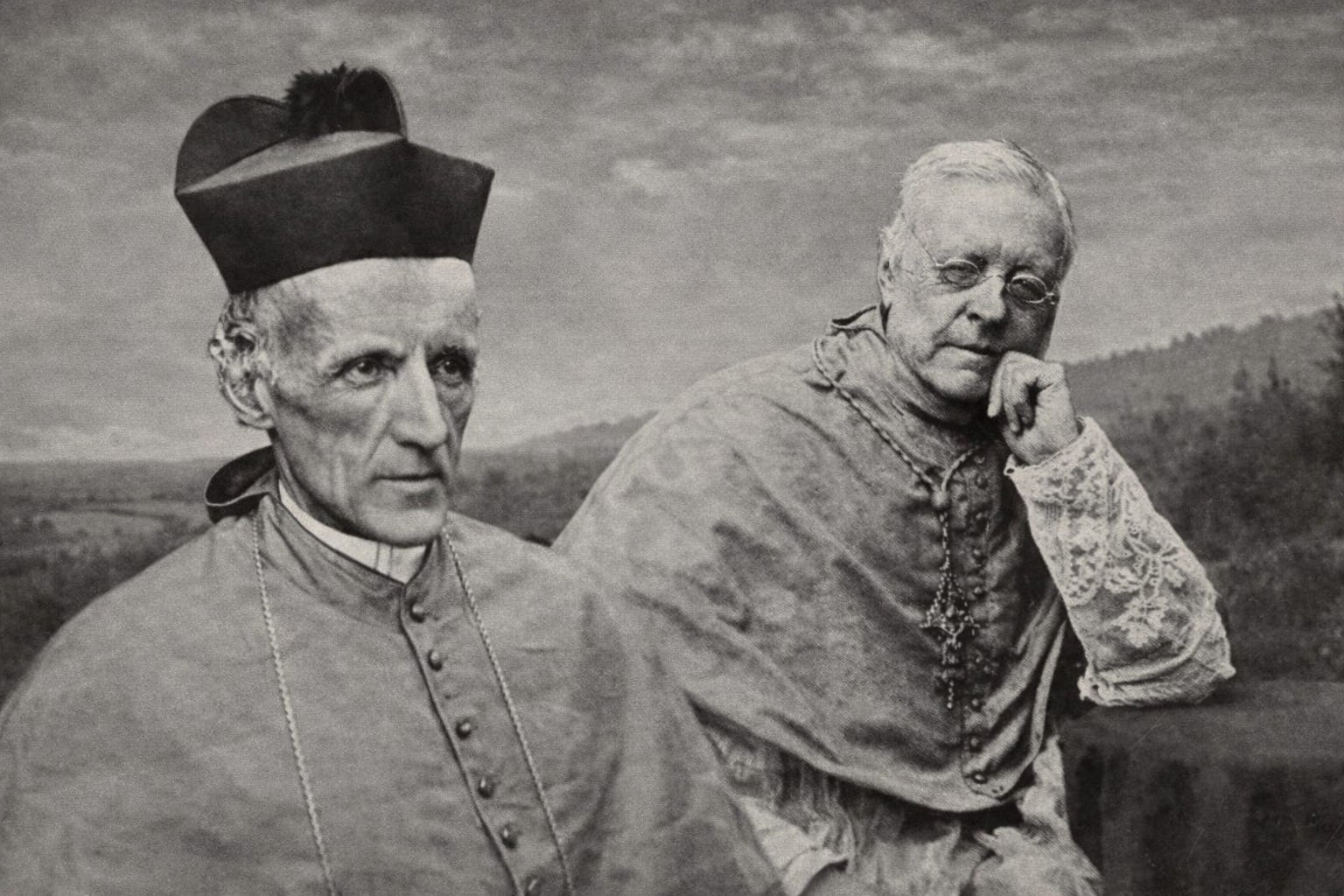
There is certainly a common phenomenon today, in which some new converts quickly presume to set themselves up a the teachers and instructors of the religion they joined only yesterday. You read more about this phenomenon – and Cardinal Newman’s comments on it – here:
While such converts need to be helped to understand the unfittingness of such a proceeding, those who have long been Catholics must also be on guard against a corresponding danger of their own.
God’s grace is open to all, as is his Holy Church. And as Fr Coleridge writes:
“[I]f it is miserable to wander or to have wandered, there may be even greater misery in store for those who have kept themselves right when others went wrong, if they are not full of charity for them when they return.”
For more context on this Gospel episode, see Part I.
You can find The WM Review’s audio recording of Fr Aloysius Ambruzzi’s meditation on this parable here:
Parables of God’s Love for Sinners
The Preaching of the Cross, Vol. II
Chapter IX
St. Luke xv. 1—32 ; Story of the Gospels, § 124
Burns and Oates, 1886.
(Read at Holy Mass on the Third Sunday after Pentecost)
How Jesus responds to the charge of associating with sinners
The accusation you might miss in the Parable of the Lost Sheep
How does a wandering sheep differ from lost coin in Christ’s parables?
Does God love repentant sinners more than those who stay faithful?
Why does the younger son want his inheritance, when he lacks for nothing?
Why does the father give the Prodigal his portion, knowing what he will do with it?
Why God’s pardon can be a greater triumph to Him than a benefit to us
Does the Prodigal’s Elder Brother represent the Jewish people?
Dispositions of the elder brother
If we consider that our Lord had the first years of the life of His Church in view at this time, as it must be certain that He had, it becomes very easy to understand the commentaries of the Fathers on this and other similar passages of His history, as well as the readiness which the early Gentile Fathers show in recognizing the immense mercy of God to the world which had issued in the creation of the Gentile Church. It was the first great triumph of the grace which came into the world by the Sacrifice of the Good Shepherd, the first great occasion at which His Heart must have rejoiced with joy unspeakable.
But, alas! the dispositions of the elder brother are founded in our poor human nature, and must not be limited to any one particular instance to which our Lord may be supposed to have referred. Good people are often very narrow-minded, and the possession of spiritual privileges may often become the foundation of self-satisfaction and of an exclusive feeling with regard to others.
To say this is the same thing as to say that it requires a special grace of humility and thankfulness to feel as to such points as God would have us feel, and that our largest and widest thoughts concerning His compassion and mercifulness are sure enough to be inadequate. Our minds can only take in with immense difficulty the boundless amplitude of the goodness of God. It is supremely difficult to be grateful enough for His mercies to ourselves, and so it is also supremely difficult to understand how merciful He can be to others, how constantly He passes over the limits of His covenant, how free He is in giving what He has not promised.
As we see in the parable of the Labourers in the Vineyard, our Lord was continually labouring to make this feature in God’s dealings with men intelligible. The Christian doctrine concerning the conditions on which the means of grace are offered to mankind, furnishes the only limit that can be put to the clemency of God, and this doctrine, when rightly understood, opens the door of mercy very wide indeed in all cases in which men do what they can, in ignorance of His positive institutions, and in good faith as to what He requires of them.
If Christians are ever too severe, too strict, too exclusive, making God require what is impossible, and the like, it is not because of the rigidity of the Christian doctrine, but on account of the narrowness, the exclusiveness, the jealousy, the self-satisfaction of those who misunderstand it. The way to understand God’s love is to love Him with all our might, and to love with all our might every creature under heaven for whom our Lord has shed His Blood and stored up His graces in the Church.
‘Elder Brotherism’
‘Elder-brotherism,’ then, if we coin such a word, is a spirit which may often put us altogether out of harmony with the sweetness and largeness of the love of God.
The first instances of it, no doubt, in the history of the Church, are to be found in the demeanour of some of the Judaizing Christians to the converts from the Gentiles, for whom St. Paul had to labour to secure the full recognition of the doctrine laid down by St. Peter, ‘We believe to be saved by the grace of the Lord Jesus Christ, in like manner as they also.’1
But it is too natural a growth of human narrowness not to have survived the controversies about the Gentiles in the earliest age. It was a kindred spirit to that which made the Christians say, ‘I am of Paul, and I am of Apollo, and I of Cephas, and I of Christ.’ The children of the earliest converts from the heathen may in their turn have been inclined to look with some disdain on the converts of their own day. The members of nations which have long been Catholic may be tempted to look down on the newly reclaimed Protestant or schismatic.
We shall soon come to the parable in which those who have borne the burthen of the day and the heat are made to complain that those who have worked but one hour are made equal to themselves. We shall then see how mischievous such a spirit is, which our Lord seems to point to as almost the one greatest danger to His servants, inasmuch as He speaks of it as the cause why the first are made last, and the last first, in His Kingdom. Certainly, we find it here, in these Pharisees and Scribes, so many of whom were to lose all place therein.
For Satan is ever on the watch to work in spiritual persons on those elements in their character which may be made to give birth to faults against charity, knowing that the ruin of the soul is certain to follow when such faults are allowed to root themselves therein. And it belongs to the doctrine of the loving mercy of God that those who are in danger of such faults should be gently and tenderly warned of their enormous danger.
How miserable and dangerous
It is not wonderful, therefore, if our Lord had in His mind as a very prominent object in the delivery of this great parable, the spiritual misery of those who are represented under the image of the elder brother.
Nor is it wonderful if He framed His words so as to touch very pointedly the case of these Scribes and Pharisees, many of whom were so soon to lose their opportunity of closing with the Gospel offers out of a kind of jealous indignation at the freedom with which these same offers were made to and accepted by the Gentiles.
The elder brother in the parable must have changed his conduct altogether if he was to live on in happiness in his father’s house. If he would not go in to the banquet of rejoicing, it might soon come to his refusing to live with the returned Prodigal altogether. Thus our Lord seems to give us another lesson beyond that of the misery of leaving God and of the love with which we shall be welcomed back if we return after having left Him. He seems to tell us that if it is miserable to wander or to have wandered, there may be even greater misery in store for those who have kept themselves right when others went wrong, if they are not full of charity for them when they return.
This is the doctrine of St. Paul, when he tells us that to speak with the tongues of men and angels, or to have prophecy, and know all mysteries and all knowledge, or to have the faith that can move mountains, or to distribute all our goods to feed the poor, or to give our bodies to be burned, all these things will profit us nothing, if we have not charity.
A lesson important indeed to all who have been born to the possession of the Gospel privileges, and who have been sheltered all their lives from the danger of forfeiting them. And a lesson to those, also, who have come back like the Prodigal, lest it should ever occur to them, after their return, to look down on others, or forget, as the elder brother forgot, to pray for them and so prepare their own hearts to welcome them home.
Parables of God’s Love for Sinners
How Jesus responds to the charge of associating with sinners
The indictment you might miss in the Parable of the Lost Sheep
How does a wandering sheep differ from lost coin in Christ’s parables?
Does God love repentant sinners more than those who stay faithful?
Why does the younger son want his inheritance, when he lacks for nothing?
Why does the father give the Prodigal his portion, knowing what he will do with it?
Why God’s pardon can be a greater triumph to Him than a benefit to us
Does the Prodigal’s Elder Brother represent the Jewish people?
Here’s why you should subscribe to The Father Coleridge Reader and share with others:
Fr Coleridge provides solid explanations of the entirety of the Gospel
His work is full of doctrine and piety, and is highly credible
He gives a clear trajectory of the life of Christ, its drama and all its stages—increasing our appreciation and admiration for the God-Man.
If more Catholics knew about works like Coleridge’s, then other works based on sentimentality and dubious private revelations would be much less attractive.
But sourcing and curating the texts, cleaning up scans, and editing them for online reading is a labour of love, and takes a lot of time.
Will you lend us a hand and hit subscribe?
Follow our projects on Twitter, YouTube and Telegram:
Twitter (The WM Review)
Acts xv. 11.