
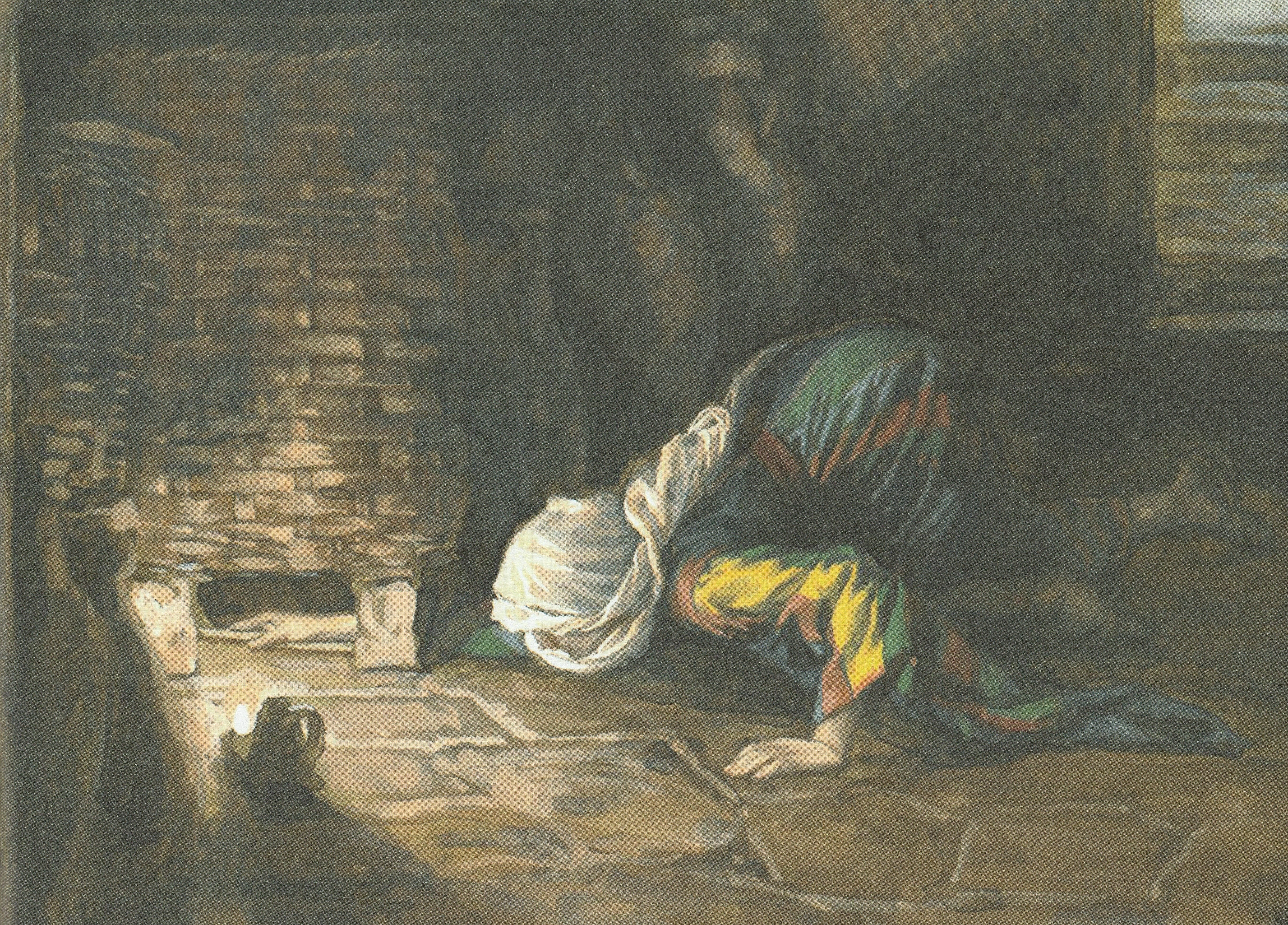
The parable of the lost coin reveals how souls may be lost through negligence within the Church, not merely by wandering away from her.
Editor’s Notes
In this part, Fr Coleridge tells us…
How the parables of he lost sheep and the lost coin unveil the depth of Heaven’s gladness at each sinner’s homecoming.
That this joy springs from both God’s fatherly care and His love shown in the Incarnation.
Why the lost coin brings to light the work of the Church’s shepherds within the fold.
He shows us that souls are lost through neglect as well as wandering and straying.
For more context on this Gospel episode, see Part I.
Parables of God’s Love for Sinners
The Preaching of the Cross, Vol. II
Chapter IX
St. Luke xv. 1—32 ; Story of the Gospels, § 124
Burns and Oates, 1886.
(Read at Holy Mass on the Third Sunday after Pentecost)
How Jesus responds to the charge of associating with sinners
The accusation you might miss in the Parable of the Lost Sheep
How a wandering sheep differs from lost coin in Christ’s parables
Does God love repentant sinners more than those who stay faithful?
Why does the younger son want his inheritance, when he lacks for nothing?
Why does the father give the Prodigal his portion, knowing what he will do with it?
Why God’s pardon can be a greater triumph to Him than a benefit to us
Does the Prodigal’s Elder Brother represent the Jewish people?
Interpretation of the parable
‘I say to you that even so there shall be joy in Heaven upon one sinner that doth penance, more than upon ninety-nine just who need not penance.’
And this last sentence is repeated in the next parable of the woman and the lost groat, with the significant change, ‘there shall be joy before the angels of God.’
It also has its counterpart in the third parable, in which the eldest son is made to take offence at the joy manifested on the return of the Prodigal, and to complain that he himself had never been made the occasion of so much rejoicing. We may presently explain rather more fully what is here meant.
The lost Groat
But we must first pause a moment to speak of the second of the three parables, which appears at first sight to be a mere repetition of the first in other words. If it were only such, it might still teach us to consider how very dear the thought of the reclaiming of sinners must have been to the Sacred Heart, that He should have been at the pains to put forth the same truth twice over, and to give a second example which might represent His joy at the success of His labours in this respect.
We do not repeat in this way on a subject-matter which we do not consider most important. It may be, indeed, that this is the simple explanation of the double parable. It is easy enough to find a distinct reason for the parable of the Prodigal Son, in which the history of a declension and a conversion is related from the point of view of the sinner himself, rather than of God Who reclaims and recalls him.
There are, however, several reasons for thinking that our Lord chose to repeat the truth of the parable of the Lost Sheep in that of the Lost Groat for the sake of touching on one or two distinct points peculiar to the last of the two.
But what is the difference between the two?
Father Coleridge Reader is a labour of love. But curating, cleaning up and publishing these texts takes real work.
To keep this project going, and to make more of this treasury available, we rely on reader support. Some posts are reserved for members to sustain this mission.
We’re trying to keep something precious alive.
If you’ve benefited, consider joining us as a subscriber. It makes a real difference.