

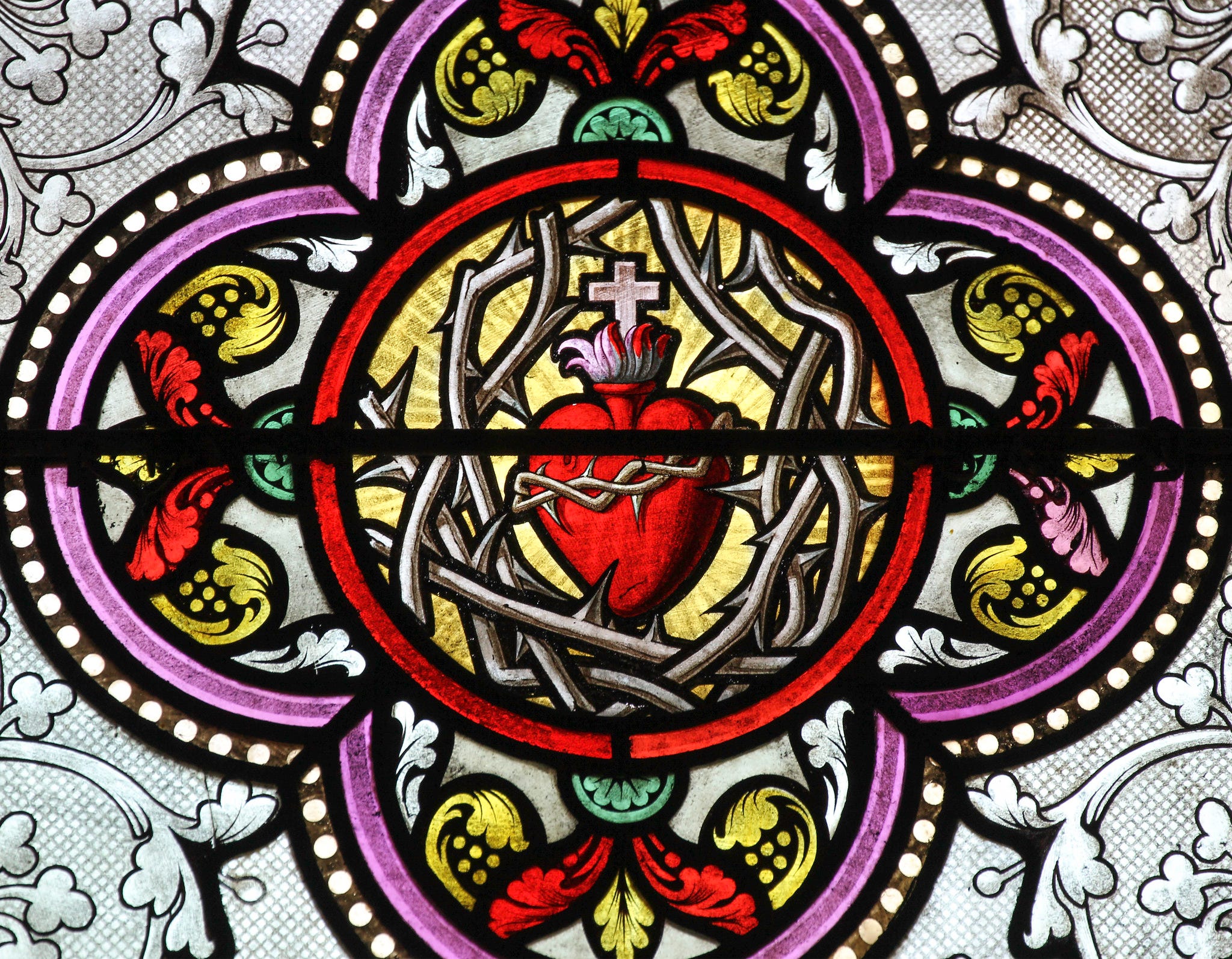
The love that Jesus has for us is beyond our imagination.
Editor’s Notes
In this piece, Father Coleridge tells us:
How fulfilling the Father’s will was the reason Our Lord came down from heaven
Why the Sacred Heart desires the salvation of every soul entrusted to Him.
What it means that Christ counts no labour too great to preserve souls from being lost.
He shows us that the Incarnation is the perfect fulfilment of the Father’s saving will, and that Christ watches over every faithful soul with more love and vigilance than they could have for themselves.
For more on this series, see Part I.
Faith in the Son of Man
The Training of the Apostles, Part IV
Chapter X
St. John vi. 25–72; Story of the Gospels, § 74
Burns and Oates, London, 1885.
(Read on Corpus Christi)
The multiplication of loaves pointed towards the Eucharist – but the crowd weren’t interested
What miracles like the multiplication of loaves are supposed to achieve
Jesus worked miracles to draw out faith in himself, the one sent by God the Father
How talk of the manna helped the crowd understand the Bread of Life
Devotion of the Sacred Heart
Our Lord repeats three times over the mention of the will of the Father Who sent Him.
First, He says that He is come down from Heaven not to do His own will but the will of Him that sent Him. Then He adds that this is the will of the Father Who hath sent Him, ‘That of all that He hath given Me I should lose nothing, but should raise it up at the last day.’
Then in the third place He says that ‘this is the will of the Father Who hath sent Him, that every one who seeth the Son and believeth in Him, may have life everlasting, and I will raise Him up at the last day.’
The intelligence of the whole passage, therefore, depends on our grasping the meaning of these three consecutive sentences, in which the same truth is set forth in an ever increasing degree of plainness and clearness.
When our Lord says that He has come down from Heaven, not to do His own will, but the will of Him that sent Him, He speaks of course of His Incarnation, in which He is present on earth, being the Son of God Who is in Heaven. The object, then, of His presence on earth in the Incarnation, is, in the first place, to do the will of His Father Who has sent Him.
Here He speaks of His human will, because as God He has the same identical will with His Father. The will of God, which is thus declared to be the first and principal cause of all that our Lord does in the Incarnation, is the Divine will of the Father, the Son, and the Holy Ghost.
When our Lord says that He is come not to do His own will but that of His Father, He does not mean that His own human will is, or can be, contrary to that of His Father. He means that the will of His Father is the rule of His life and of all that He does, and that His human will is perfect in its devotion to the Divine will, and performs whatever that Divine will desires, with all its intensity and energy and joy and resolution.
The Sacred Heart wills the salvation of men with a power and a devotion of which no one but Himself is capable. And yet He wills it, notwithstanding His love for man, because the Father’s will is that He should will it, and accomplish it. For He loves us because His Father wills that He should love us, and because His Father so loves us as to give Him to us to be our Saviour.
Thus the contrast, if there is a contrast, is not between the freedom of one who is not sent by another and the obedience of one who is sent by another. It is between the power of the Divine will in imparting force and intensity to the human will of our Lord, by the manifestation of its own desire, and the love which our Lord might conceivably have had for us if He had not been sent by the Father for that purpose for which He was sent.
How then is it possible for Him to cast out any one whom the Father gives Him, when He is come on purpose to do the will of His Father?
He sees in the persons of those who are given to Him, the expression of the very will to accomplish which He has come down from Heaven.
Raising up at the last day
The next sentence carries on a little further the explanation of what it is not to cast out any one whom the Father may give Him.
‘This is the will of the Father Who sent Me, that of all that He hath given me I should lose nothing, but should raise it up again at the last day.’
Not to cast out, then, is the same thing as not to lose, but to raise it up at the last day. We have other words of our Lord which seem to explain to us what He may mean by losing what is given to Him. He said in His prayer to His Father, before going to the Garden of Gethsemani, ‘Those whom Thou hast given to Me I have kept, and none of them is lost, but the son of perdition, that the Scriptures may be fulfilled.’1
And again, in the account of the scene in the garden at the apprehension of our Lord, St. John says, after telling us how our Lord had enjoined on His captors to let the Apostles go their way, ‘that the word might be fulfilled which He said, of those whom Thou gavest me I have not lost any one.’2
Thus Judas was already lost when our Lord made His prayer, though that was before the accomplishment of the betrayal, and the Apostles might have been lost, if our Lord had not provided for their safety by shielding them from the temptations they might have been exposed to, if they had been taken prisoners with Him.
But our Lord must here speak of the loss which is final and irrevocable, when the soul is separated from Him altogether, and beyond remedy, by dying in sin.
None to be lost
And yet His watchful Heart may see this loss in a soul at the moment when it shuts its ears to grace, as Judas had hardened his heart before his final perdition.
The loss of a soul is often decided practically by a step which is not the last in the process of perdition. Our Lord speaks of that which is in truth the immense loss and misery of the soul itself, as if it was in a certain sense His own loss, a kind of failure of His own, and so a diminution of His glory and blessedness and triumph throughout all eternity.
And, on the other hand, He speaks of the avoidance of this loss and defeat, as if it were His own victory and His own great happiness, as if it were a great glory to Himself to raise up one more in the last day.
When He says, ‘Not one of them is lost’ except Judas, it is like One Who speaks of the greatest treasures that could have been committed to Him, and the words of the Evangelist about His disciples not being lost, on account of His watchful care over them in protecting them from danger and temptation, seem to show us how constantly this thought is in the Sacred Heart of our Lord, that He must preserve those whom His Father has given Him with the utmost care and forethought.
Faith in the Son of Man
The multiplication of loaves pointed towards the Eucharist – but the crowd weren’t interested
What miracles like the multiplication of loaves are supposed to achieve
Jesus worked miracles to draw out faith in himself, the one sent by God the Father
How talk of the manna helped the crowd understand the Bread of Life
Previous Chapter:
The Discourse in the Synagogue
How Our Lord gradually unveiled the doctrine of the Holy Eucharist
How Jesus used the loaves to explain his doctrine to the people – and to us
How Jesus presented the Eucharist in the face of dulness and antagonism from the crowd
How Christ can demand faith in his teaching on the Eucharist
From:
The Training of the Apostles, Part IV
Here’s why you should subscribe to The Father Coleridge Reader and share with others:
Fr Coleridge provides solid explanations of the entirety of the Gospel
His work is full of doctrine and piety, and is highly credible
He gives a clear trajectory of the life of Christ, its drama and all its stages—increasing our appreciation and admiration for the God-Man.
If more Catholics knew about works like Coleridge’s, then other works based on sentimentality and dubious private revelations would be much less attractive.
But sourcing and curating the texts, cleaning up scans, and editing them for online reading is a labour of love, and takes a lot of time.
Will you lend us a hand and hit subscribe?
Follow our projects on Twitter, YouTube and Telegram:
Twitter (The WM Review)
St. John xvii. 12.
St. John xviii. 9.