

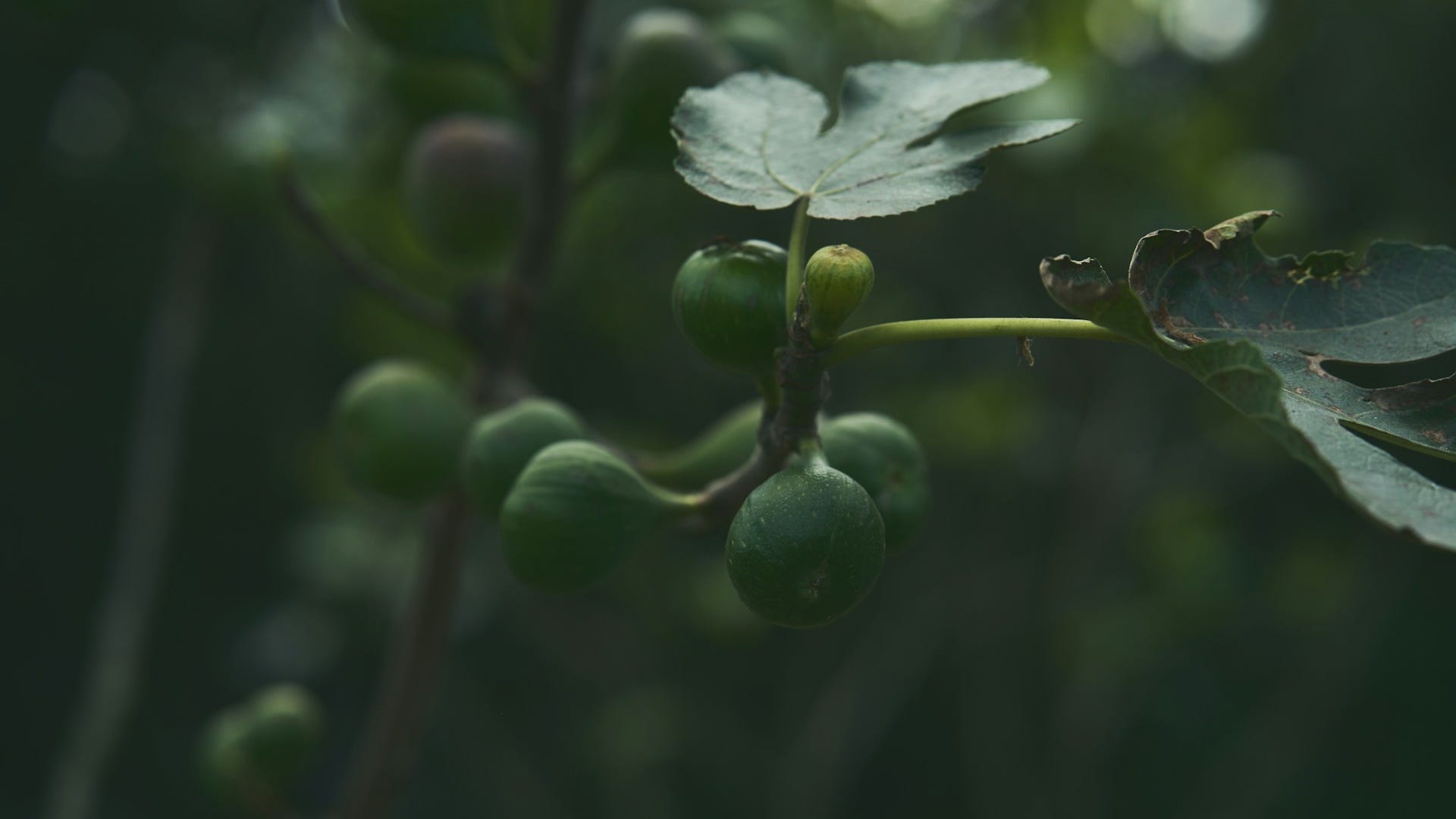
In his prophecy, Our Lord seems to tell the Church to look forward to the end of the world as we might look forward to summer.
Editor’s Notes
It's “Giving Tuesday” – and the best way you can support Father Coleridge Reader is taking out an annual subscription:
Another really great way to support us is to subscribe to our parent project, The WM Review:
You can also give a one-time donation to The WM Review, which directly supports Father Coleridge Reader's operations.
Thank you for your generosity!
Doomsday—Part IV
In this chapter, Fr Coleridge tells us…
How Christ transforms terror into hope by bidding His children lift their heads at destruction’s signs.
That the fig-tree’s greening prophesies both Jerusalem’s fall and Israel’s final conversion before world’s end.
Why summer’s approach teaches faithful souls to welcome judgment as deliverance drawing near at last.
He shows us that God’s most fearsome warnings carry hidden promises of redemption to those who trust.
For more context on this part of the Gospel, see Part I.
The Doom of the World
Passiontide—Part I
Chapter XIV
St. Matt. xxiv. 29–36; St. Mark xiii. 24–34; St. Luke xxi. 25, 26;
Story of the Gospels, § 144, 5.
Burns and Oates, 1889
Sung on the First Sunday of Advent
Why Christ warns that physical signs will signal the end of the world
Doomsday – Why Christ tells us to hope for it, as for summer figs
Lift up your heads
‘But when these things begin to come to pass, look up and lift up your heads, because your redemption is at hand.’
There are expressions in this part of the prophecy which may seem to refer equally well to either of the two great future events with which the prediction is concerned, that is, either the destruction of Jerusalem, or the coming of our Lord at the end of the world.
In the years that preceded the destruction of the city, the Christians had suffered very much from the persecuting fury of the Jews, and the overthrow of the Jewish polity was really a day of deliverance and redemption to them. They might, therefore, be told to hail the signs which heralded in the calamities of Jerusalem as signs, in that sense, of a welcome breathing-time for themselves.
Again, at the end of the world, there could be no doubt that all the prophetic anticipations concur in describing the Church as suffering more terribly than ever from the persecution of Antichrist, which, it is thought, will be more severe, although shorter, than any former persecution. So it would be in accordance with our Lord’s gentle and loving character to bid the Church in either case take these signs of destruction, either of the city or of the world, as the signs of coming summer.
He is not content with saying that it shall be so. He bids His children lift up their heads, and, not exactly rejoice over the destruction of the enemies of God and of the Church, but give thanks for the approach of what He calls their redemption.
The exhortation may fit either time. Of course, the redemption would be greater—the deliverance from more intolerable evil—and the goods which will then be close at hand far more magnificent as well as eternal, in the latter case than in the former.
Parable of the Fig-tree
If, however, we are to take the sentence before us as an immediate connection with those which it follows, there can be no doubt that it refers to the final deliverance which will be brought about by the Day of Judgment.
And it is in harmony with the tone of feeling with respect to the Last Day, which shows itself in the New Testament, that that Last Day should be commonly looked forward to by Christians with great desire and hope, and a joyful longing and confidence.
This runs through the passages in the Epistles where there is allusion to the end of the world, and where people long with so much joy and hope for any future event, the signs of its approach are hailed with just that kind of feeling which our Lord enjoins. It seems reasonable, then, to understand the passage as having reference to the Last Day of the world.
But there are several intimations in the passage which seem to persuade us to understand the words, at all events, in a secondary sense, of the deliverance which followed on the removal of the Jewish nation.
‘And from the fig-tree learn the parable,’ that is, the parable that the fig-tree has to teach you. ‘When the branch thereof is now tender, and the leaves are come forth, you know that summer is nigh.
‘See the fig-tree and all trees; when they now shoot forth their fruit, you know that summer is nigh. To you also, when you shall see all these things come to pass, know that the Kingdom of God is at hand, know that it is very nigh, even at the doors.’
The parable is very plain, and probably, at the time when our Lord spoke, although we know that the time was not yet come for the figs to be ripe on the trees, yet the slopes of Mount Olivet were clothed with the fresh verdure and foliage of the spring, and summer was near at hand.
It was our Lord’s way, as has often been remarked, to use the scenes before His eyes as the illustration of what He was teaching.
He meant, we may suppose, to carry on the bright hopeful thoughts which He had just put into words, about lifting up their heads, and the rest, and bid them hail the signs which precede, either the chastisement of the nation or the judgment of the world, as the first signs of the early summer are hailed by those who value its gifts. The signs are terrible in themselves, but to Christians they are like the shooting of the fig-tree and all the trees which they see around them.
Father Coleridge Reader is a labour of love. But curating, cleaning up and publishing these texts takes real work.
To keep this project going, and to make more of this treasury available, we rely on reader support. Some posts are reserved for members to sustain this mission.
We’re trying to keep something precious alive.
If you’ve benefited, consider joining us as a subscriber. It makes a real difference.