
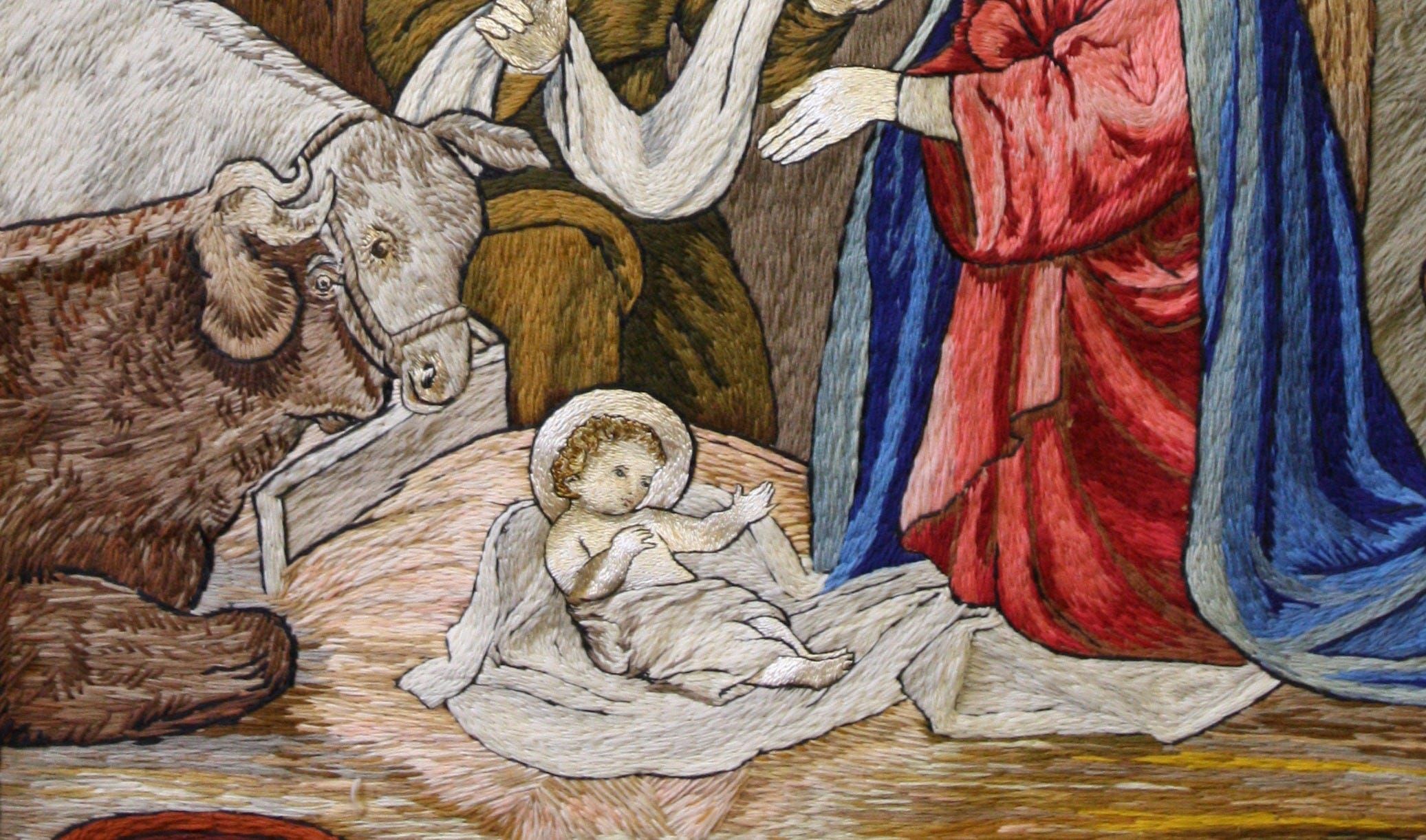
The first act of the newborn Saviour was to renew the offering of himself to his Father.
Editor’s Notes
Merry Christmas from Father Coleridge Reader and The WM Review!
In this part, Fr Coleridge tells us…
How Christ’s chosen poverty began both expiation for sin and instruction in vanity of riches
That the helpless Babe possessed perfect divine and human faculties in full exercise and intelligence
Why His experimental knowledge now added love for suffering as promise and prelude of Cross
He shows us that the Infant Redeemer consciously embraced His lowly circumstances with immense joy, sanctifying poverty through His Sacred Person while teaching Mary and Joseph the heavenly perspective that made worldly splendour loathsome to the Saviour.
For more on the links between Christmas and the Passion, see the introductions to the following:
You can hear an abridged and adapted version of parts of this chapter here, which featured as part of The WM Review’s series Preparing for Total Consecration to the Blessed Virgin According to the Method of St Louis de Montfort:
The Nativity of Our Lord
The Thirty Years
Chapter I
St. Luke i. 6, 7; Vita Vitæ Nostræ, § 8.
Burns and Oates, 1915
(For Christmas)
What happened at the first Christmas? Did Our Lady suffer the pangs of childbirth?
Here’s why Our Lady’s perpetual virginity is a necessary Christmas truth
What Our Lady’s perpetual virginity has done for the Church – and for marriage
Why Christmas was the beginning of a new life of Mary and Joseph
Our Lord’s work of expiation
We are thus led to see, with those blessed Saints, how the circumstances under which our Blessed Lord chose to come into the world of men, the conditions of poverty, humiliation, and suffering which surrounded Him at once in the cradle in the cave, were all arranged beforehand in His providence for the more perfect discharge of His two-fold work, the work of expiation and satisfaction, and the work of instruction and revelation of the truth.
Thus, in their rejection, as it seemed, by the inhabitants of Bethlehem, the holy pair could see the first working of the great principle which was to be conspicuously characteristic of His treatment at the hands of men.
It is the rule for the greatest blessings to occasion the deepest ingratitude. They would see in the poverty and mortification of the manger and the home in the cave which He chose for Himself, the first reading to the world of the lesson of the vanity and the peril of riches and comforts, His burning desire at once to begin with this instruction, as well as with the atonement which He was to make for the many sins to which the love of comfort and wealth and honour have given occasion, and for the many shortcomings in the service of God of which the same love was to be the cause.
Nothing could be more unseemly, from a merely human point of view, than that the Lord of all the world should come into it in such a manner, instead of being received at once by the offering of all that the world had to give Him in these respects. But, from the heavenly point of view, it would have been far more unseemly, as has been said, if He had accepted the conditions of wealth, honour, luxury, comfort, splendour, in which an earthly prince might have been born.
All these conditions were worthless in themselves, at the best. But, moreover, they were stained by the blood of souls whom they had ruined, by the dishonour of God and the injury of man with which they had been connected. They might suit the child of Augustus or of Herod, they were altogether loathsome in the eyes of the Redeemer of the world.
Perfection of His faculties
It must always be remembered—and we are never more likely to forget it than in our contemplations of the first Christmas at Bethlehem—that He Who appears to us a helpless Babe, silently weeping for the hardships of this His first welcome into the world, was, as ever, perfect God and perfect Man, in the full possession and exercise of His intelligence and other human faculties, as well as of the attributes of His Godhead.
This truth was not hidden from Mary and Joseph, and it gave an increase of deep reverence and awe to their ministrations, at the same time that it added fresh tenderness to their love and devotion. In order to understand perfectly, even according to our capacities of intelligence, the scene in the cave, we must endeavour to give to ourselves some account of the interior acts of our Lord on His entrance in the world which He came to redeem.
It was now that He made a fresh offering of Himself to His Eternal Father, a renewal of that oblation which had been made when He entered the world of creation at the moment of the Incarnation. It was now that He submitted Himself anew to the will of His Father as the rule of His life, and that He welcomed anew the special work of redemption and enlightenment for which He had been sent, and which He now began.
Experimental knowledge
But there was now something more than a continuation of the life which He had hitherto led in the womb of Mary. For now He began for the first time His experimental knowledge of the circumstances of the human life which He had taken to Himself, and which was to remain the same in character to the end of the thirty-three years.
Before this He had known perfectly, by the Divine knowledge which was His, and by the knowledge of human things which belonged to His Human Soul, all the characteristics of the condition on which He was now entering. But now He began to learn, as St. Paul says of Him, “obedience from the things which He suffered,” and this would make Him take to His Heart with an especial love all the circumstances of poverty, affliction, privation, mortification, and pain, which He had deliberately chosen for Himself in the arrangement of His Birth in His Divine wisdom.
Burning with zeal for the glory of His Father, and for the welfare of the race whom He had made His brethren, He accepted with immense thankfulness and joy these sufferings which were to Him the promise and the prelude of the Cross.
And if Mary turned to Him with a boundless increase of delight, now that she was able to see His face and clasp Him to her heart, He also would condescend most deliberately and most lovingly to all the endearments which belonged to His state of Infancy, and receive with intense gratitude the ministries of His Mother, and of the very dear Saint who was to be to Him as a father. He rejoiced to be able to show them the tenderness of His love and the completeness of His obedience, while His Heart overflowed also with immense compassion for all mankind, and delighted in that sanctification of poverty and lowliness and dishonour, which resulted from the fact that He had now touched them in His own Sacred Person.
You can find an abridged and adapted recording of this chapter here, which featured as part of The WM Review’s series Preparing for Total Consecration to the Blessed Virgin According to the Method of St Louis de Montfort:
The Nativity of Our Lord
What happened at the first Christmas? Did Our Lady suffer the pangs of childbirth?
Here’s why Our Lady’s perpetual virginity is a necessary Christmas truth
What Our Lady’s perpetual virginity has done for the Church – and for marriage
Why Christmas was the beginning of a new life of Mary and Joseph
Here’s why you should subscribe to The Father Coleridge Reader and share with others:
Fr Coleridge provides solid explanations of the entirety of the Gospel
His work is full of doctrine and piety, and is highly credible
He gives a clear trajectory of the life of Christ, its drama and all its stages—increasing our appreciation and admiration for the God-Man.
If more Catholics knew about works like Coleridge’s, then other works based on sentimentality and dubious private revelations would be much less attractive.
But sourcing and curating the texts, cleaning up scans, and editing them for online reading is a labour of love, and takes a lot of time.
Will you lend us a hand and hit subscribe?
Follow our projects on Twitter, YouTube and Telegram:
Twitter (The WM Review)