
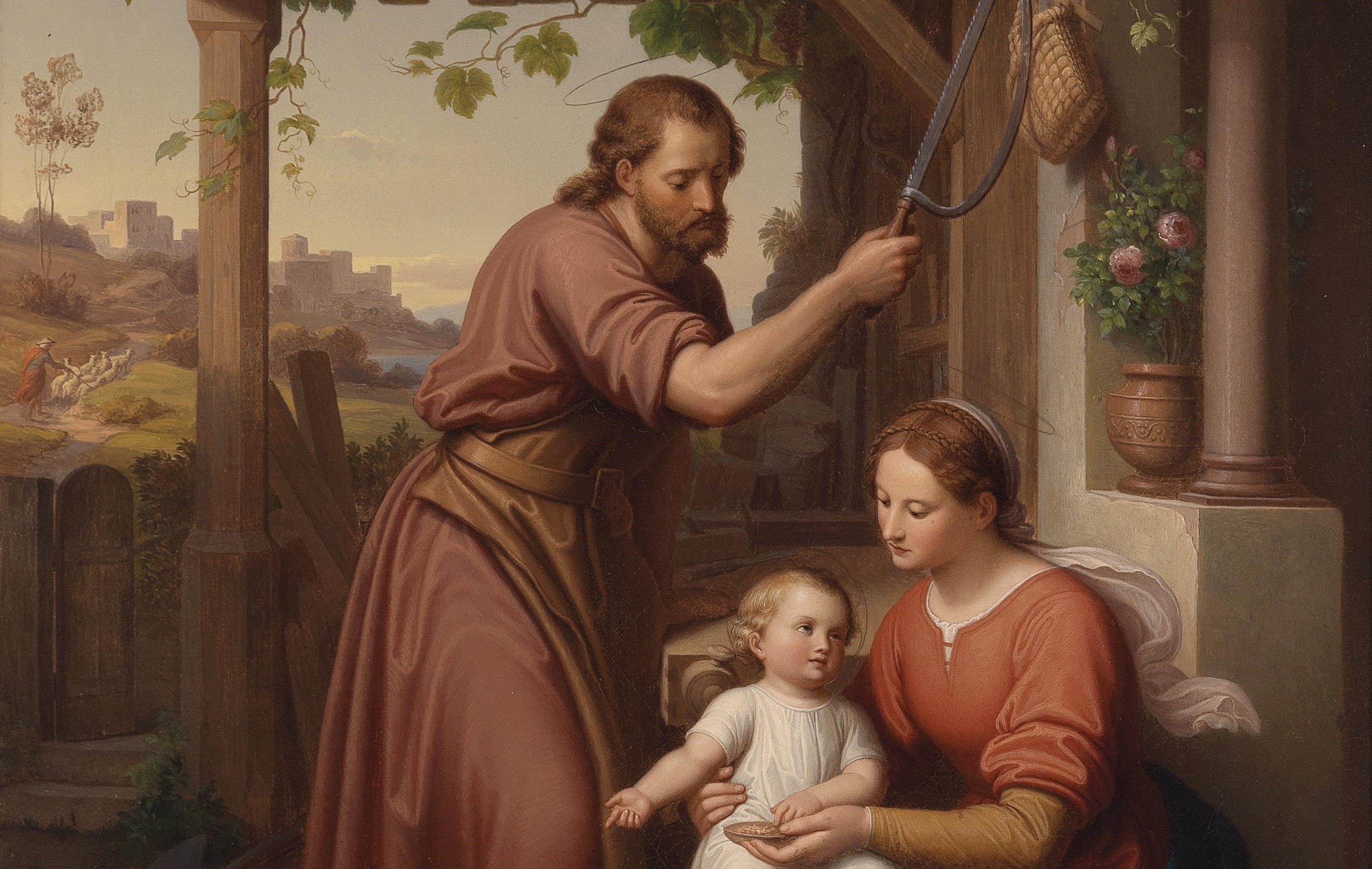
How could anything be the same after that momentous birth?
Editor’s Notes
Merry Christmas from Father Coleridge Reader and The WM Review!
In this part, Fr Coleridge tells us…
How God deliberately arranged the circumstances to welcome His Son into the world in poverty and humiliation
That the fragrance of this humility rose as costly incense, surpassing any worldly magnificence or honour
Why Mary and Joseph's understanding of these mysteries was as full as that of the angels.
He shows us that Christ's chosen abasement at birth reveals the spirit of His Kingdom, while Mary and Joseph's perfect comprehension made them the Church's first and greatest contemplatives of God's ways.
You can hear an abridged and adapted version of parts of this chapter here, which featured as part of The WM Review’s series Preparing for Total Consecration to the Blessed Virgin According to the Method of St Louis de Montfort:
The Nativity of Our Lord
The Thirty Years
Chapter I
St. Luke i. 6, 7; Vita Vitæ Nostræ, § 8.
Burns and Oates, 1915
(For Christmas)
What happened at the first Christmas? Did Our Lady suffer the pangs of childbirth?
Here’s why Our Lady’s perpetual virginity is a necessary Christmas truth
What Our Lady’s perpetual virginity has done for the Church – and for marriage
Why Christmas was the beginning of a new life of Mary and Joseph
“She brought forth her Son, the first-born.”
He is called her first-born, because so He was in truth, though there could be no other after Him, the firstborn of the whole creation, the first-born among the innumerable children of God whom He was to make such by their faith in Him.
He is the only-begotten Son of the Eternal Father, for in the Divine Nature there can be no more than one Son. He is the first-born in His Human Nature, the first-born of His Blessed Mother, for there could be no one before Him as there was no one after Him, and He left her spotless and inviolate, and so she was ever to remain. His first place of rest in this world was in her loving arms, which received Him as He came forth, or in which He was, as some say, laid by the holy angels who waited around. Then “she wrapped Him in swaddling-clothes,” for she had no need of help or service, who had borne Him without pain or weakness, “and laid Him in a manger, because there was no room for them in the inn.”
The hillside which His hands had made, and no human habitation, gave Him the hospitality which men denied to Him, and the animals for whom the manger had been made were, in that sense, His first hosts. Mary made His birth known at once to the blessed Joseph, and the two were the first of all creatures to adore the new-born God.
And then began that new life of Mary and Joseph of which we have spoken. She fed the Infant Saviour with the milk of her breasts, she tended Him with the utmost care, while her holy spouse watched over them both and supplied all their wants. Here, then, we have another stage in the immense and continual growth of Mary and Joseph in sanctity. Every onward step in the history of the Incarnation was the occasion of a fresh outpouring of grace on each for the discharge of their new office.
Circumstances chosen by God
It is needless to say that every one of the circumstances of this entrance of our Lord into the world was deliberately chosen by God for purposes of His own.
As He had guided the policy and the decree of the distant Emperor, and the actions of all the officials through whom the Imperial purpose passed, before it could reach the point at which it became, to Joseph and Mary, the manifestation of the Divine will, so also He had arranged that there should be the crowd at Bethlehem, that the khan should be full, and all the concurrent incidents of the night which ended in the resort of the holy pair to the cave.
The obscurity, the discomfort, the poverty, the suffering, the helplessness, the loneliness, the insignificance, the ignominy, and other similar circumstances which formed the welcome received by our Saviour on His first appearance among mankind, all were chosen by God rather than any other possible circumstances, as the most appropriate and most honourable to Him, in consideration of the work which He came into the world to do.
No honour which the world could have offered Him, no display of wealth, no magnificence of attendance and reception, no palace of gold and ivory, crowded with nobles to wait on Him, and kings and queens to provide Him with every luxury and comfort, could have been so suitable to Him on His entrance into the human world as the surroundings which welcomed Him in this cave, the home of animals rather than of men.
Sympathy and suffering
In this most sacred cave, the providence of His Father was His furnisher and His host, the Holy Angels, His Blessed Mother, and St. Joseph were His courtiers and attendants, and nothing was offered Him for His wants or His service that had on it the stamp or stain of worldly greatness, the loathsomeness of pride, the foulness which in the eyes of Heaven attaches itself to all that can minister to concupiscence.
The poverty, the humiliation, the mortification, for the love of which it may almost be said He would have come down from Heaven, were here to greet Him with all their fragrance and Divine beauty. The adoring sympathy which these circumstances called forth from His Mother and her holy spouse, rose like the most costly incense around His manger-bed, in union with the adoration of the whole host of Heaven.
For He began His reign on earth with a great act of humiliation, in which He indulged to the utmost the darling passion of His Sacred Heart. Then, as was always the case, in accordance with the law of which He Himself was so often to speak, “that whoso humbleth himself shall be exalted,” the Eternal Father took care that His first moments of abjection and humiliation should not be left unhonoured by the purest and simplest souls of earth and by the homage of the angelic choirs.
Intelligence of Mary and Joseph
We may return hereafter to the consideration of the circumstances under which it was the decree of God that His Son should be born into the world.
For the present it is enough to say how obvious it must be that our Lady and St. Joseph must have fully understood the Divine counsels which were thus executed, and have been ready to adore these counsels with all due submission, admiration, and joy, even though it could not but be with a most tender sympathy and compassion for the sufferings which thus formed so large a part of the welcome of the Blessed Babe into His new Kingdom.
Thus their share of the Cross begins with the entrance of our Lord into the world. The keen suffering which they must thus have felt, and the perfect resignation with which it was endured, formed a part of the providential service which they were to render to the Infant Lord of all. Mary and Joseph could take in all the wonderful truths contained in these mysteries, as completely as they have ever been comprehended by the highest of the angels, and far more fully than they have been explained by the most enlightened theologians of the Church.
They could see in all these things illustrations both of the office of the new King, and of the spirit and scope of the new Kingdom. They were the first and the most intelligent of the thousands of contemplatives of the ways of God, to whom the Church was to give birth. All the exercises and flights of this heavenly wisdom are summed up for us in the few simple words of St. Luke: “Mary kept all these words, pondering them in her heart.”
We may be sure that the thoughts of Joseph resembled most closely and faithfully the thoughts of Mary. At the same time the blessed foster-father was already beginning to feel the weight of his own peculiar cross. For it was his office to be the provider and manager of the Holy Family, and every detail of hardship and suffering fell upon him thus with a double pang.
You can find an abridged and adapted recording of this chapter here, which featured as part of The WM Review’s series Preparing for Total Consecration to the Blessed Virgin According to the Method of St Louis de Montfort:
The Nativity of Our Lord
What happened at the first Christmas? Did Our Lady suffer the pangs of childbirth?
Here’s why Our Lady’s perpetual virginity is a necessary Christmas truth
What Our Lady’s perpetual virginity has done for the Church – and for marriage
Why Christmas was the beginning of a new life of Mary and Joseph
Here’s why you should subscribe to The Father Coleridge Reader and share with others:
Fr Coleridge provides solid explanations of the entirety of the Gospel
His work is full of doctrine and piety, and is highly credible
He gives a clear trajectory of the life of Christ, its drama and all its stages—increasing our appreciation and admiration for the God-Man.
If more Catholics knew about works like Coleridge’s, then other works based on sentimentality and dubious private revelations would be much less attractive.
But sourcing and curating the texts, cleaning up scans, and editing them for online reading is a labour of love, and takes a lot of time.
Will you lend us a hand and hit subscribe?
Follow our projects on Twitter, YouTube and Telegram:
Twitter (The WM Review)