

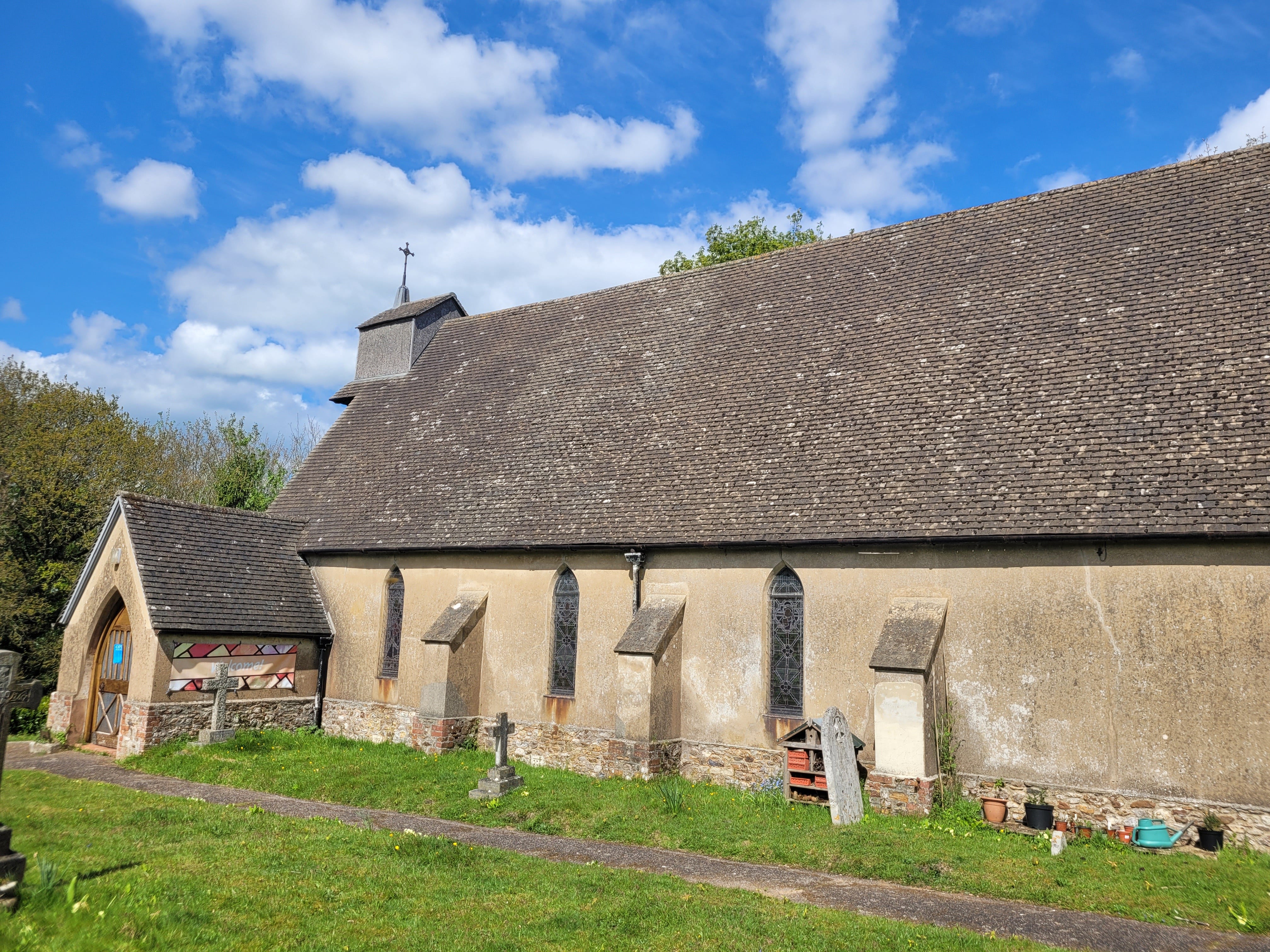
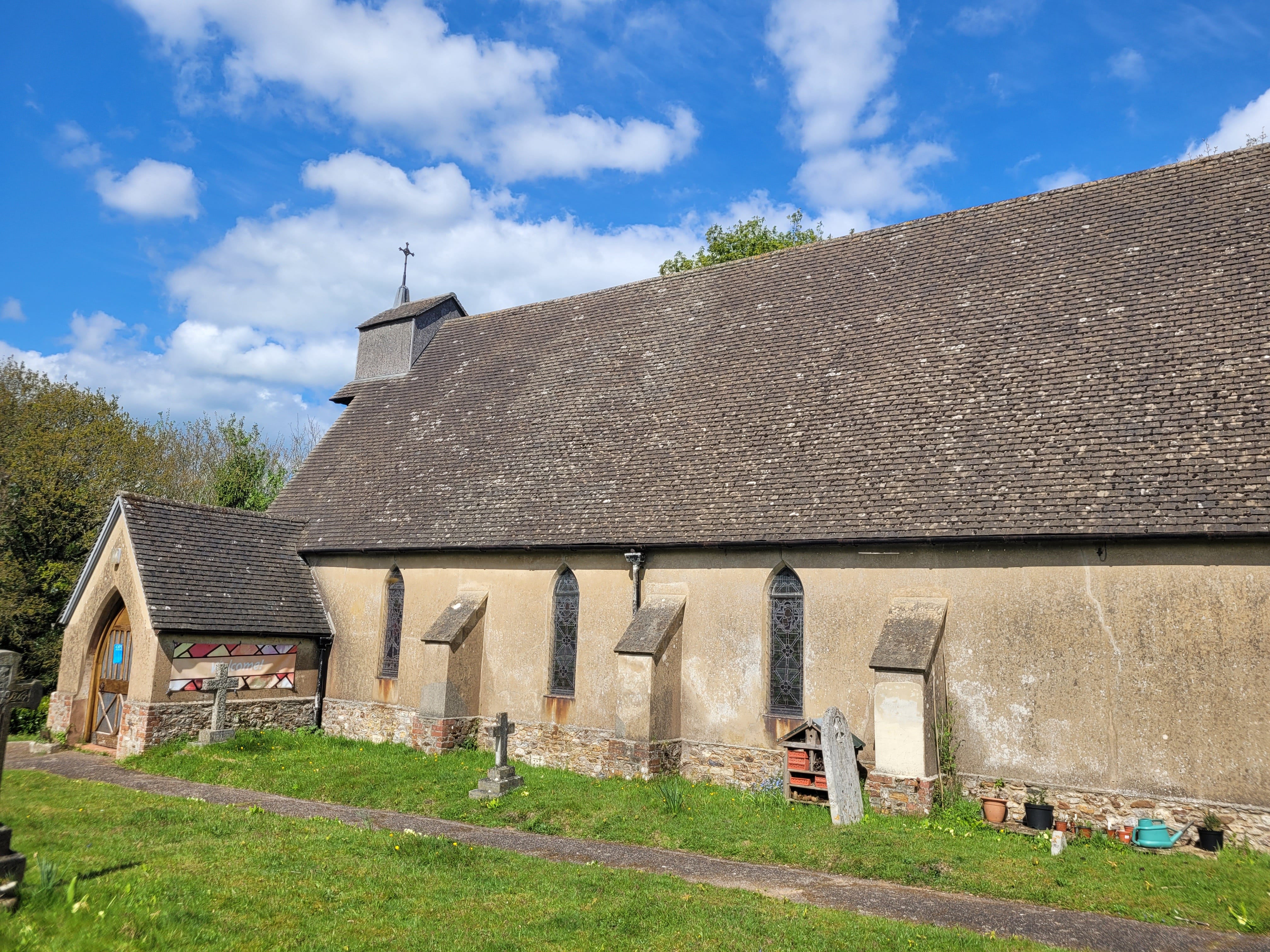
A lost wallet sent us back to Ottery St Mary via Alfington, and we took the opportunity to see another important site from Fr Coleridge’s life.
Another trip to the South West
Many readers expressed appreciation for my article last week, titled ‘How we found Fr Coleridge’s grave’.
I had been trying to find the site of Fr Henry James Coleridge SJ’s final resting place, and had narrowed it down to two possible cemeteries in Ottery St Mary. With very little to go on beyond these scraps, and some optimism and prayers, my family and I drove to the South West of England on Fr Coleridge’s anniversary in the hope of finding the grave.
That article was an anniversary post, and was accompanied by two obituaries written at the time of Fr Coleridge’s death – and featured photographs from the British Jesuit Archive (used with written permission):


The good news for those who enjoy reading such “pilgrimage posts” , like my earlier WM Review ‘Resting Roots’, is that another one is now before them.
Because while we did find Fr Coleridge’s grave… I unfortunately had lost my wallet in Ottery St Mary.
The lost wallet
After a lot of searching throughout the house, I worked out the last place I had used a card was in a farm shop cafe there (for some traditional Devonshire scones and clotted cream). I called the place on Saturday and confirmed that it was there. Thankfully, nothing had been taken from it. I said I’d call back on Monday to work out whether we could have it posted, or needed to collect it.
A minor debate ensued in the house: did I leave it in the cafe, or had Mrs Wright left it in the farm shop? I had forgotten to ask when I called them. Where it had been found would indicate who was at fault.
In the meantime… how to get the wallet back? The post would take a while, as well as being expensive and insecure. Should I go back to pick it up in person? It’s not a short journey, and I have work to be doing. The car had also been making funny noises on the last trip (concerningly high revs, sounding like it could explode at any moment…), and wouldn’t get into the garage until Tuesday.
But the rest of the week after that was jam-packed, and getting down there would be impossible.
There was nothing for it. It had to be Monday.
Mrs Wright heroically agreed to drive us down there so that I could work on my laptop during the journey. This would also give us an opportunity to ask where the wallet had been found.
So with more optimism and prayers (this time about the car), while the kids were at school and with Baby Wright in the back seat, off we went.
And we decided to make a very quick visit to another site from Fr Coleridge’s life on the way.
Alfington
Henry James Coleridge was born in Ottery St Mary, the second son of the judge Sir John Taylor Coleridge. I wrote about Ottery St Mary in the article already mentioned (including its annual flaming tar barrel tradition).
But I did not write about Alfington (or Alphington).
The Coleridges were an important family in the area, and indeed England: many gravestones in the churchyard bear the same name; the celebrated poet Samuel Taylor Coleridge (Fr Coleridge’s great-uncle) was also from the same town; the priest’s older brother, John Duke Coleridge, later became the Lord Chief Justice of England.
Given the family roots, it was natural that Henry James returned to the area.
Soon after he left Oxford – having failed to obtain a position as a Tutor at Oriel College, due in part to suspicions of impending “Romanism” – he decided to take a country curacy with the Anglican Establishment. Here is how Bishop Patterson describes it:
“Part of the parish of Ottery St. Mary, where was, and now is, the home of his family, was erected into a separate cure, and Henry Coleridge was asked to become the first curate. The Judge [Sir John Taylor Coleridge] was naturally desirous that he should be near home, and the church and parsonage were soon built with this view. Other circumstances combined to recommend this course to him.”
That “separate cure” is Alfington, a couple of miles north of Ottery St Mary.
Confusingly, there is a ward of Exeter named Alphington – and material about Fr Coleridge tells us that he was in “Alphington”. However, it seems clear that it was to Alfington that Fr Coleridge went: this small, probably medieval1 village is two miles from Ottery St Mary, whereas Alphington is about 15 miles away; and the church of St James and St Anne (and its parsonage and school) in Alfington were indeed built by Sir John Taylor Coleridge in 1849. The details matched up – although it was noticeable that Henry James Coleridge is not mentioned in any of the information about the church.
As Providence had it, Alfington was on the route to the farm shop where my wallet had been left, and only about five minutes away. So we managed to stop and take a look.
The church was off the main road, and only accessible through a very narrow road that wound around and upwards. But before long, we reached it.
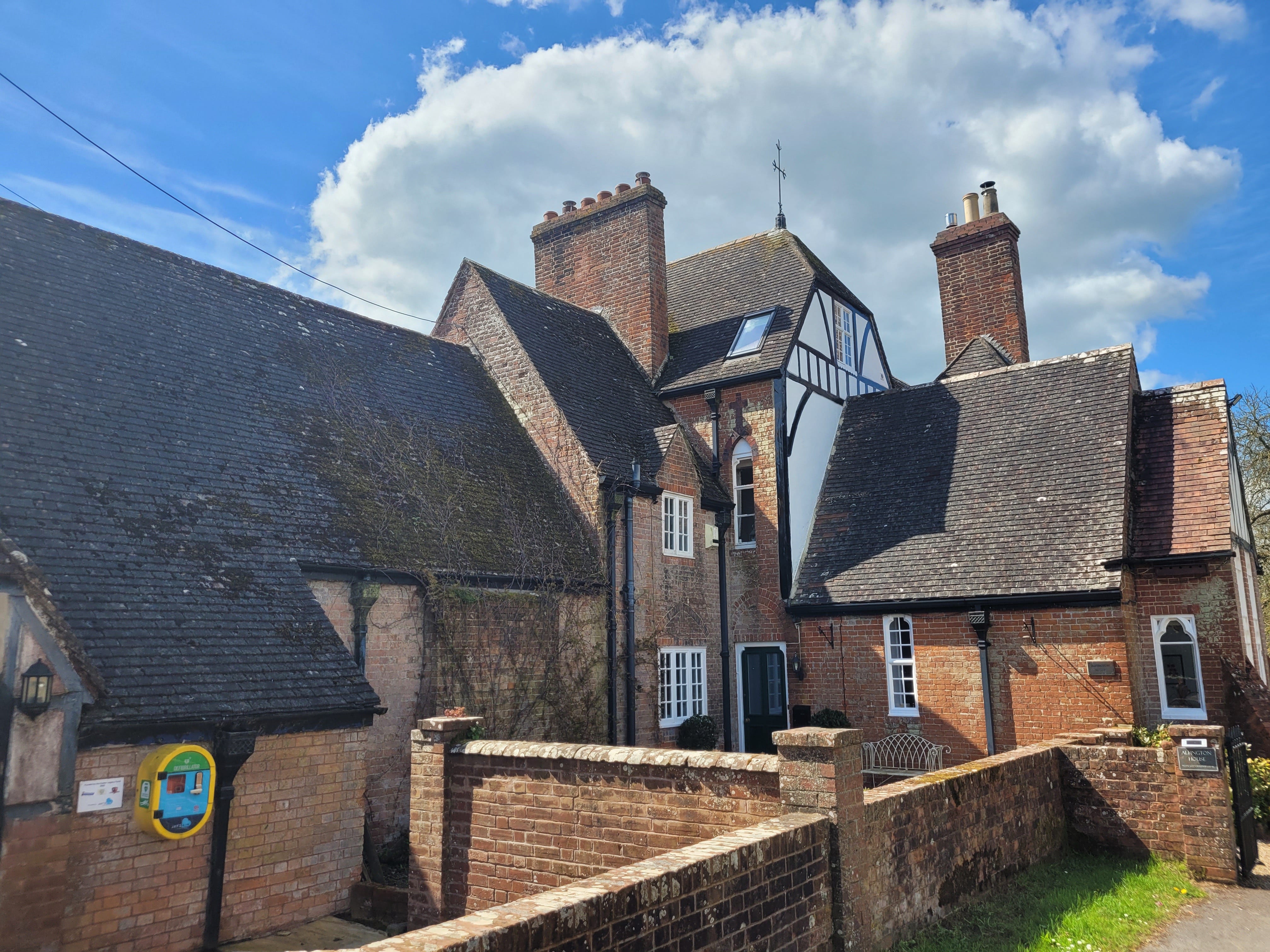
Here is the parsonage, built by Sir John Taylor Coleridge for his son:
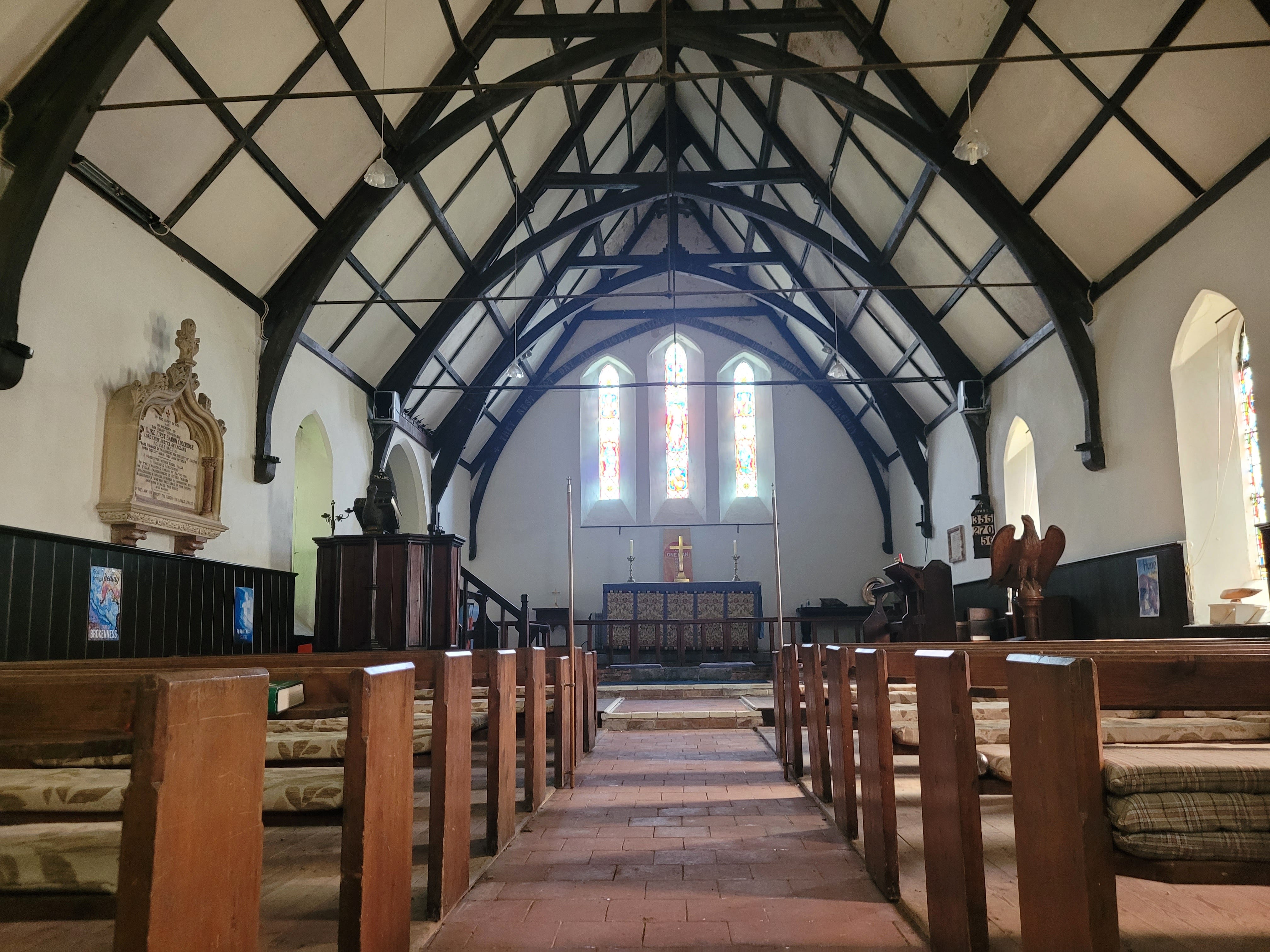
Here is the church. It does not have a beautiful exterior, as it was intended to be temporary and built with cheap materials.2
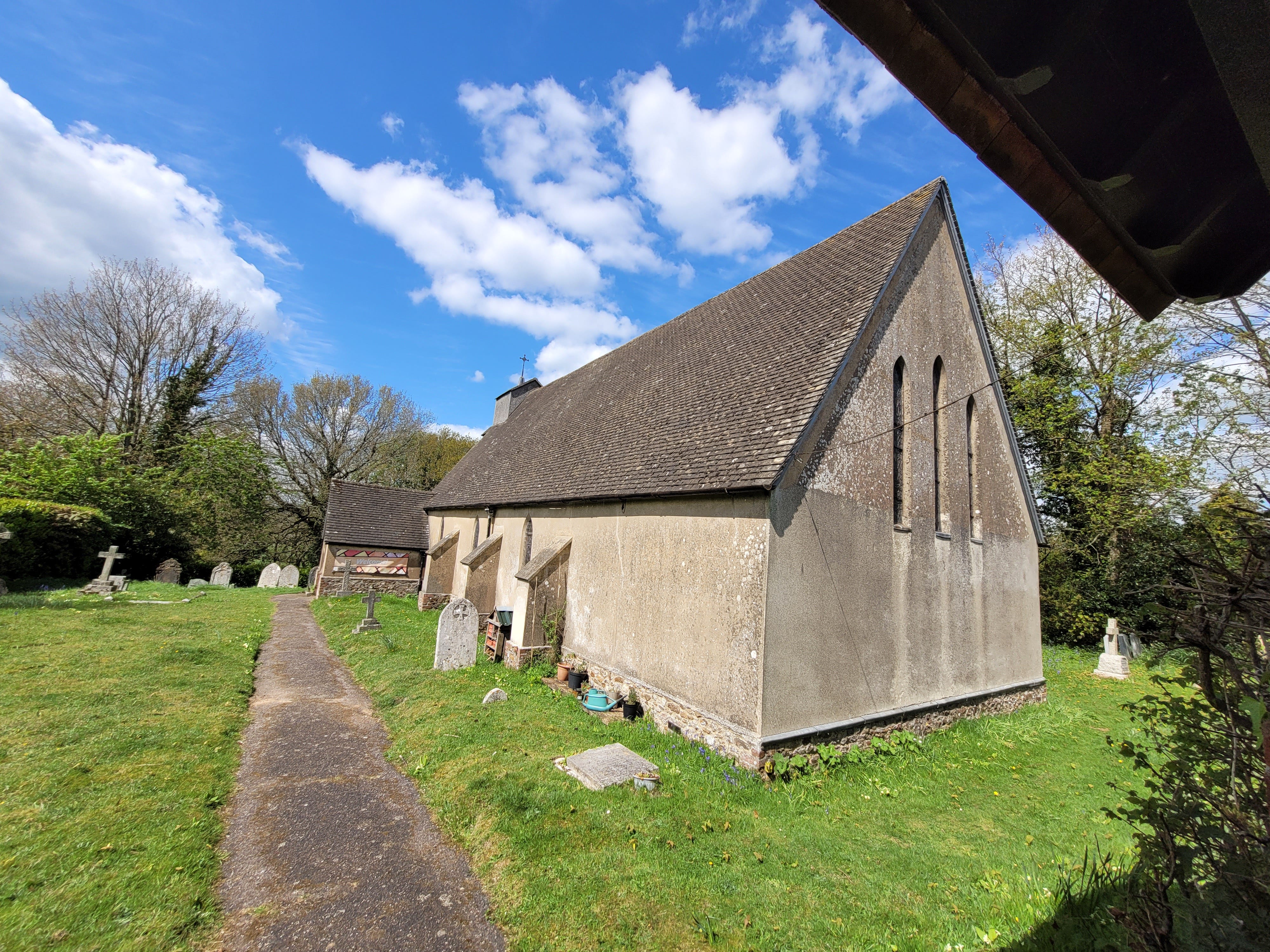
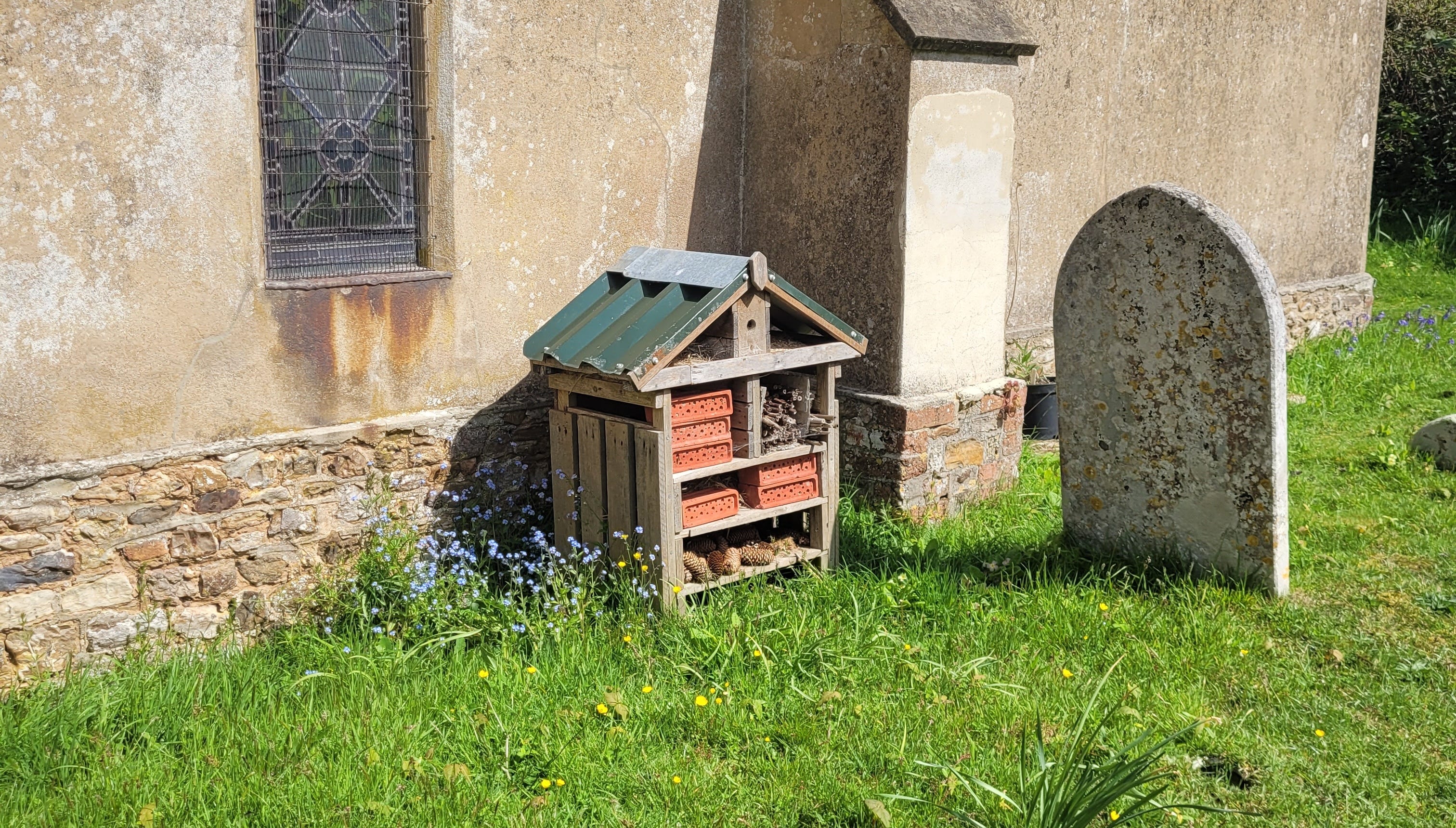
There was a beehive:
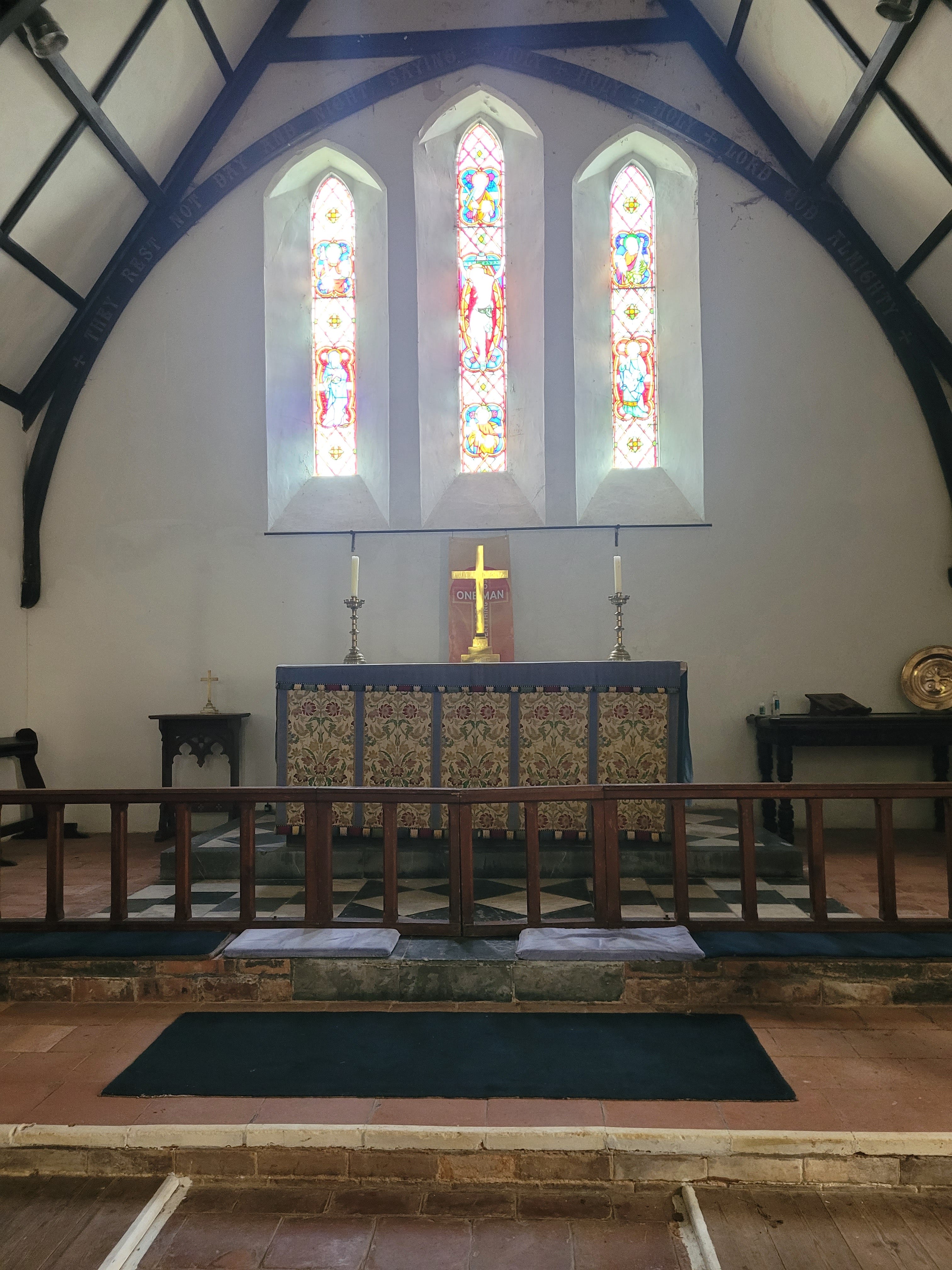
While the interior is also austere, it is much more beautiful.
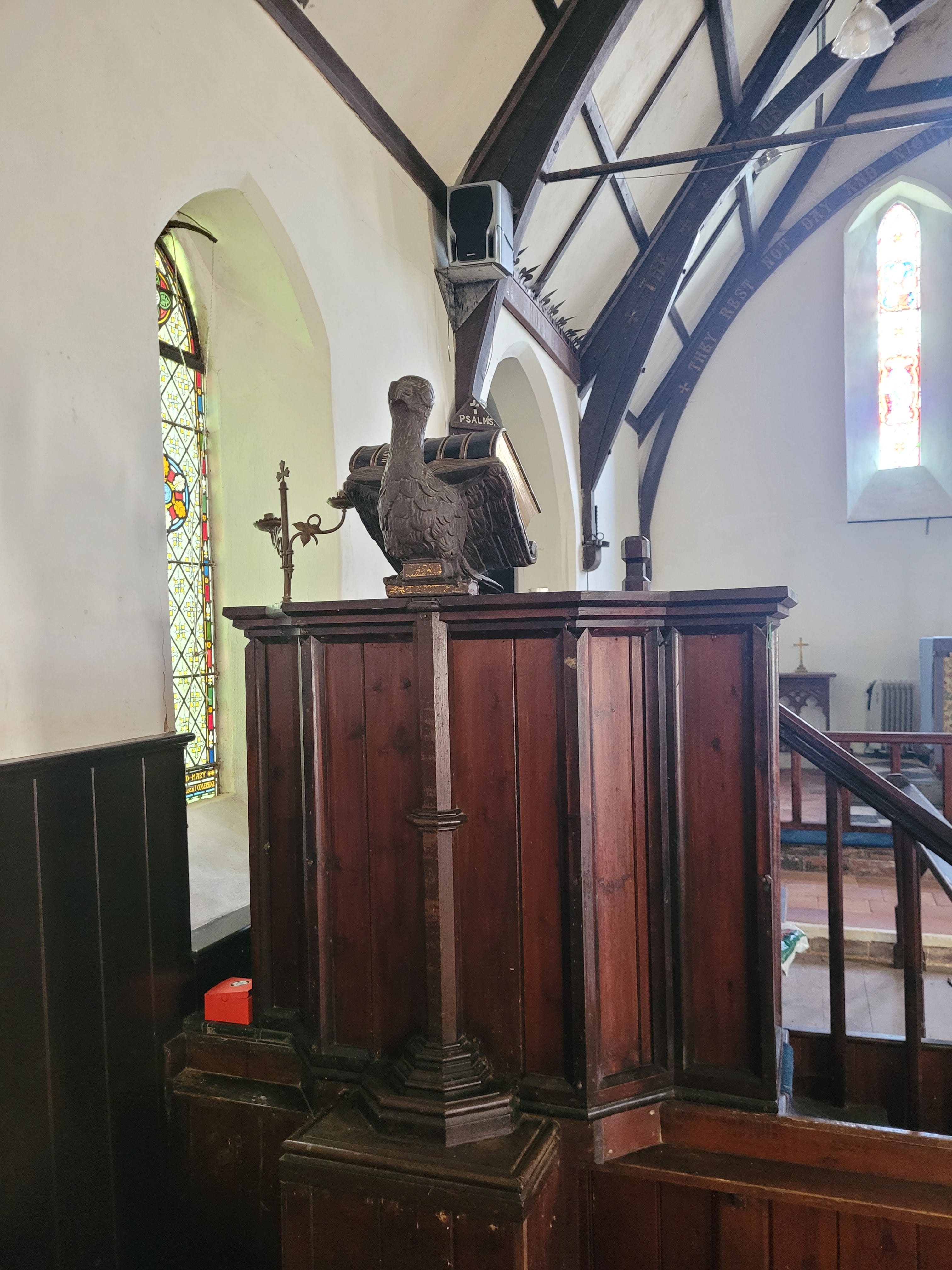
Was this the pulpit from which he preached as an Anglican?
Coleridge at Alfington
Fr Coleridge was comfortable and happy in Alfington. Here, he was able to serve God as he believed he should, and care for souls – but this comfort was to be elevated to a higher level in due course. As Fr Clarke writes in his obituary:
“During the years that elapsed between the time of his leaving Oxford and his reception into the Church, the seed that had been sown at Trinity and Oriel was springing up and growing to its full perfection. In his peaceful little parish in his beloved Devonshire, surrounded by those he loved, and engaged in the congenial work of the Christian ministry, he enjoyed an earthly happiness which made his obedience to conscience and the great sacrifice that it entailed all the more meritorious in the sight of God.”
That seed of Catholic truth, watered with faithfulness to actual graces given to him, was indeed growing – although Coleridge remained cautious. Bishop Patterson wrote:
“The sensitive sincerity of his nature shrank from affecting to be dogmatic without a distinct and final basis on which to rest such a pretension.”
Patterson presents letters showing Coleridge’s state of mind in 1849, in which he advises Patterson himself to put away doubts about the Church of England and to fulfil his duties of state:
“You have indeed a sore trial in those feelings” (of doubt as to the Anglican position), “as I have in a way, though I do not know the cost of a struggle because it is my way to yield. More blessed is your pain! I think of you often, and seem to see that you are sure to conquer, through God’s grace, and that your doubts will all tend to your perfection. It must be so, dear friend, for you fight under good guidance.”
He presents another letter to similar effect – showing how important the perceived fruits of Anglican sacraments were to Coleridge’s position:
“To speak seriously, I am inclined to give up as unholy (almost) all attempts to unchurch the Church of England. For the existence of God’s grace with her is very clearly evident, and not only this, but it is, as Dr. Pusey says, closely connected with her sacraments and ordinances. Now of this phenomenon we can only give one account to ourselves: it is the work of God. The only other alternative is, that it is the work of His enemy, imitating for the destruction of His children His gracious operations.
“If then He be with us in the sacraments, or to speak more properly, in the Church, even if He gives this grace as a means to lead persons elsewhere (as He scattered fragments of truth and light over the heathen world), yet we can only follow surely where He would lead us by these means; by clinging closely to them and using them with all our heart.”
Coleridge believed that he could content himself by “put[ting] a Catholic sense” on the Anglican Thirty-nine Articles (although Newman had been denounced for doing just that in Tract 90, in 1841):
“To doubt and criticize is at once, so far, to begin by losing our hold of His hand. Let us then cling to it, and it will lead us ‘a little further on’ if it be His will. Leaving controversy to those who can deal with it, let us try to make ourselves humble and holy… I give up my hostility to the Thirty-nine Articles as long as I am allowed to put a Catholic sense on them. My path is of course beset with difficulties and my present position full of temptations (don’t laugh at me, but pray for me), but I must do the best I can.
Coleridge concluded by offering his assurance that if one despises what appear to be unfaithful doubts, whilst remaining faithful to what light one is given by God, then doubts based on truth will persist:
“See if you can comfort yourself with the considerations which influence me. You once said something which made me fear you attached far more weight to my opinion than you should… Now at present, with all the weight that much affection, at all events, can give to such an entreaty, I do pray you to dismiss your doubts. If I have done anything towards unsettling you, I hope I have at least demolished my own authority by this palinode. […]
“God bless you, my dear friend… Scatter to the winds unfaithful doubts; if they are not unfaithful, they will come back again to us when we are more worthy of light.”
We should note that while there may be a certain truth in this, there may also be a certain complacency or presumption there as well. It is most fitting to allow Father Coleridge to contradict (or clarify) the Reverend Coleridge on this point:
“[O]ur Lord was evidently most anxious to impress on those who came across His preaching the extreme importance of closing with the graces offered to them. The time of grace was soon to pass away, perhaps never to return.
“It need not be said that an opportunity once neglected can never be recovered. But all opportunities must be taken when they occur. They pass away, and their return cannot be reckoned on.”3
His conversion
Most fortunately for Coleridge, the opportunity did not pass away altogether. Bishop Patterson writes:
“[H]is soul was not deserted by its Creator, and from time to time new circumstances stirred again the depths within him, and what he wrote in 1847, that his ‘doubts if not unfaithful would come back,’ came to pass. His peaceful home and the loving pastoral care which he gave to his flock at Alphington, much prayer, many earnest Communions, a life of quiet austerity and self-denial, of high aspirations after the more excellent way at whatever cost of human ties and interests, in a word, the unreserved surrender of self; these were the sure ways which led him on to the perfect day.”
Prompted by several events which rendered the idea of a “Catholic position in the Church of England” (or a “Via Media”) untenable – such as the condemnation of W.G. Ward and that of a sermon by Dr Pusey on the Eucharist – many began, Bishop Patterson said, “to shake the minds and wills of men out of any routine in which they may have been living more or less unconsciously.”
Some of Fr Coleridge’s friends and acquaintances became Catholics around this time. However, Patterson writes, Coleridge was the sort of man who really had to be convinced himself, and could not simply follow others on a human faith alone, or by pressure:
“He was, however, not a man to be pushed on by the force of argument, or even of example, and his answers to such appeals were always such as to show that the work of conviction could only be wrought in him by the operation of his own thought in subordination to the grace of God.”
But eventually he arrived at the conclusion:
“In April, 1852, after long and patient prayer and the very gradual surrender of one position after another, and the painful trials involved in growing divergence from his revered and beloved father’s religious opinions, and the giving up, as this seemed to involve, of all home ties and of his personal interests, he submitted to the claims of the Catholic Church, and at thirty years of age began life anew.”
Fr Clarke writes:
“But all the charms of Ottery St. Mary and its happy and peaceful life disappeared in presence of the Voice that, in the beginning of 1852, bade Henry Coleridge go forth from the country that he loved, and from the kindred that he held so dear, and out of his father’s house that had been so happy a home to him from his childhood upwards, and turn his steps to the unknown land which God was showing him.”
“In the spring of 1852,” writes the friend and contemporary whom I have already quoted, “I had been a Catholic for two and a half years, and was living at my father’s house in Portman Square, when I received a message from Father Coleridge asking me to call upon him. I found him in a most prostrate and helpless condition. He had fully resolved to seek admission into the Church, and had detached himself from all his connections and obligations at Oxford and elsewhere, and had announced his intention to his family. But he knew nothing of the existing Church in England, and did not know how to act, or which way to turn, in order to effect his purpose.
“At my suggestion we made an eight days’ retreat together under Father Douglas, during which Father Coleridge was received into the Church and had time and quiet to review his position.”
Time in Alfington drawing to a close – relations with his family
After his conversion, he said that he had remained in Alphington for the sake of his father. After he left Alfington and Ottery St Mary, he made his way to Rome to prepare for the priesthood. In 1852, he wrote to Patterson from Rome:
“I cannot quite tell when it was that I resolved that nothing should any longer hinder me from laying aside all that kept me from the Church of Rome, giving up Alphington and my fellowship, and, after a short interval of rest and quiet, doing what you have done.
“I have never been unhappy since; and though I have had much sorrow to go through (and may have some more) and have met with great opposition, all has only confirmed my conviction and strengthened my purpose… My sister had a most severe illness, and the trouble and anxiety of that time delayed me a little, as I did not wish my father should have so much on his mind at once.
“He has been the great cause of my staying so long at Alphington, and now it has been a most severe blow to him that I have gone. He has built (against my wish) a very nice house, school-house and school, close to the little church which you remember… Nothing could be more happy than my place there. I was so fond of the people and of their children, and they had thoroughly given me their hearts. However, I made up my mind to leave before Lent, and parted with them at Quinquagesima… Well, that parting is over, and another with my dear cousins at the Manor House, and here I am at home at last, where I mean to remain, not so much to make up my mind—that is already done—as to prepare myself by quiet and thought for a new life.
“The state of mind of my father and mother is a great grief to me, but prayer is a comfort, and I know that God’s ways are wonderful, and that He can change the most settled prejudices by the power of His grace. They wish me to go abroad, … but I do not wish to act in any way as if influenced by the better condition of (Catholic) things abroad, but only by the one fact that the English Church is not in communion with the centre of Unity.”
His family came to terms with his conversion, as he later wrote:
“My father was much hurt for some time because I could not join in family prayers, but now he seems much less put out, and can even speak without a sigh of my going to Mass or sermon.
“In fact it is not as he had expected, for he had conjured up all sorts of visions of conspiracies and dark designs against all the rest of the family which I was to be for ever practising; and he thought he himself would be publicly assailed as a Romanizer, whereas people take very little notice of the matter. I think the fuss about family prayers is rather a good thing; though it pains me to pain him in any way, it is a continual memento of the claims of the Church.”
By the time of his departure from Anglican ministry, Sir John Taylor Coleridge seems to have come to terms with it. The Irish Monthly presents comments from his father’s journal:
“On Quinquagesima Sunday, February 22, 1852, Henry Coleridge gave up his post at Alfington. His father writes in his journal under that date: ‘To-day he closes his Alfington ministry, and a trying day it will be for him, but I trust he will be supported.’
“His brother writes to his father on Ash Wednesday: ‘It must have been a moving scene at Alfington, and I should like to have been there. He leaves in peace with every one, which is a great comfort, and no one can say of him that he secedes because he did not work, or got on badly with his people.’”4
Fr Coleridge also maintained a good relationship with his brother. Following an 1863 visit to their elderly father, Lord Coleridge wrote:
“My brother’s visit did him great good. We had not been together for many years, and my brother was so gentle and good and so carefully avoided anything that could give pain that, save for its shortness, the visit had really no drawbacks.
“The more I see and hear of the Jesuits, the more I am impressed with their general superiority and freedom from nonsense. I always did rejoice that, if my brother must be a Roman Catholic and must be in an Order, he chose the Jesuit Order rather than any more modern one.”5
When we consider the prejudice against the Society of Jesus in England, Lord Coleridge’s comments are very striking. He was later reproached in court, as The Irish Monthly recounts:
“In the famous Tichborne trial the Claimant, while being examined by Coleridge (then Solicitor-General), said sneeringly, ‘You appear to be very innocent, considering that your brother is a Jesuit.’ While protesting against the insult, Coleridge confessed ‘the highest love and regard and veneration’ for his brother.
“Father Coleridge the same evening wrote to “my dearest John” a note in which he speaks of “the tender love that there is between us, and which I trust will go on deepening always, and which is one of the greatest blessings and happinesses of my life.”6
The Coleridges at Alfington
The church was not only built by the Coleridges, but also maintained at their expense. There are many mentions to the Coleridges throughout the church.
Fr Coleridge’s brother has a memorial there:
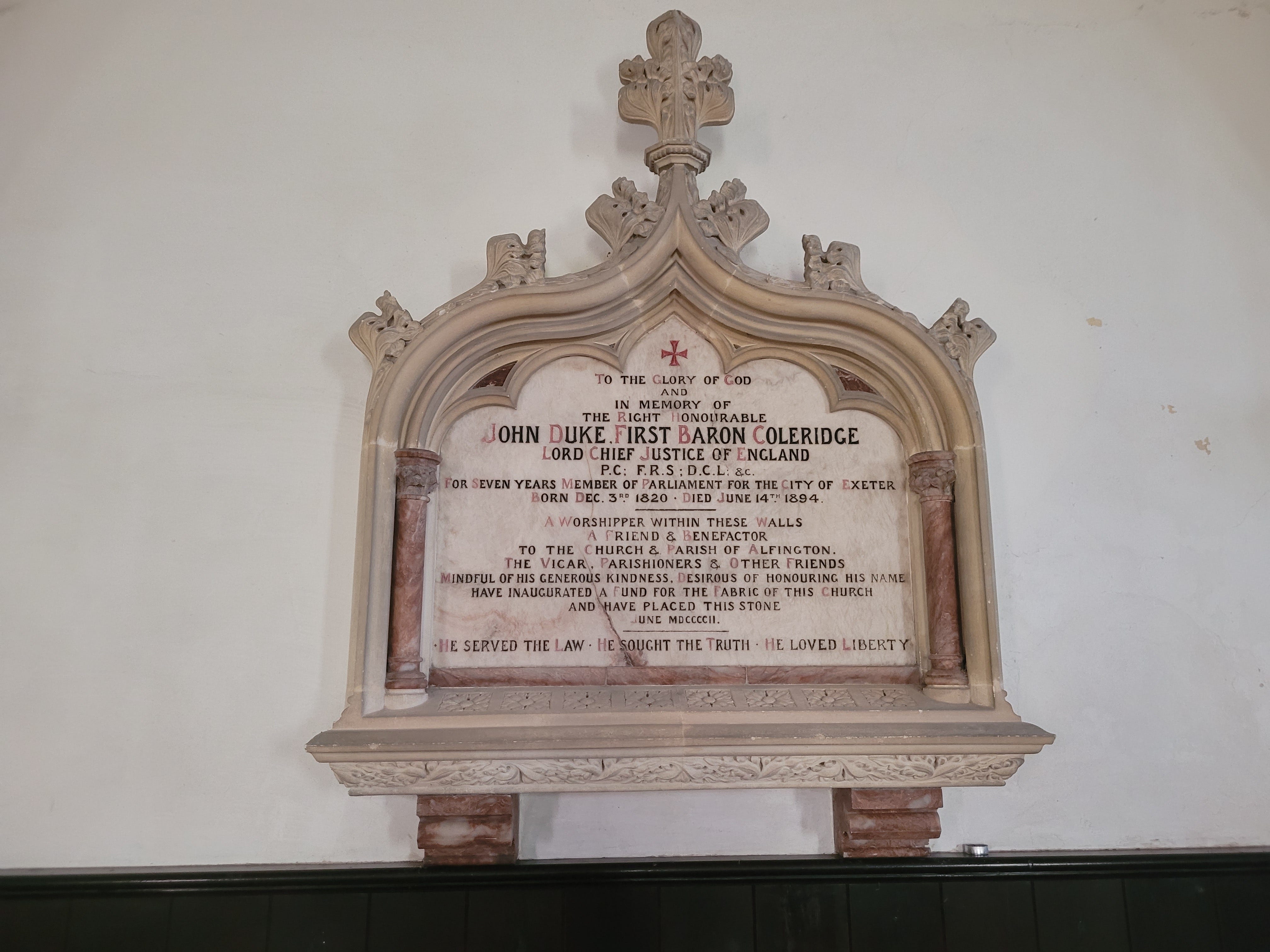
Coleridges are also mentioned on the stained glass windows.
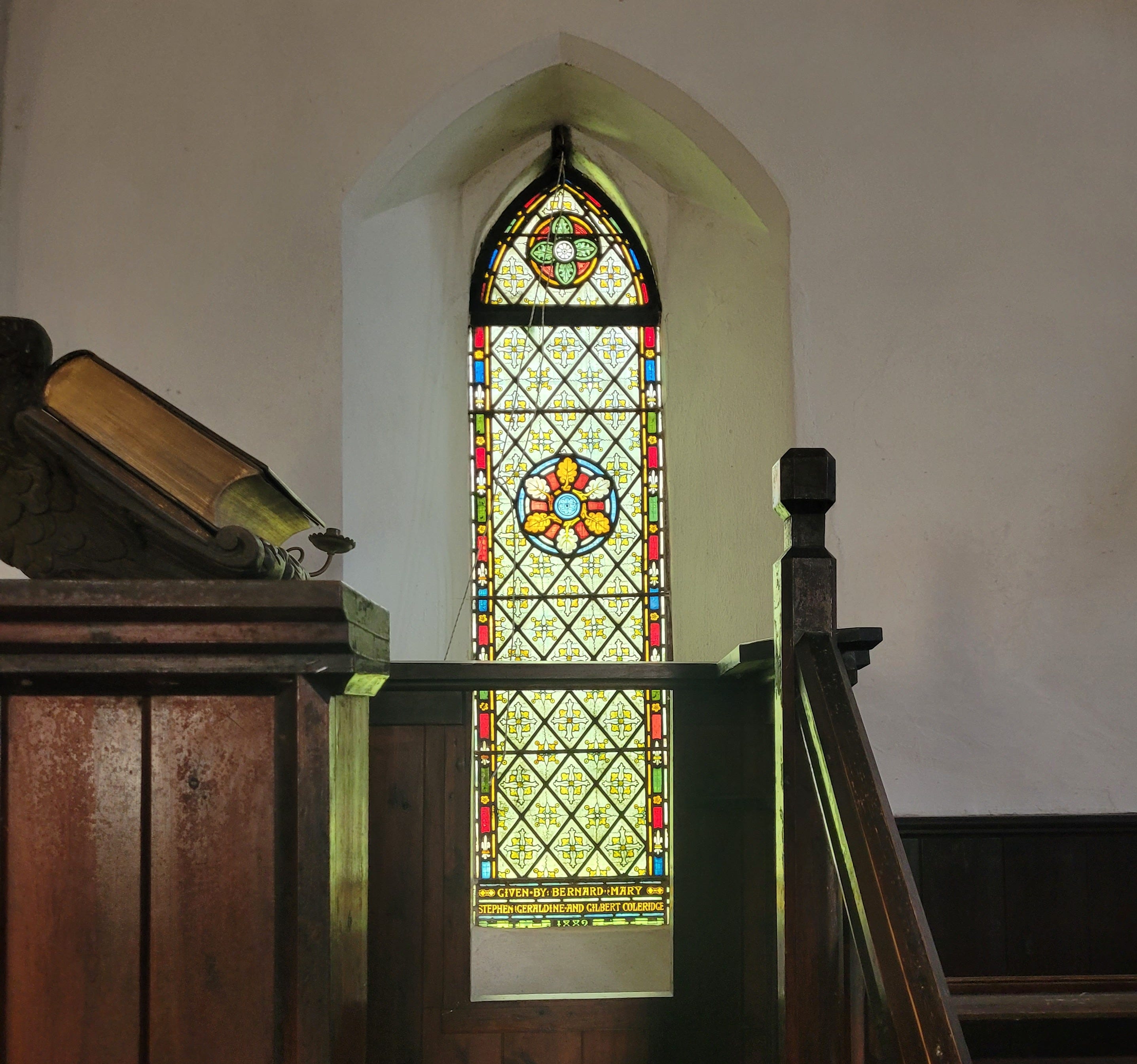
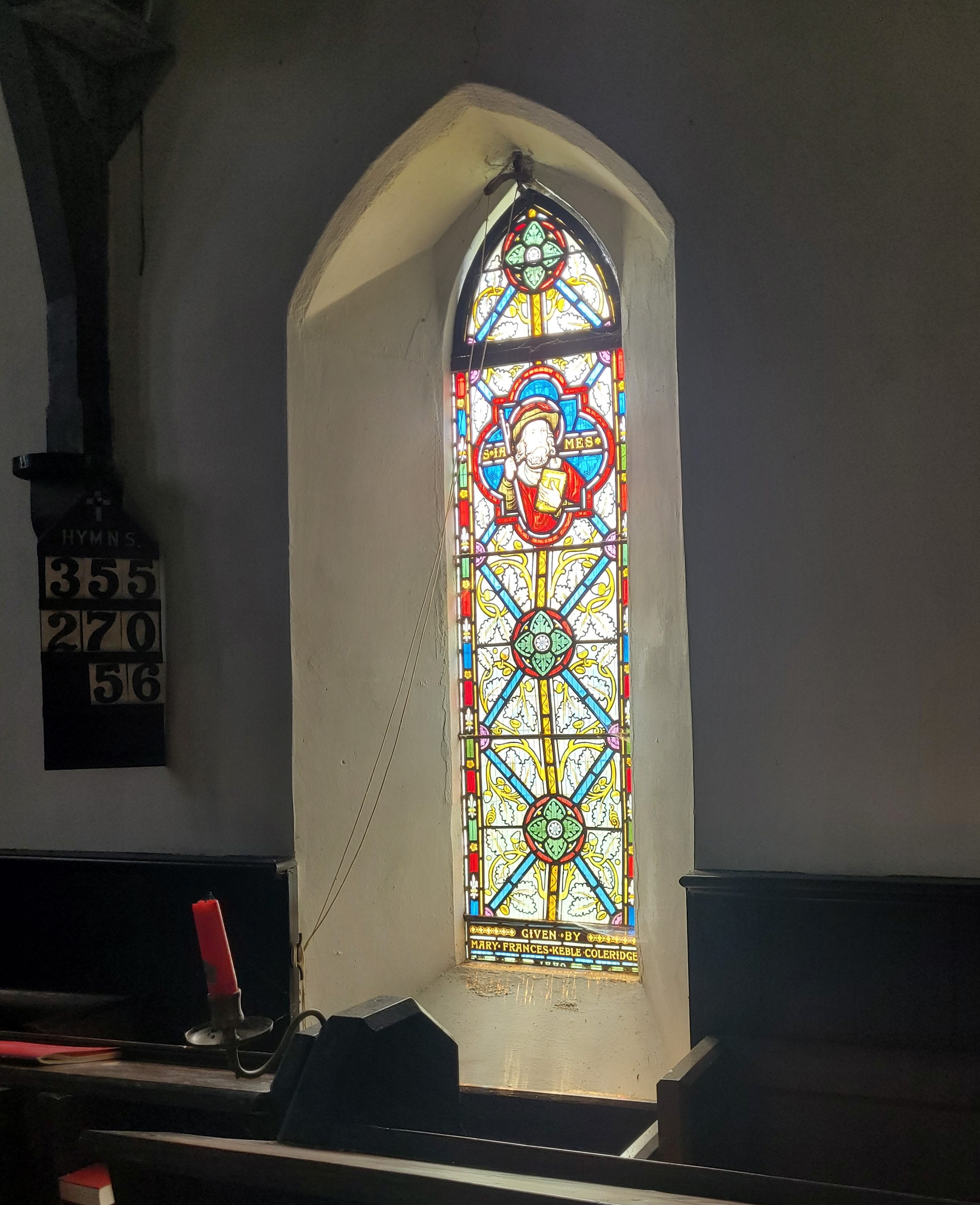
But another famous Coleridge is mentioned throughout St James and St Anne’s.
‘Bishop’ John Coleridge Patteson, The Anglican ‘Martyr’
The church contained more than one reference to John Coleridge Patteson (no relation to Bishop Patterson, cited throughout this piece).
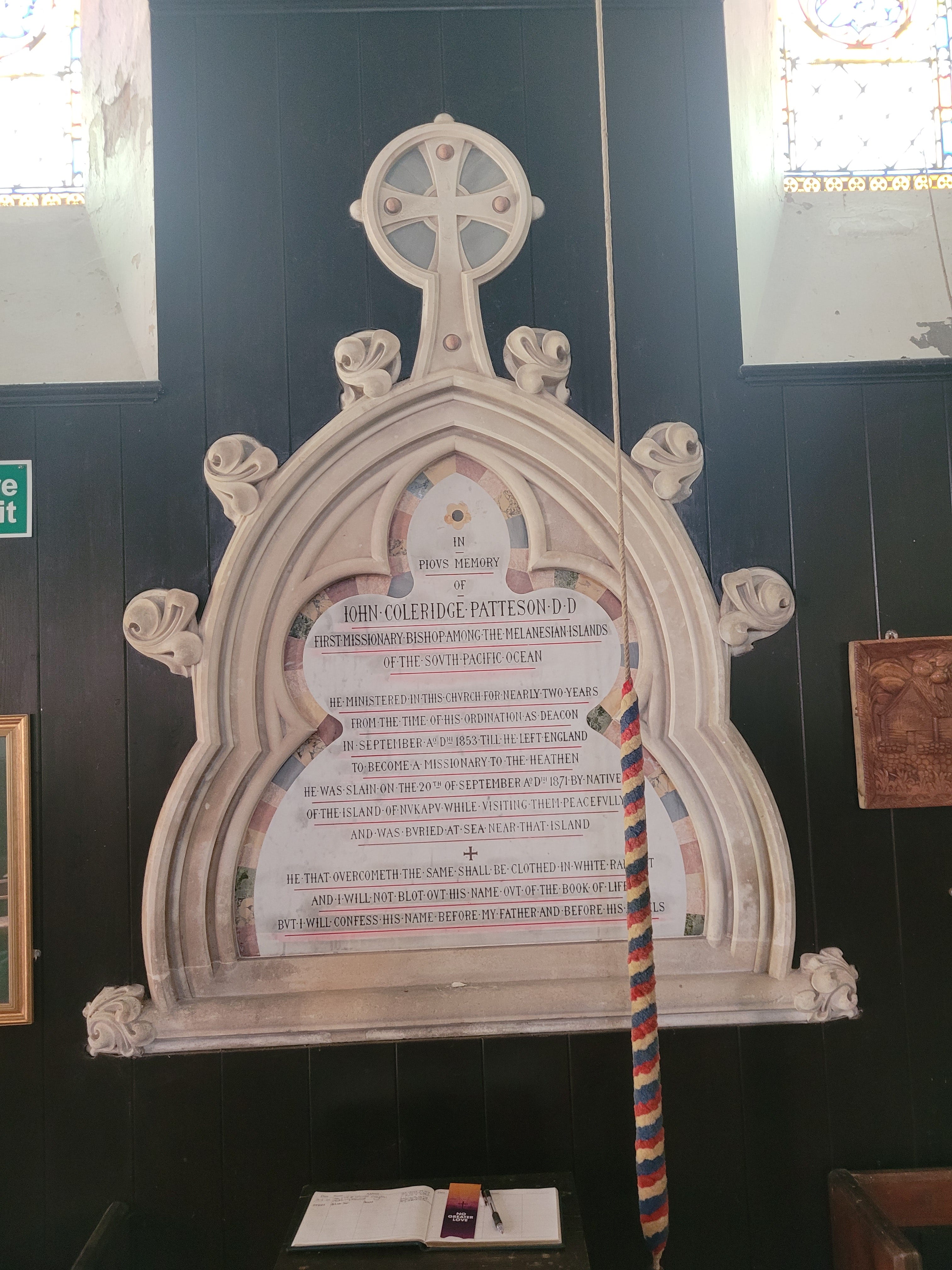
Coleridge Patteson succeeded Fr Coleridge as curate at Alphington. Fr Coleridge expected that this would happen. He wrote this in 1852:
“… Coleridge Patteson, whom you remember at Balliol, may possibly succeed me at Alphington, as we have all been wishing. He is a most sweet and excellent fellow, and though his travels and sojourn at Rome has not made him a Catholic, he is such a modest, quiet person, that I can expect anything of him by and bye, by God’s mercy.
“Anyhow, he is the man of all others I wish to succeed me, for the sake at all events of the temporal wants of my dear people and children. I know he will go on quietly and plainly without troubling them with violent anti-Catholicism… Yesterday I resigned my fellowship: so they will put me in the Times soon… Will you thank Manning for his great kindness to us all?”1
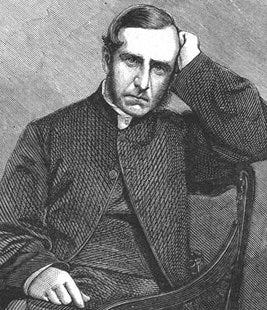
Coleridge Patteson never became a Catholic. An outstanding linguist and sailor, he went on mission work for the Church of England in the Pacific Islands, and was late made the Anglican Bishop of Melanesia. One of his methods was bringing Melanesian students to a school where they would be taught skills and the basics of the Anglican religion. They would return to their homes as teachers of both.
This strategy did not lead to any great success – as is typical. As Cardinal Billot wrote:
“[O]ne must well acknowledge that from the moment when the Protestants, especially the Anglicans, jealous of the striking successes of Catholicism, began to undertake missions to convert the infidels, they obtained no positive result.”7
One cannot help but feel sorry for well-intentioned men, as Coleridge Patteson seems to have been, whose ministries are rendered sterile by their separation from the true Church of Christ.
Meanwhile, an illegal trade known as “blackbirding” had emerged. Although the slave trade had been abolished in the British Empire, this “labour recruitment” practice saw the inhabitants of the Pacific Islands and elsewhere were kidnapped or tricked into indentured service by sailors. One method was posing as missionaries, before forcing Islanders onto the boats. This in turn resulted in reprisals against the actual missionaries.
Coleridge Patteson – with a missionary method with certain external similarities to the blackbirders’ trade – was a very high profile example of this. Despite steps taken to regulate labour recruitment, he was murdered on the island of Nupaku.
It is not entirely clear what happened, or why: the murder was commonly taken to be a reprisal for the blackbirding of five men from the island.
He had been welcomed onto the island on a canoe, leaving other shipmen aboard another ship. His body was found with a shattered skull, likely from a club; the top of his head had also been cut open. A contemporary account also describes how his body had been pierced with arrows after the death – in such a way as to indicate the customary sign of a revenge killing. His body was found in a canoe at sea, stripped except for his boots and stockings, wrapped in mats.
After his body was found, the population of the island appeared on the shore to shout, before disappearing from view. This was taken as an indicating of collective responsibility for a revenge killing.
A few years later, alternative theories were appearing. A Nukapu man claimed that one man had killed Coleridge Patteson, and had been punished; the body had been washed by the women of the island, and the placing in the canoe was taken as a mark of respect. Another theory, based on a Nukapan account, held that the Nukapans did not like Coleridge Patteson’s visits and requests for young men to go to his schools, and so eventually killed him to put a stop to it.
There are other explanations as to what may have happened (such as violations of rankings among the Nukapans), and it seems unlikely that the truth will ever be known.
But one thing is notable. Aside from the much later theory about his missionary methods, few of the accounts seem to indicate that he was killed “in hatred of the faith” – even for the Anglican faith.
In spite of this, he has been treated as a martyr by the “Established Church”. The Alfington church contained memorials to Coleridge Patteson and his “martyrdom”.
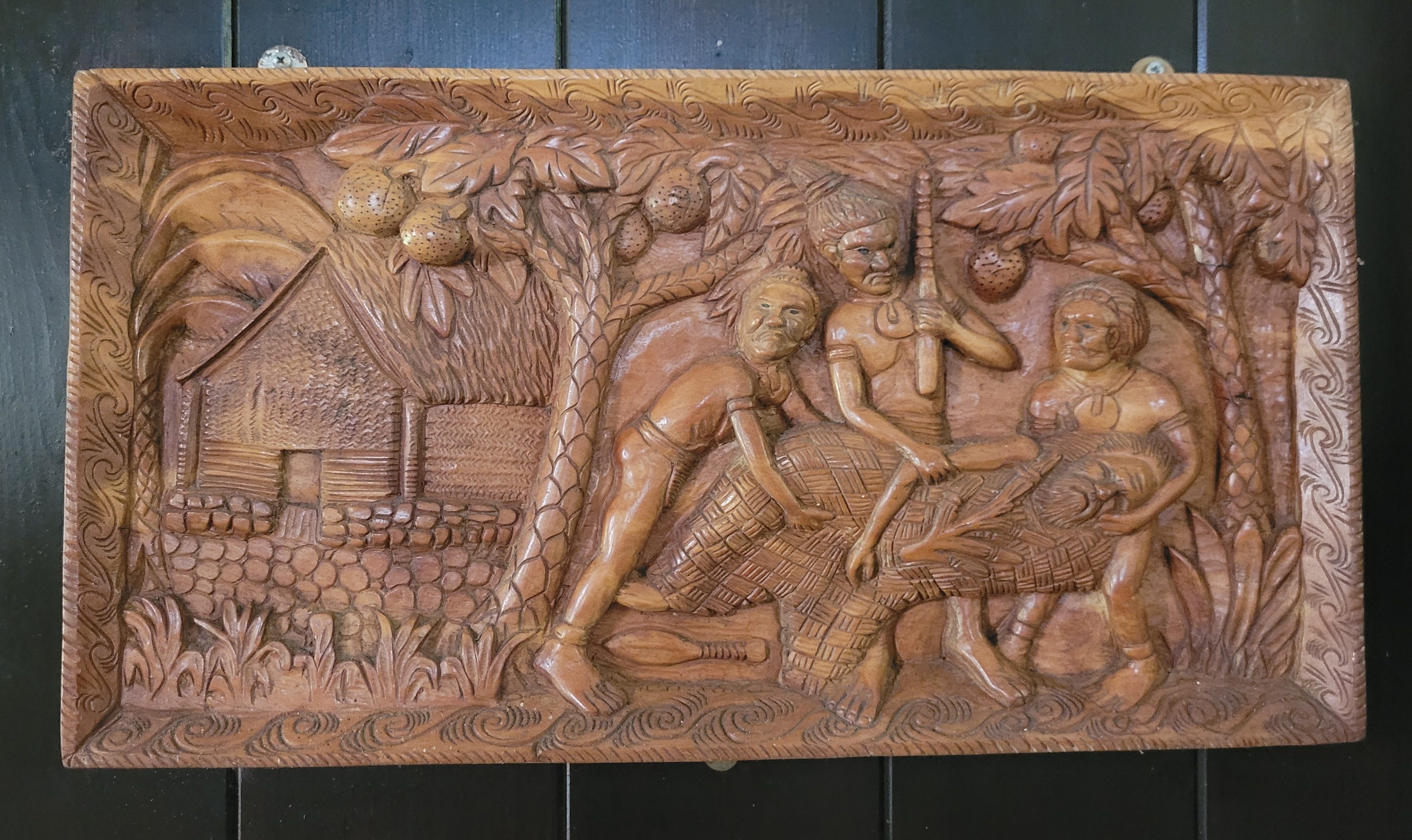
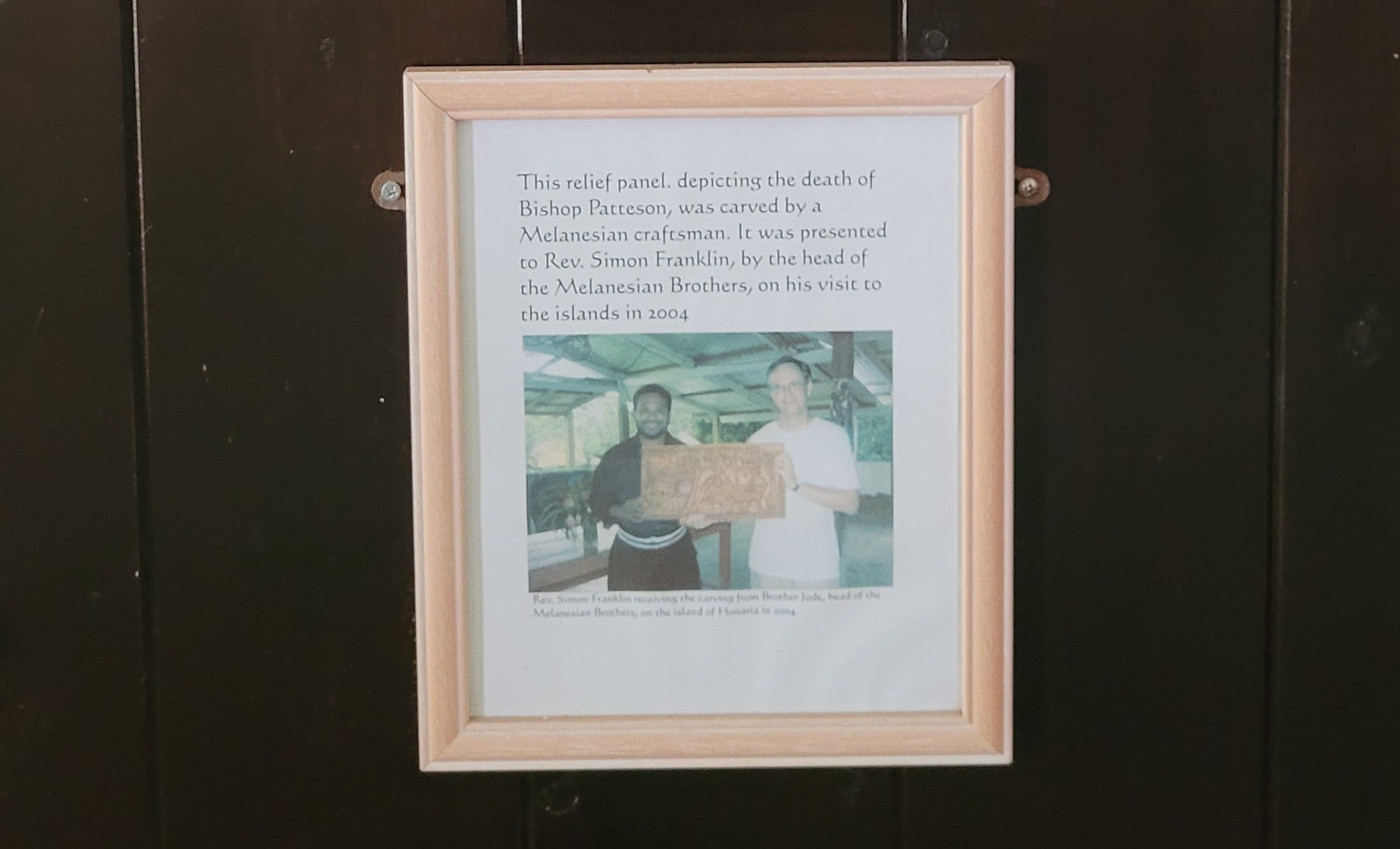
But whether or not he was a martyr for the Anglican religion, or for the Gospel in a broad sense, he was certainly a martyr for the abolition of blackbirding: his death caused an outcry in England, and led to laws that prohibited the trade.
In fact, David Hilliard argues that his death was instrumentalised for political motives from the start, and that the revenge theory was “born not out of investigation into the actions of the Nukapu people themselves, but out of a desire to condemn the activities of labour recruiters.”8
Fr Coleridge’s high estimation of his cousin must count for something in natural terms, and his separation from the church makes this loss of life tragic, rather than glorious.
Readers may consult what Pope Benedict XIV had to say about the possibility “non-Catholic martyrs” here:
Conclusion: The Farm Shop
After our very rapid visit to St James and St Anne’s, we got to the farm shop to retrieve my wallet.
Given that we had to get back to pick up the other little Wrights from school, there was no time to do anything else except buy some traditional Devonshire pasties and some coffees, while the manager went to the safe.
I’m pleased to say that we managed to get back in time, and without the car breaking down or exploding. (Update 21 April 2026: Turns out it was a failing wheel bearing. This can be pretty dangerous. A long drive like this with a car in such a state is really not advised.)
But before signing off, I am obliged to note: after passing the test of correctly reciting the name and address on my driving licence, I asked the manager whether she knew where in the establishment my wallet had been found.
It had been left in the cafe.
Here’s why you should subscribe to The Father Coleridge Reader and share with others:
Fr Coleridge provides solid explanations of the entirety of the Gospel
His work is full of doctrine and piety, and is highly credible
He gives a clear trajectory of the life of Christ, its drama and all its stages—increasing our appreciation and admiration for the God-Man.
If more Catholics knew about works like Coleridge’s, then other works based on sentimentality and dubious private revelations would be much less attractive.
But sourcing and curating the texts, cleaning up scans, and editing them for online reading is a labour of love, and takes a lot of time.
Will you lend us a hand and hit subscribe?
Follow our projects on Twitter, YouTube and Telegram:
Twitter (The WM Review)

Henry James Coleridge, Priest of the Society of Jesus Source: The Irish Monthly, Vol. 39, No. 460 (Oct., 1911), pp. 545, Published by: Irish Jesuit Province. Stable URL: https://www.jstor.org/stable/20503082
Ibid., p. 548
Ibid.
Billot continues:
We have the demonstration of this in the essay by Cardinal Wiseman, already cited, and entitled On the Successes Obtained by the Catholic Rule of Faith in the Conversion of the Pagans. This well-known author therein examines the means employed, the great number of workers, the considerable expenses, the external supports with which the missionaries are abundantly provided, the state of the countries where they most often reside and which depend on the British Empire or are at least placed under its protectorate, the great reinforcement of newspapers, free schools, gratuities, and so forth.
He shows that, if one examines the results of this enterprise, relying solely on the authentic testimonies that were sent to the Bible societies, one must arrive at the following conclusion: in the East Indies, one finds scarcely a tiny number of converts, and who have embraced Protestantism either because they have been rejected by their own co-religionists or because they have been attracted by the hope of an easier life, while the Protestant ministers have let themselves be discouraged in the face of insurmountable difficulties.
The reports of these missionaries almost never speak of conversions and dwell at length on insisting on the hope of a future success, by means of which one sees ever more clearly from day to day the sterility of their sect, which yet possesses a husband, insofar as it is provided with an abundance of human means; and it turns out that this sterility obeys an inexorable law, and that it is verified not only in one or another part of the earth, but throughout the whole world. One can cite among other examples that of those inhabitants of the islands who appealed to the missionaries, because they had observed that Christianity surpassed the other religions; instructed by the Protestants, they went from bad to worse and found themselves led to shake off the intolerable yoke of the sect.
Moreover, if one believes the rumours that circulate just about everywhere, and which seem quite credible if one takes into account their constancy and their universality, it is clear that the Protestant missionaries are in no way distinguished from those false apostles, already stigmatised in his time by Tertullian: “What shall I say of their preaching? They do not have at heart to convert the pagans, but to pervert our faithful; they place their glory in overthrowing those who are standing, instead of raising up those who have fallen. I am not surprised at this; they cannot raise themselves except upon the ruins of the truth; this is why they strive to bring down our Church in order to build their own.”
St Augustine had already also noted this property of heresy, when he compared the preachers of these sects to partridges, which seize the young of other birds, instead of engendering their own.
This was from its very beginnings the attitude followed by Protestantism: in the different states where it held mastery of the seas, it preferred to use this advantage to destroy the Catholic missions, rather than to spread the faith of Christ among the pagans. But today the circumstances have changed; it is by distributing books and proposing temporal advantages that they strive to bring down our Church in order to build their own. But in truth, this is only a palliative that does not truly remedy their sterility.
David Hilliard, ‘The Making of an Anglican Martyr’, p. 69. Studies in Church History , Volume 30: Martyrs and Martyrologies , 1993 , pp. 333 - 345 DOI: https://doi.org/10.1017/S0424208400011803. Cited in Thorgier Kolshus, ‘Reassessing the death of Bishop John Coleridge Patteson’, Journal of Pacific History, Vol. 45, No. 3 (DECEMBER 2010), pp. 331-355 (25 pages) Published By: Taylor & Francis https://www.jstor.org/stable/25764419
The answers are within!
Awaiting with bated breath to see 1. If the wallet was found 2. Who's fault it was.