

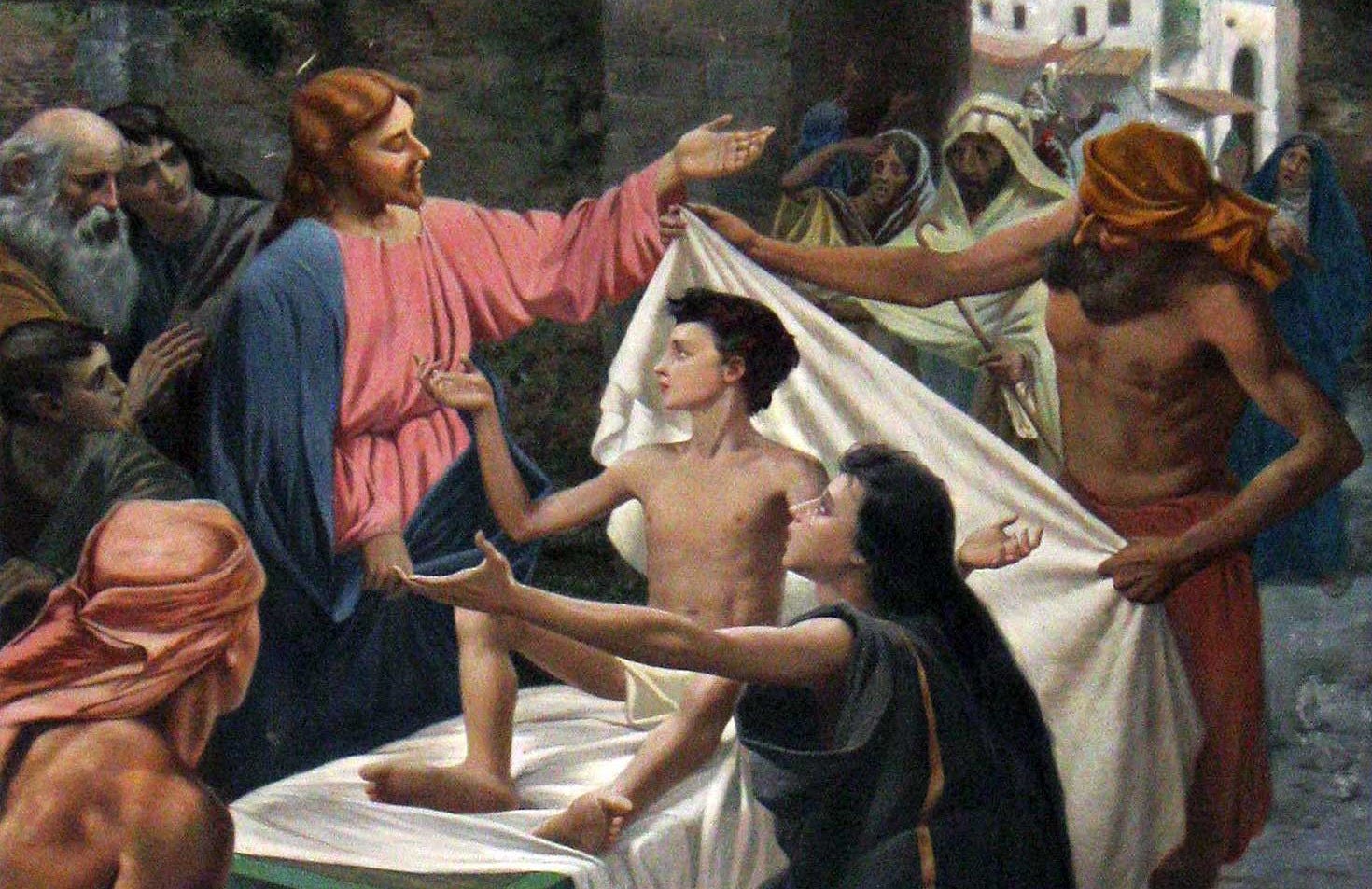
Our Lord’s raising of the widow’s son at Naim has personal significance for every one of us. PLUS: a curious excursion into Freemasonry, and what it reveals about the anti-Newman myth.
Editor’s Notes
On the Fifteenth Sunday after Pentecost, the Church reads St Luke’s account of Our Lord raising the widow of Naim’s son.
“At that time, Jesus went to a town called Naim; and His disciples and a large crowd went with Him. And as He drew near the gate of the town, behold, a dead man was being carried out, the only son of his mother, and she was a widow; and a large gathering from the town was with her.
“And the Lord, seeing her, had compassion on her, and said to her, Do not weep. And He went up and touched the stretcher; and the bearers stood still. And He said, Young man, I say to you, arise. And he who was dead, sat up, and began to speak. And He gave him to his mother.
“But fear seized upon all, and they began to glorify God, saying, A great prophet has risen among us, and God has visited His people.”
(Luke 7:11-16)
In some modern texts, “Naim” is often rendered as “Nain”.
This occurred during a preaching tour of Galilee, soon after the healing of the centurion’s servant, and before the embassy of St John the Baptist’s disciples.
There are only three accounts of Christ raising the dead, namely the widow’s son, Jairus’ daughter, and Lazarus. In this first such miracle, Christ manifests his power over life and death without being asked, foreshadowing greater resurrections to come.
Anecdote: ‘The Widow’s Son’, Freemasonry, Oscar Wilde, Manning and Newman
In passing, let us share an an interesting anecdote about “the widow’s son”, and the role this concept plays in Freemasonry.
While the term might allude to the Gospel, in Freemasonry, it refers to Hiram Abiff, the central character in the sect’s ritual. The phrase “Is there no help for the widow’s son?” is allegedly a key phrase in the ritual of the third degree of master mason, and the ultimate masonic “distress signal,” which no freemason may ignore.
Oscar Wilde gave testimony to this in an account of his life in prison:
“As I was walking round the yard one day I noticed that one of the men awaiting trial was signaling to me by Masonic sign. I paid no attention until he made me the sign of the widow’s son, which no mason can ignore. He managed to convey a note to me. I found he was in for fraud of some kind and anxious that I should get my friends to petition for his release. He was quite mad, poor fellow. As he would always insist on signaling and I was afraid the warders would get to notice it, I persuaded Major Nelson to let me wear black goggles until he was convicted and sent to Portland.”
This is not the only masonic phrase that appears to refer to Christianity, and is liable to deceive the uninitated. The freemason Yasha Beresiner gives another example, again in relation to Wilde:
“‘J & B’ are interpreted by Oscar, at the instigation of [J.E.C.] Bodley, as ‘St John the Baptist,’ on which Oscar, in his maiden speech to the Brethren and other non-Masonic guests, says:
‘… I have heard that St J(ohn) the B(aptist) was the founder of this order. I hope we shall emulate his life but not his death – I mean we ought to keep our heads!’
“His comments and wit are responded to with ‘Yells of laughter’. Scholars have been at a loss to understand why Oscar’s comments should have caused ‘Yells of laughter’, as recorded by Bodley in his diary.
“The explanation may lie in that the Masons present would have appreciated the substitution and thus the misinterpretation of the letters J & B as referring to John the Baptist’s. The words used in the Masonic ritual refer to the two pillars in King Solomon’s Temple as described 1 Kings 7:15-22:
‘...He erected the pillars at the portico of the temple. The pillar to the south he named Jakin and the one to the north Boaz The capitals on top were in the shape of lilies. And so the work on the pillars was completed’.
“Oscar himself will have remained unaware, having only gone through one single ceremony, of the correct words used in the ritual and thus his reference to John the Baptist will have been all the more amusing to those familiar with the correct wording.”
J.E.C. Bodley, who is mentioned as deceiving Wilde as to the meaning of these letters, was also responsible for initiating Wilde into Freemasonry in 1875.
This same Bodley wrote a biography of Henry Edward Cardinal Manning, and has been described by Roy Jenkins as “almost certainly [Manning’s] most intimate non-Catholic friend.” This biography seems to be the only source for the claim that Manning believed Cardinal Newman, Fr Coleridge’s friend and associate, to be guilty of “ten distinct heresies.”
This same biography also praised Manning for allegedly being uninterested in securing converts to the Catholic Church, partisan loyalty as an Anglican, and for “unreserved liberality” on the topic of the dogma outside the Church there is no salvation. You can read more about all this here:
Now, we do not put store by any of these claims; nor do we do not wish to impugn Manning for friendship with Bodley – though some purveyors of the “anti-Newman legend” have tried to impugn Newman for far more tenuous acquaintances.
The point, however, is that Newman’s critics should consider the unsavoury and unreliable provenance of this anecdote before raising it against him.
So much for the Masonic version of “The Widow’s Son”. Let us now turn to something more wholesome.
The Raising of the Widow’s Son
The Training of the Apostles—Part II
Chapter XII
St. Luke. vii. 11-16; Story of the Gospels, § 51
Burns and Oates, London, 1882
Fifteenth Sunday after Pentecost
Part I: Why did Christ choose Naim for his first raising of the dead?
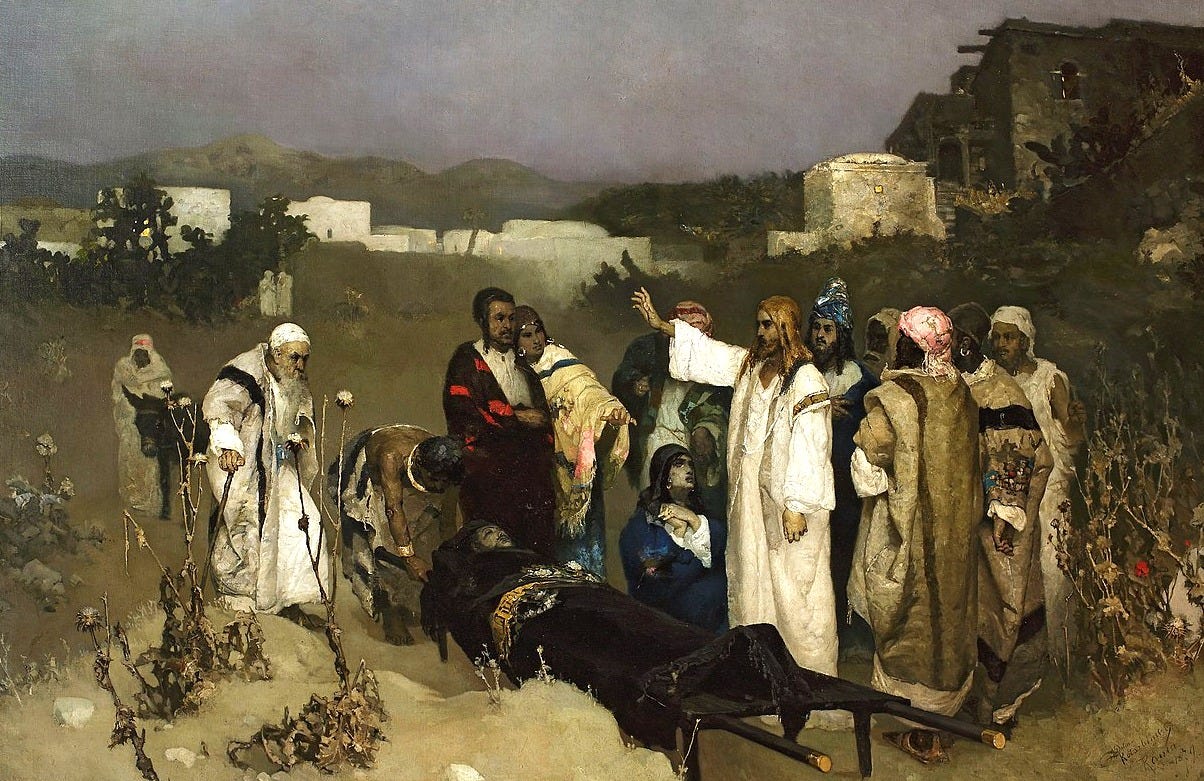
Naim, where Christ raised the widow’s son from death, was not a place where he was well-known. So why did he go there?
Part II: The raising of the widow’s son at Naim – how it unfolded
At Naim, Christ raises a widow’s only son before many witnesses, revealing his divine authority.
Part III: Why YOU are the dead son of the Widow of Naim
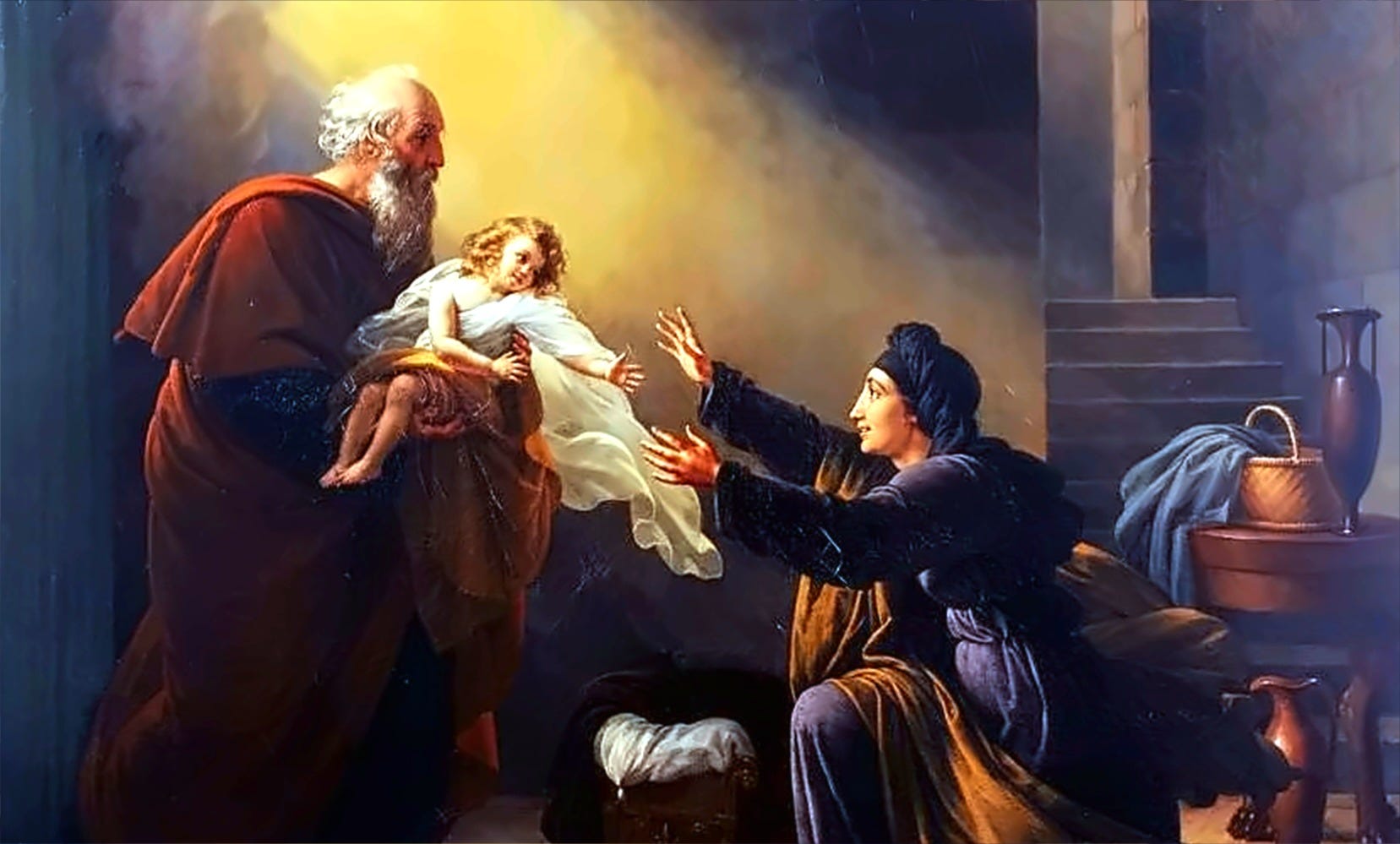
The Prophets Elias and Eliseus raised the dead, but only with great effort and prayer. The ease of Christ’s miracle teaches an important truth about the New Covenant and the sacraments.
Part IV: The effect of raising the Widow’s Son at Naim
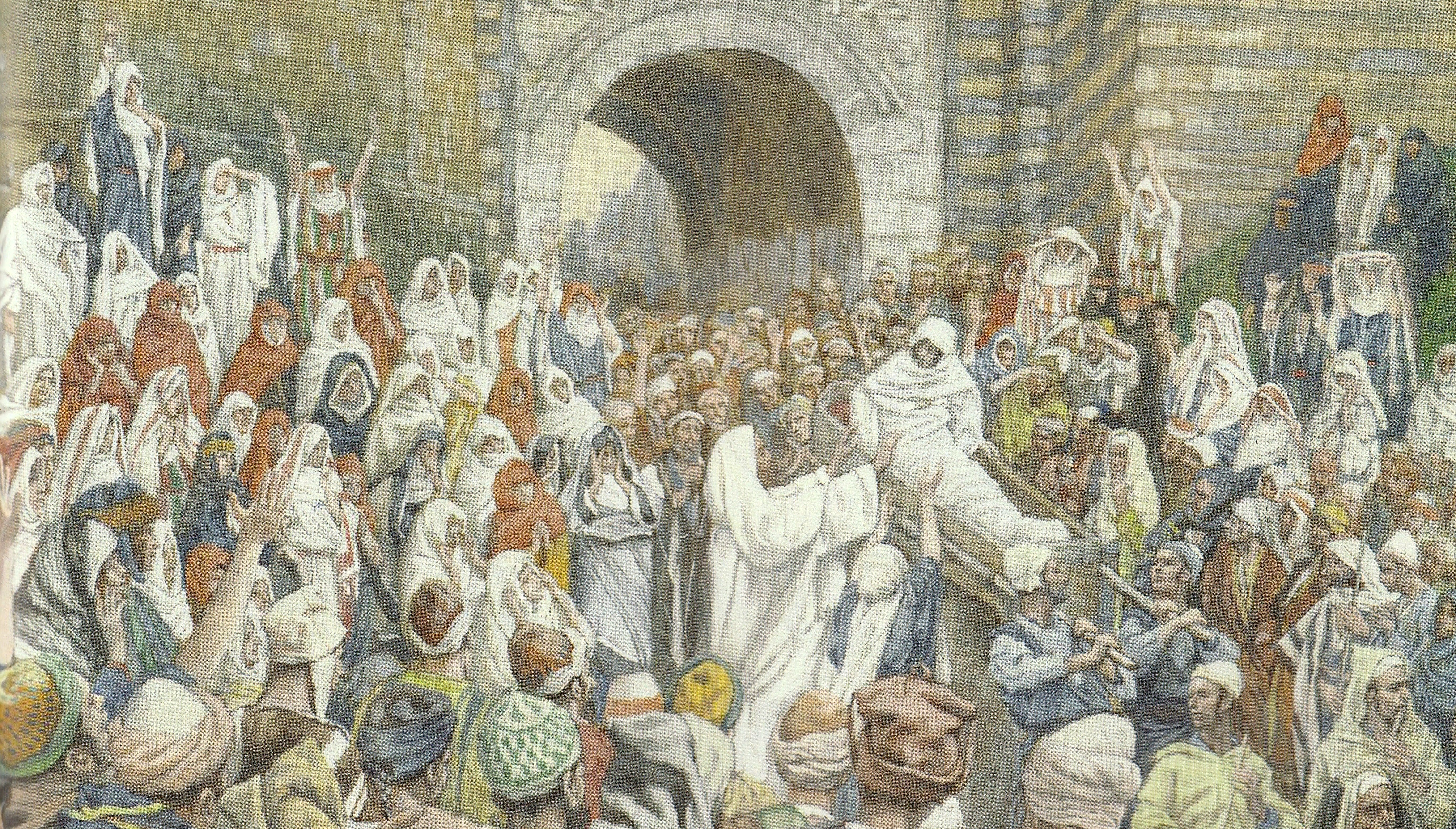
The miracle was a sign to both the people and to St John the Baptist and his followers – and a message to the religious establishment in Jerusalem.
BONUS: Did Cardinal Manning really accuse Cardinal Newman of ‘ten distinct heresies’?
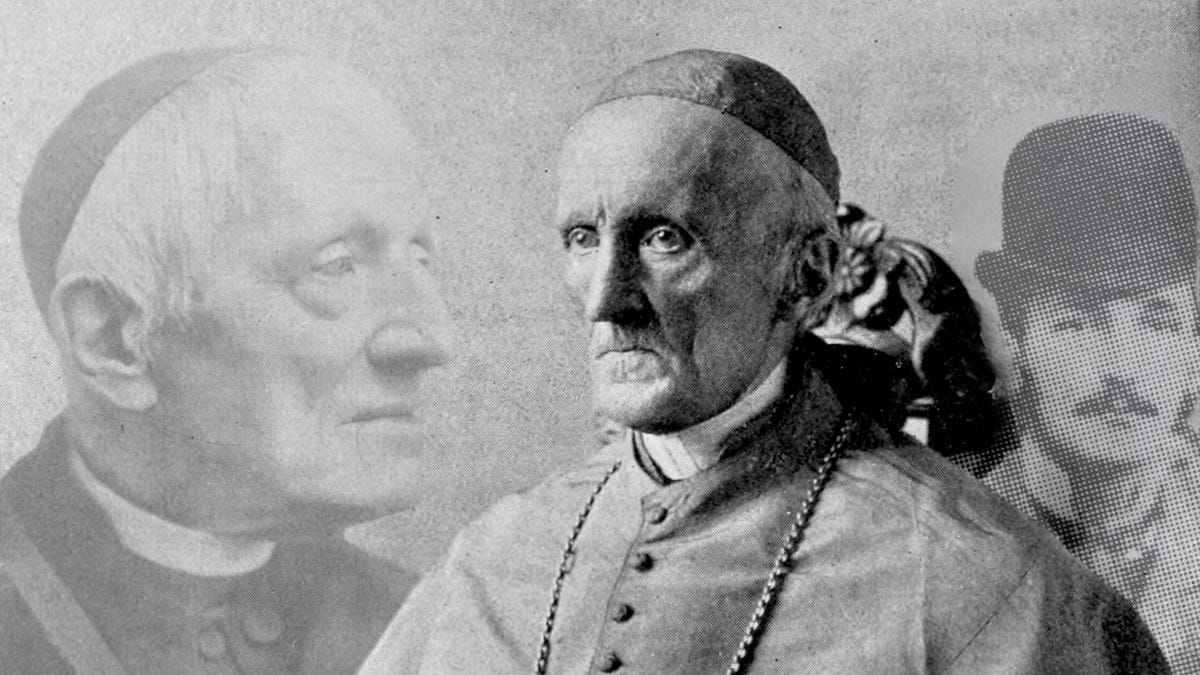
What does “The Widow’s Son” have to do with the often-repeated anecdote, that Cardinal Manning accused Cardinal Newman of “ten distinct heresies”? The rabbit hole is deeper than you might think.
Here’s why you should subscribe to The Father Coleridge Reader and share with others:
Fr Coleridge provides solid explanations of the entirety of the Gospel
His work is full of doctrine and piety, and is highly credible
He gives a clear trajectory of the life of Christ, its drama and all its stages—increasing our appreciation and admiration for the God-Man.
If more Catholics knew about works like Coleridge’s, then other works based on sentimentality and dubious private revelations would be much less attractive.
But sourcing and curating the texts, cleaning up scans, and editing them for online reading is a labour of love, and takes a lot of time.
Will you lend us a hand and hit subscribe?
Follow our projects on Twitter, YouTube and Telegram:
Twitter (The WM Review)