

Our Lord’s triumphant entry into Jerusalem led to his Passion and Resurrection. His triumphant entry into Heaven led to the Descent of the Holy Ghost at Pentecost.
Editor’s Notes
The following reflections from Fr Coleridge are on the Gospel reading for the Sunday after the Ascension, preceding Pentecost.
In that reading, Our Lord moves from discussing love within the Church to the hatred of the world, showing how internal charity and external suffering are inseparably linked. He prepares the Apostles for post-Ascension trials, assuring them that fidelity to Him will bring persecution – but also union with His own divine life and mission.
As with several Sundays in Eastertide, this reading is taken from Christ’s final discourse at the Last Supper, just before His Passion. It is immediately preceded by the parable of the vine and branches (John 15:1–10).
Mentioned without endorsement: It is interesting to see that the popular television series The Chosen adopted a similar framework for its fifth season. Each episode of Season 5 begins with part of the Last Supper discourses, but they appear in reverse order. This is more or less what occurs in the Roman Liturgy from the Third Sunday of Easter:
Third Sunday after Easter: John 16.16-22
Fourth Sunday after Easter: John 16.5-14
Fifth Sunday after Easter: John 16:23-30
Sunday after Ascension: John 15:26-27, 16.1-4
Pentecost: John 14:23-31
As a further side note, the depiction of the Last Supper ends with the singing of part of Psalm 117 (the last of the “Hallel Psalms”) – to the melody of the Paschal Sequence Victimae Paschali Laudes. This melody, in a mournful tone, also runs throughout the depiction of the Agony in the Garden.
To the Paschal Victim,
Christians, offer your thankful praises!A Lamb redeemeth the sheep,
The innocent Christ, to the Father
Reconcileth sinners.Death and life have duelled
In that combat stupendous:
The Prince of Life who died, living reigns.
Whatever one makes of The Chosen, this musical choice – recalling the words of the Sequence – does indeed provide an interesting perspective on the Passion as a triumph rather than a defeat.
Persecution
The Gospel text read on this Sunday, and Fr Coleridge’s discussion, points towards an important topic: the way in which persecution serves as a kind of indication of which is the true Church.
The WM Review recently published an article on this in response to Senator Ted Cruz’s endorsement of an essay attacking Catholic traditionalists. This consisted mainly in an extract from Louis Cardinal Billot’s treatise on the Church, which itself included an extended text from Joseph de Maistre. It appears in Billot’s discussion of the note of holiness; in it, he contrasts the opposition which the true Church experiences from manifestly wicked men, and the way such men treat all other religious bodies. As an example, he writes:
“[I]f the Catholic Church were from below and not from above – if by her principles and her efficacious influence she did not oppose the perversity of the world in all things – then surely the world would love and cherish what was its own, or at the very least would leave her in peace.
“But now, since they perceive and hold it as established that the Catholic Church is the most steadfast bulwark among men of the divine law, and that once it were destroyed nothing further would remain that could impede the absolute dominion of what they call ‘human rights’ and of unbridled licence – for this reason they assault her alone with all their forces; for this reason, “They say: ‘Raze it, raze it, even to its foundation’
“Yet by this very fact, they stand as witnesses to her holiness – witnesses beyond all exception.”
Billot is not alone in making such observations. The theologian Fr E. Sylvester Berry calls persecution itself “a quasi-mark of the Church during the period of preparation prior to the coming of Antichrist.”1 In support of this striking idea, he cites the words under examination in this chapter:
“If the world hates you, know that it hated me before you... But because you are not of the world, but I have chosen you out of the world, therefore the world hates you. Remember the word that I have spoken to you: No servant is greater than his master. If they have persecuted me, they will persecute you also… But all these things they will do to you for my name’s sake. […]
“They will expel you from the synagogues. Yes, the hour is coming for everyone who kills you to think that he is offering worship to God. And you will be hated by all for my name’s sake.”2
On these words, Berry comments:
“As Christ was hated, despised, calumniated, and persecuted in His natural body, so also shall He be in His mystical body, the Church. Therefore a Church that is not thus despised and persecuted, can scarcely be the one which Christ had in mind when He uttered the words quoted above.
“It is always consoling to realize that those who calumniate the Church and stir up persecution against her, are fulfilling the prophecies of Christ and thus they unwittingly prove her divine character. Thus does ‘He that dwelleth in heaven laugh at them; and the Lord deride them.’”3
The theologian Van Noort makes a similar point when considering the mark of holiness as a means of identifying the true Church:
1. Christ prophesied that His Church would be hated by the world; hated precisely because, under the life-giving impulse of the Holy Spirit, it would not belong to this world […]
Now it is a strange as well as a notorious fact that of all the Christian societies none experiences this hatred of the world so strongly as the Catholic Church. Something further, it is the only Church which is continuously attacked by that amorphous multitude which rises age after age under the leadership of evil men. By their very persecutions, then, the children of this world identify that Church which is vivified by the Spirit of Christ.4
In a footnote at the end of that section, he cites the same text from de Maistre as Billot:
On this point J. de Maistre comments aptly: “No enemy of the faith is ever deceived. They all strike in vain because they are battling against God; but they all know where to strike.”5
Frs Spirago and Clarke (the author of an obituary for Fr Coleridge) also write, in their The Catechism Explained, “the true Church is that one which is most persecuted by the world,” and explain:
Christ often spoke to His disciples of these persecutions: “The servant is not greater than his Master. If they have persecuted Me they will also persecute you” (John xv. 20).
“They will deliver you up in councils, and they will scourge you in their synagogues . . . you shall be hated by all men for My name’s sake” (Matt. x. 17-22).
“Yea, the hour cometh that whosoever killeth you, will think that he doth a service to God” (John xvi. 2).
“Because you are not of the world, but I have chosen you out of the world, therefore the world hateth you” (John xv. 19).
Never in the history of the Catholic Church has it been free from persecution. Whatever be the differences between the sects they unite against the Church. The apostles, especially St. Paul, were objects of hate to the Jews (Acts xiii. 50; xvii. 8), and St. John (166 A.D.) testifies that their hatred of the Christians had not died out in his day.
The present day is not wanting in examples in the sufferings inflicted on religious communities, in the interference of the secular governments in things spiritual, in the opposition made to processions and meetings and other devout practices.
Can any Church be the true Church which does not oppose the spirit of the world?6
Over the last 2,000 years, those who have become Catholics have found themselves on the outside of the established religious systems of their nations, and in an analogous situation to the Apostles and early Christians.
Even today, Catholics who believe and worship as their forefathers can find themselves on the outside of the self-styled “Conciliar/Synodal Church,” and treated in some of the ways described by Our Lord and Coleridge. Few are as opposed to those who adhere to the religion of our grandparents as the partisans of this new Conciliar/Synodal Church.
Coleridge also presents a picture similar to that faced in the early 2020s by those who were not prepared to undergo certain “medical treatments,” which many jurisdictions were considering making mandatory in order to access what he called “ordinary necessaries of life.”
The WM Review has also published a number of reflections on persecution:
Preparation for Tyranny
Other Articles
Suffering under persecution – the example of the English Martyrs
Persecution, a chastisement in which the Devil is allowed temporary success (Fr Coleridge)
The Japanese “Hidden Christians” and the persecution of the Church
Let us proceed to Fr Coleridge’s reflections.
Hatred of the World
Passiontide, Part III
Chapter III
St. John xv. 11-27.
Story of the Gospels, § 156
Burns and Oates, London, 1892
Part I: Why does ‘the world’ hate Christ and his Church?
.png)
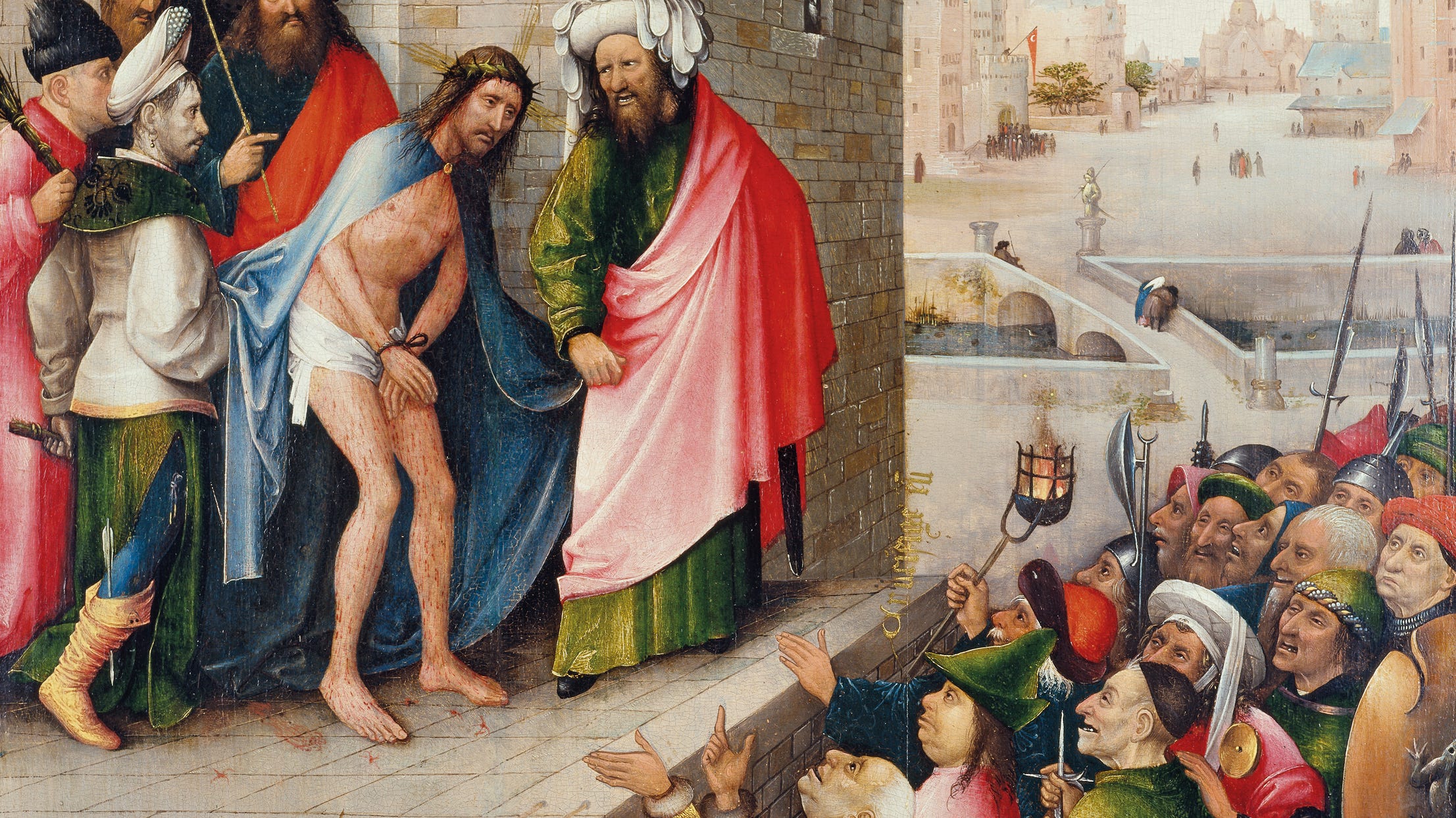
The hatred of the world is not a failure of the Church’s mission – but the seal of her fidelity.
Part II: Why is persecution a mark of the true disciple of Christ?
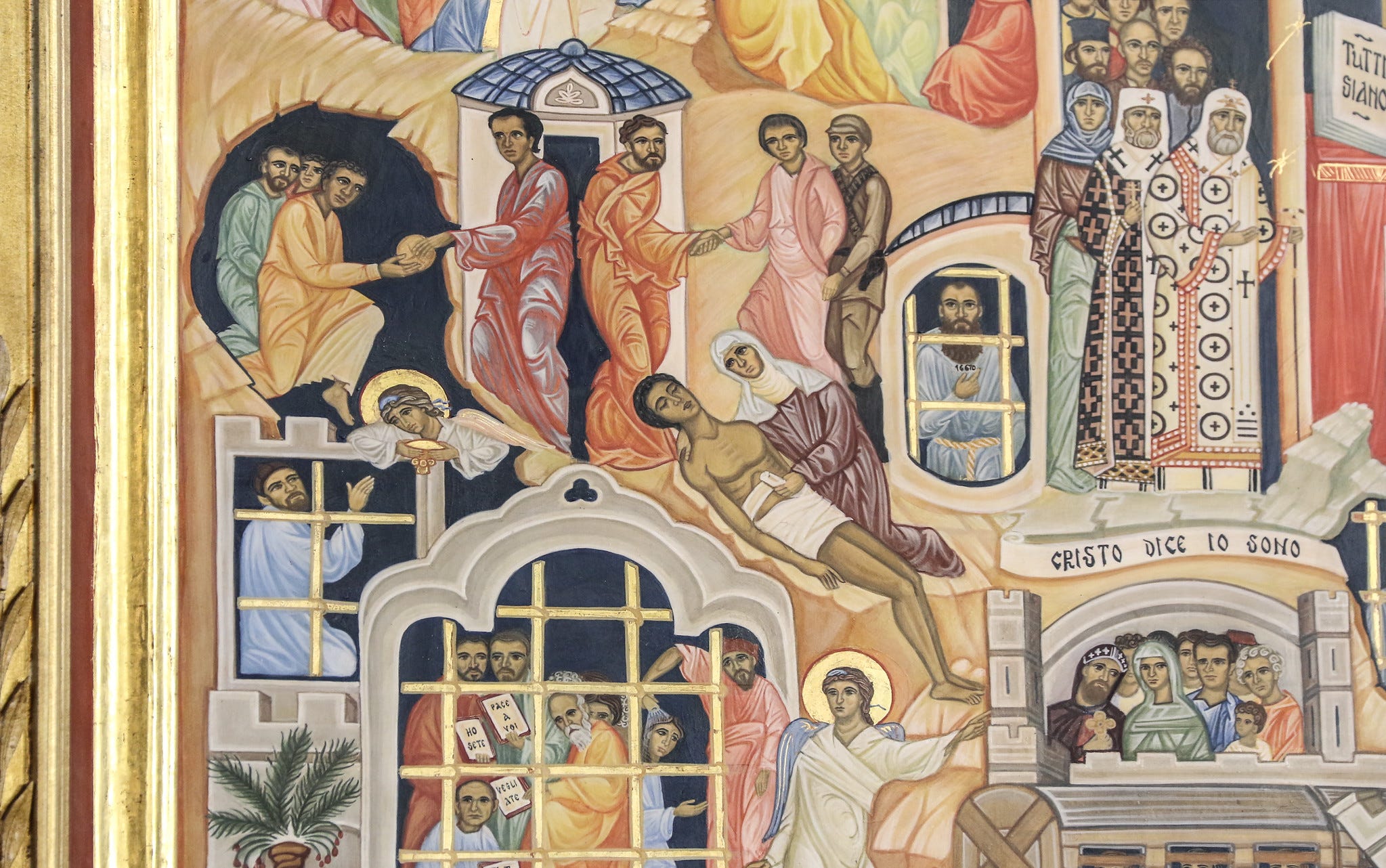
Christ tells His Apostles to expect hatred, not as a curse, but as a mark of union with Him.
Part III: Why did Christ say his people ‘hated both me and my Father’?

Christ declared that his people rejected both His words and His works, and so had no excuse – but what did he really mean by saying they ‘hated my Father’?
Part IV: Why did Christ’s people hate him ‘without cause’?

Referring to the psalm, Christ says ‘They hated me without cause’ – a hatred born not of reason, but of shame.
Part V: Why does Christ say the Holy Ghost ‘shall bear testimony of Me’?
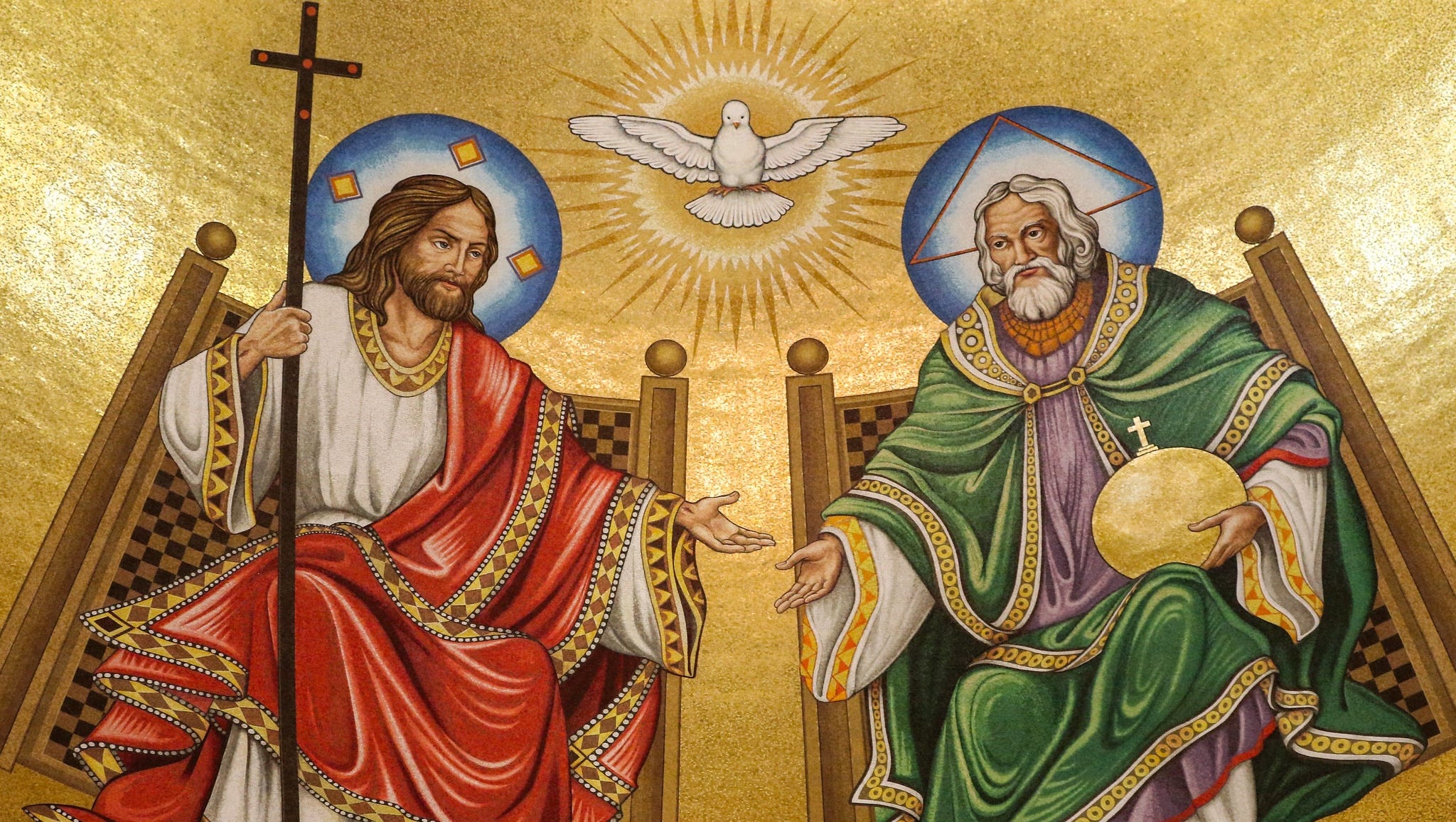
Christ answered hatred not with vengeance, but by sending the Spirit of Truth – so that the Apostles could bear witness to His divine mission.
Part VI: Persecution and Catholics as a religious minority
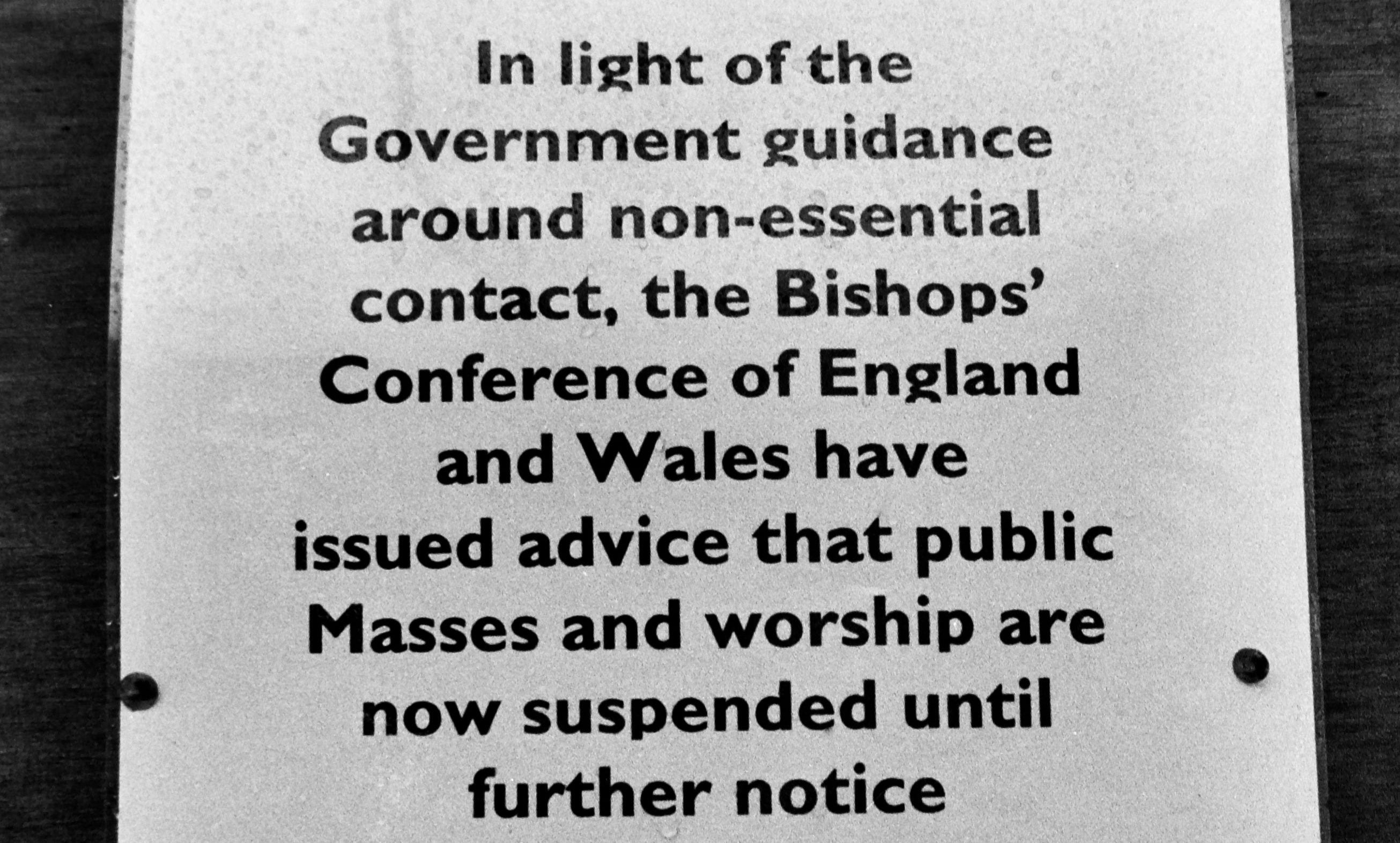
Our Lord’s warning that his followers would be ‘put out of the synagogues’ has extensive application even to us today.
Here’s why you should subscribe to The Father Coleridge Reader and share with others:
Fr Coleridge provides solid explanations of the entirety of the Gospel
His work is full of doctrine and piety, and is highly credible
He gives a clear trajectory of the life of Christ, its drama and all its stages—increasing our appreciation and admiration for the God-Man.
If more Catholics knew about works like Coleridge’s, then other works based on sentimentality and dubious private revelations would be much less attractive.
But sourcing and curating the texts, cleaning up scans, and editing them for online reading is a labour of love, and takes a lot of time.
Will you lend us a hand and hit subscribe?
Follow our projects on Twitter, YouTube and Telegram:
Twitter (The WM Review)
p. 88
Ibid.
p. 89.
Van Noort pp 195-6.
Du Pape, IV, conclusion. VN, 211.