
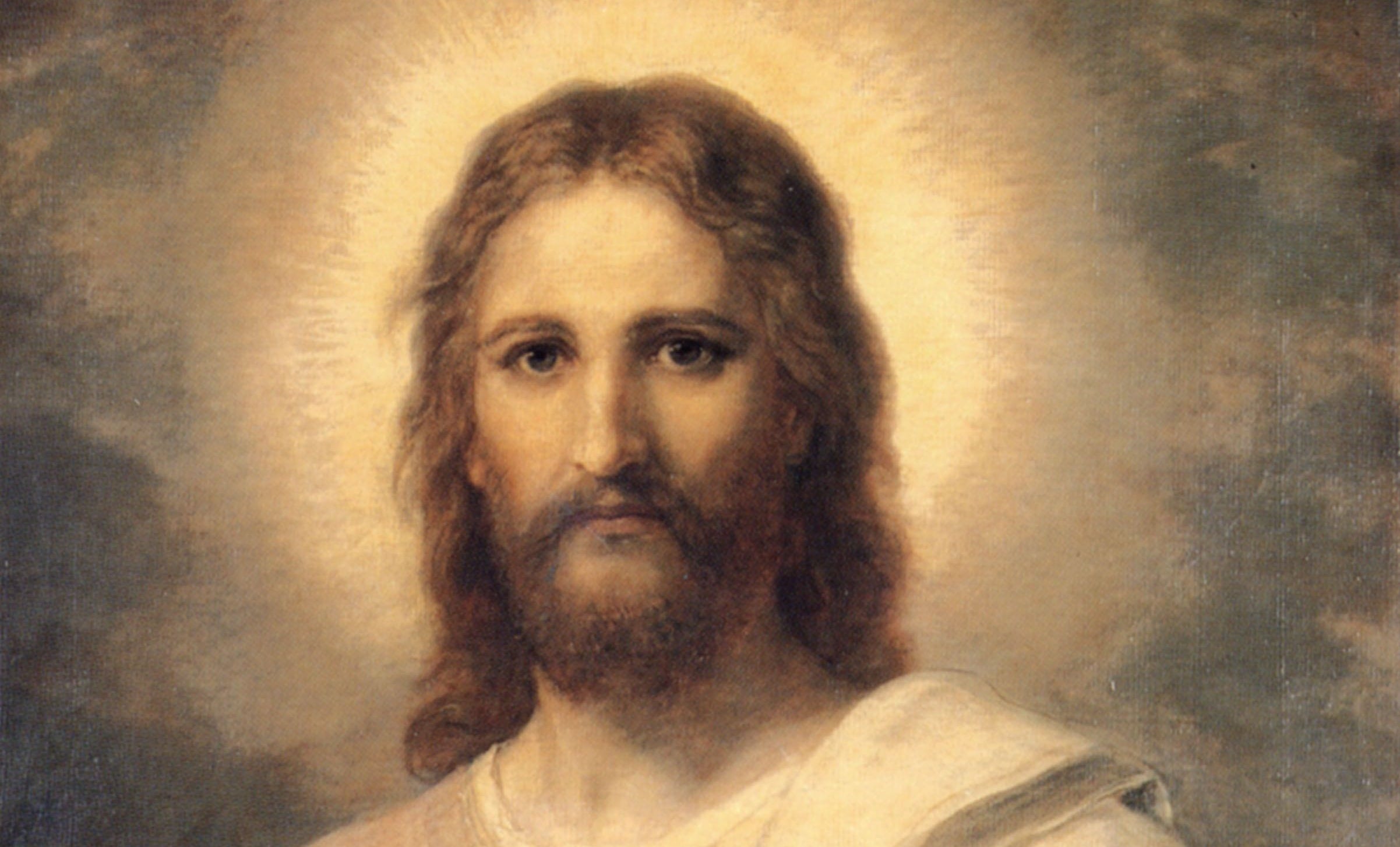

It is in the Epistles that we find the fullest doctrine of what Our Lord accomplished in his Sacrifice.
Editor’s Notes
As we enter into Holy Week, and approach the Sacred Triduum, Fr Coleridge considers Our Lord’s entrance into his Passion.
How the Epistles unveil the inner doctrine and fruits of the Passion
That the Holy Ghost completes Christ’s teaching in the Gospels by enlightening the Apostles in their writings
Why the mystery of the Passion exceeds even the words left by the Apostles.
He shows us that to approach the Passion rightly, we must pass from its history into its divine meaning, with reverence shaped by the Spirit’s light.
As a further aid for meditation, The WM Review, Father Coleridge Reader and Catholic Hub last year produced a recording of Fr Coleridge’s harmonisation of the Passion narratives:
Our Lord Entering on the Passion
Passiontide, Part I, Chapter II
Burns and Oates, London, 1889
Headings and some line breaks added.
The Passion in the Epistles
Now the Gospels only give the theology of the Passion by relating its historical course. They do not draw out the doctrine in any fulness at all.
It is left for the Epistles of the Apostles to set all this forth, and they have instructed the Church for ever by what they have left behind them in this way. Her theologians are for ever poring over the words of St. Peter and St. Paul and St. John, and pondering what was that great counsel of mercy which was brought to its consummation on Mount Calvary.
But all that St. Peter and St. Paul and St. John have left behind them, in passages scattered over a few letters written to meet the incidental needs of the Churches which they governed, can be little indeed in bulk and depth, if it be placed by the side of our Lord’s own thoughts concerning the work which He was then accomplishing.
It is impossible, indeed, to value too highly the Gospel records of the Passion, on which devout souls have fed and will for ever feed while the world lasts. But the Epistles dwell comparatively little on the outward facts of the Passion, though we see how these facts were treasured in the hearts of their writers. There are words here and there about the particulars, as when St. Peter says of our Lord that ‘when He was reviled, He did not revile, when He suffered, He threatened not, but delivered Himself to him that judged Him unjustly, Who His own self bore our sins in His Body on the tree, that we being dead to sin might live to justice, by Whose stripes ye are healed.’1
But what the Epistles dwell on is the fruit, and not the details, of the Crucifixion.
‘For you were not redeemed with corruptible things, as of gold or silver, from your vain conversation of the tradition of your fathers, but with the precious Blood of Christ, as of a Lamb unspotted and undefiled, foreknown indeed before the foundation of the world, but manifested in the last times for you, who through Him are faithful in God, Who raised Him from the dead and hath given Him glory, that our faith and hope might be in God.’2
They delight in passages in which the Atonement is openly spoken of, and the consequences of the Passion drawn out as ‘the oblation whereby He hath perfected for ever them that are sanctified,’3 ‘being delivered up for our sins, and risen again for our justification,’4 ‘so that as by the disobedience of one many were made sinners, so also by the obedience of one many shall be made just,’5 and others of the same class.
It is in these that we may trace the fulfilment of that promise of our Lord to His Apostles at the Last Supper, that the Holy Ghost should teach them all things, and bring all things to their minds, whatsoever He shall have said to them.
‘I have yet many things to say unto you, but you cannot bear them now. But when the Spirit of Truth is come, He will teach you all truth, for He shall not speak of Himself, but whatsoever things He shall hear He shall speak, and the things to come He shall show you. He shall glorify Me, because He shall receive of Mine, and shall show it to you. All things whatsoever the Father hath are Mine, therefore I said that He shall receive of Mine, and shall show it to you.’
These words of course refer to many other things beside the effects of the Passion. But when we take in our hands the Epistles as reflecting the minds of the Apostles under the illumination of the Holy Ghost, we can hardly think, either that any doctrines can have been more important for the Church to have received under His guidance than these, or that any teaching short of that of the Holy Ghost can have produced these wonderful contemplations in the minds of her children.6
Thoughts on entering the Passion
These considerations may help us in some measure to understand what it was to our Lord to enter on His Passion.
The triumph of the Day of Palms, the cavils of His enemies, the disputes in the Temple, in which one after another of the various classes of His enemies were reduced to silence, the denunciation of the Scribes and Pharisees to the people, the prophecies of the destruction of Jerusalem and of the end of the world, the last parables and warnings, and then the short retirement till Thursday evening, the Cenacle and all its half revealed mysteries, followed by the last exit to Gethsemani and the whole day of the Passion—all were counted up in the Sacred Heart beforehand, and all had interests and pains or consolations of their own.
But to Him they were all but the external accomplishment of the great mystery of Eternity, for which the Incarnate Son of God became Man, and in which the Power and Wisdom and Love of God put themselves with a splendour and might to the imagination of which the highest Seraphim never soared.
May He grant us, through His Holy Spirit, ‘to handle this so great mystery with all the reverence, all the honour, all the devotion, and awe, which are needful and becoming in those who have to deal with it!—ever to believe, and to understand, and to feel, and to hold, and to speak, and to think, concerning It, as is pleasing to Him and expedient for our own souls!’7
Our Lord Entering on the Passion
Read Next:
Here’s why you should subscribe to The Father Coleridge Reader and share with others:
Fr Coleridge provides solid explanations of the entirety of the Gospel
His work is full of doctrine and piety, and is highly credible
He gives a clear trajectory of the life of Christ, its drama and all its stages—increasing our appreciation and admiration for the God-Man.
If more Catholics knew about works like Coleridge’s, then other works based on sentimentality and dubious private revelations would be much less attractive.
But sourcing and curating the texts, cleaning up scans, and editing them for online reading is a labour of love, and takes a lot of time.
Will you lend us a hand and hit subscribe?
Follow our projects on Twitter, YouTube and Telegram:
Twitter (The WM Review)
1 St. Peter ii. 23, 24.
1 St. Peter i. 18–21.
Heb. x. 14.
Rom. iv. 25.
Rom. v. 19.
‘Beside the narrative of the Sacred Passion, we find in the New Testament, especially in the Epistles of St. Paul, a number of contemplations and considerations on the Sacred Passion, which have become the foundation of much of the theology of the Church, as well as the source of continual meditation to her devout children.
‘It seems to be a part of the office of St. Paul, to present to the Church the causes, the significance, the effects, the Divine reasons of the great sacrifice of the Cross, its results in Heaven and on earth and below the earth, in time and in eternity, the place which it occupies in the counsels of God, rather than the details of the history, which, however, were clearly the daily occupation of his mind.
‘In this he is not singular among the Apostles, for we find the same line of thought in St. Peter and St. John. But their Epistles are comparatively of small bulk, and the great development of the subject of which we speak was left for the Apostle of the Gentiles, the disciple of Gamaliel, whose mind was stored with all the traditional learning of the Jewish schools, while he was at the same time familiar with the philosophy of the ancient world outside the chosen people.’
The Baptism of the King, Preface, pp. vi. vii.
In oratione Ecclesiæ ante Missam.