

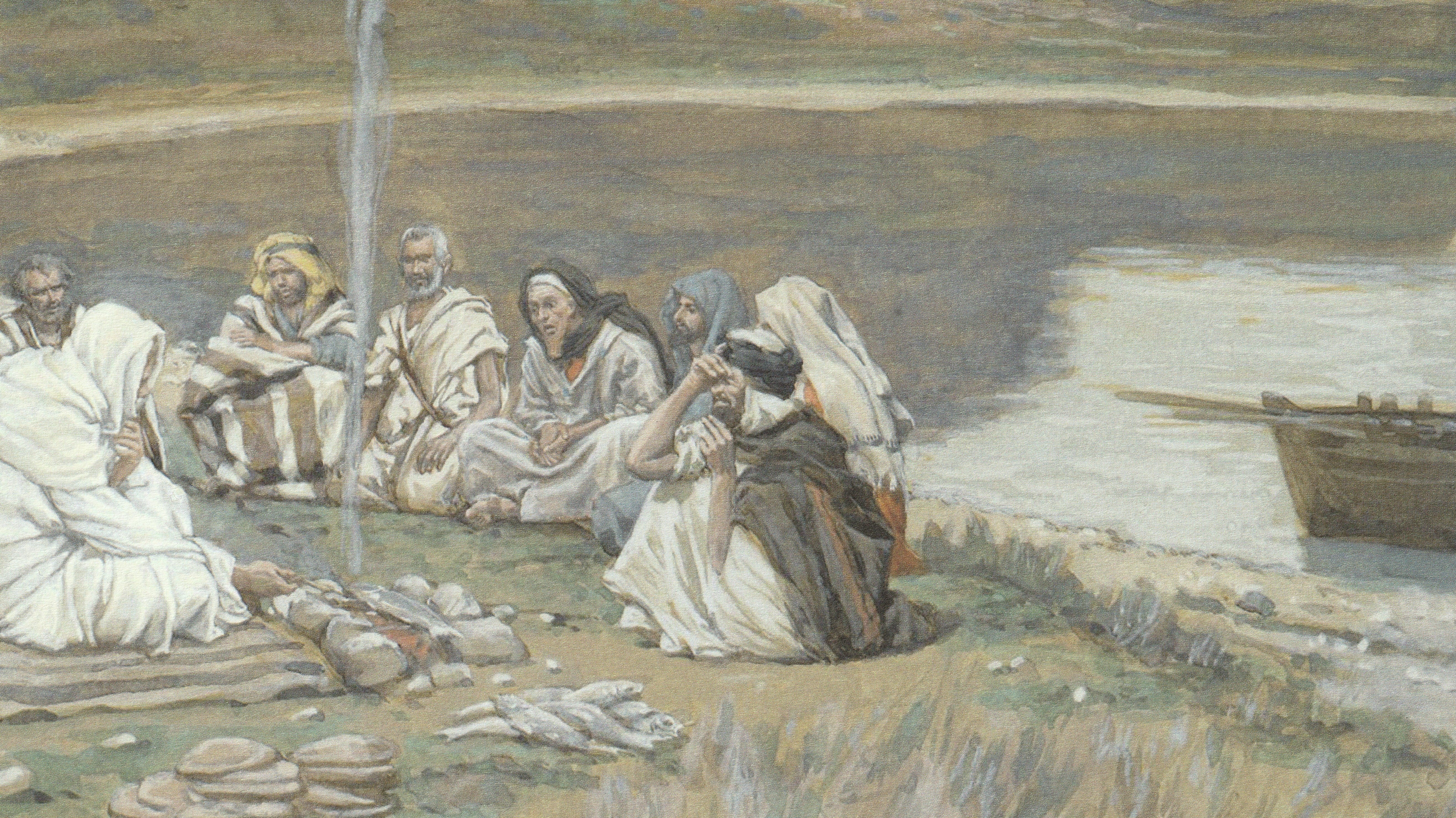
Christ established the Church with clarity—yet left little trace of it in written form. What does this show us about her divine constitution?
Editor’s Notes
Many believe that Christ made St Peter the Pope when he changed his name and talked about “the keys of the kingdom of Heaven.” In fact, the Church teaches that St Peter’s profession of faith gave rise to a promise of the primacy, which was ultimately bestowed in the events discussed in this piece, following his threefold profession of charity:
We teach and declare that, according to the gospel evidence, a primacy of jurisdiction over the whole church of God was immediately and directly promised to the blessed apostle Peter and conferred on him by Christ the lord.
It was to Simon alone, to whom he had already said:
You shall be called Cephas, that the Lord, after his confession, You are the Christ, the son of the living God, spoke these words: Blessed are you, Simon Bar-Jona. For flesh and blood has not revealed this to you, but my Father who is in heaven. And I tell you, you are Peter, and on this rock I will build my church, and the gates of the underworld shall not prevail against it. I will give you the keys of the kingdom of heaven, and whatever you bind on earth shall be bound in heaven, and whatever you loose on earth shall be loosed in heaven.
And it was to Peter alone that Jesus, after his resurrection, confided the jurisdiction of supreme pastor and ruler of his whole fold, saying:
Feed my lambs, feed my sheep.
You can read more about this here:

In this part, Fr Coleridge tells us…
How Christ founded the Church in truth, while concealing its form from profane scrutiny.
That His few words to the Apostles contained full and lasting authority.
Why the silence of Scripture points to the dignity, not vagueness, of the Church.
He shows us that the Church was not exposed to critics, but built upon the living word and Spirit.
Last Words by the Lake
The Passage of Our Lord to the Father
Chapter XV
St. Matt. xxvii. 45-61; St. Mark xv. 33-47; St. Luke xxiii. 44-56; St. John xix. 28-42; Story of the Gospels, § 170, 171
Burns and Oates, London, 1892
How did Christ feed and teach the Apostles after his Resurrection?
How did the risen Christ reveal the Church's divine constitution?
What does 'Feed My sheep' really mean for Peter’s role in the Church?
Few words in which Our Lord conveyed instruction
It must be remembered always that there is one great subject that we know to have been ever present to our Lord (not to speak of His disciples), on which we know it to have been His object to dwell frequently in these conversations, but on which we find a remarkable silence in these records, namely, the constitution of the Church, for that seems to be the subject spoken of as the Kingdom of God.
It is very natural to think this the common and most obvious subject on which they would receive instruction from Him at this time, and yet we must be struck by the few words mentioned on the subject. We can only explain this by considering that it was our Lord’s intention to found the Church as a living body, not to describe it as a part of His work which students might examine and critics estimate.
To say that the instructions on these great subjects were given to the Apostles as the rulers and guides of an ever-living body, is much the same thing as to say that they were not given to them in any form to which appeals against their paramount authority, in the way of criticism and cavil, could be made, especially when we consider that the Church was to be the organ of the Indwelling Spirit.
The growth of the Church was to be supernatural, and not to be ordered according to the laws of natural increase and growth. A certain amount of instruction was necessary for those who were to be its first instruments and administrators, but we must always keep in mind that it was to be the work of the Divine Paraclete through the Apostolic Body, and that our Lord Himself seems to have taken care that His own personal action was not to be made very conspicuous, though His presence was the life of all.
It is quite true that we have the statements, such as that which has been already quoted, about His conversations and instructions concerning the Kingdom of God. And we know that before and after His Resurrection He ordained the Apostles, or instituted the Sacraments, and, as we believe, founded the Hierarchy and the Supreme Pontificate, and left behind Him the rule of obedience and unity, by which the ever-living Church was to stand until the end of the world.
But we search in vain for full records of the constitution of the Church according to the pattern of human institutions, which are to pass away under the waves of time and the shocks of human commotions, and are not meant to stand through them all.
Teaching by actions
Our Lord’s words were so pregnant and full of life, that it is not difficult for us to believe that He may have said but a few words to St. Peter as the charter of the everlasting Priesthood and Pontificate, and a few more to the Apostles in which He may have left behind Him the power of forgiving or retaining sins of every kind on earth, by a sentence which is ratified in Heaven—a power which had never before been entrusted to men.
We may remember that the Apostles must have been fully instructed in all necessary details of practical knowledge which their great commission required, and that the Church which they founded was to be guided through the storms of ages by the never-failing presence of the Holy Ghost. If we take this view of the actions and words of our Lord, especially during this most interesting period of the forty days, it will not seem difficult to us to attach a great importance to the words and actions which we have reason to look upon as having, more perhaps than any others, a spiritual and almost sacramental meaning of their own.
The blessed St. John, especially in his later chapters, has prepared us for this method of expecting to find some such meanings in what he relates of our Lord, and it is fortunate for us that we have so comparatively large an amount of his Gospel which belongs to this short period. We may now pass on to the few incidents of which we shall have to speak before we pass on to the Ascension.
We have thus a fair certainty that the instructions of our Lord to His Apostles during this period were mainly occupied with the great subject which has been named, the Kingdom of God. It also may be considered most probable that whatever instruction our Lord then gave them was not such as could be written down, and cast in a long form, but rather in a few short pregnant sentences, even if it were afterwards to be expanded or commented upon at greater length.
And it must always be remembered that it was a time when the Apostles were made capable of far greater insight into the ways of God and the methods of His government than they had before possessed.
Intelligence of Scripture
It may not be quite certain whether it was early or late in the course of the forty days that they received the gift which one of the Evangelists speaks of by which their intelligence was opened that they might understand the Scriptures, which seems to have been performed in some solemn way, implying the importance of the occasion and the greatness of the gift conferred on them.
The passage in St. Luke in which special mention is made of the collation of this gift of enlightenment as to the meaning of the Sacred Scriptures, may seem to suggest that the boon was bestowed upon them with a particular object, in view of their being empowered to discern and set forth to others the hidden meanings of Holy Writ with reference to the Redemption and the Passion of our Lord.
But it seems hardly well to limit the interpretation and intelligence enjoyed by the Apostles to any one particular subject which belongs to the whole range of the great gifts with which our Lord has enriched the Church. We are all familiar with the words of à Kempis:
‘For in this I feel there are two things especially necessary for me, without which this miserable life would be to me insupportable, namely, food and light… Thou hast therefore given to me, weak as I am, Thy Sacred Body for the nourishment of my soul and body, and Thou hast set Thy Word as a light to my feet. Without these two I could not well live, for the Word of God is the light of my soul, and Thy Sacrament is the Bread of Life.’1
Deep meaning of our Lord’s actions
And it is a joy to devout Christians to think that the refection of their souls in the Sacred Scriptures, was a gift increased in its efficacy and delight by a special power of intelligence imparted after the Passion by our Lord.
Moreover, it is natural to add to this enumeration of the special opportunities laid open to the Apostles at this time that their more habitual intercourse with their risen Lord may be fairly considered as having enabled them ordinarily to enter more fully and deeply into the meaning of His actions, and to see in them, after the Resurrection, Divine principles and significances such as before had been hidden from them.
The actions of which we are about to speak, and have been now speaking, being instances of what we mean.
For instance, the part taken by St. Peter in this mysterious fishing in the Lake of Tiberias may have had meanings to the already illuminated minds of the Apostles which they would not have had a few weeks before.
Subscribe now to never miss an article:
Last Words by the Lake
How did Christ feed and teach the Apostles after his Resurrection?
How did the risen Christ reveal the Church's divine constitution?
What does 'Feed My sheep' really mean for Peter’s role in the Church?
Here’s why you should subscribe to The Father Coleridge Reader and share with others:
Fr Coleridge provides solid explanations of the entirety of the Gospel
His work is full of doctrine and piety, and is highly credible
He gives a clear trajectory of the life of Christ, its drama and all its stages—increasing our appreciation and admiration for the God-Man.
If more Catholics knew about works like Coleridge’s, then other works based on sentimentality and dubious private revelations would be much less attractive.
But sourcing and curating the texts, cleaning up scans, and editing them for online reading is a labour of love, and takes a lot of time.
Will you lend us a hand and hit subscribe?
Follow our projects on Twitter, YouTube and Telegram:
A Kempis