

As with every incident of Our Lord’s life, he wishes to teach us by example – but how are we to imitate him?
Editor’s Notes
In this piece, Fr Coleridge tells us…
How our Lord’s withdrawal into the wilderness blesses prayer, solitude, and self-mortification for all.
That his example consecrates both the desert hermit and the ordinary Christian life.
Why fasting, penance, and austerity become enduring weapons in the life of the Church.
He shows us that every path—solitary or common—draws strength and grace from his fast.
For more context, see Part I.
Fasting of Our Lord
The Ministry of St. John the Baptist
Chapter VI
St. Matt. iv. 11; St. Mark i. 13; St. Luke iv. 13.
Story of the Gospels, § 18
Burns and Oates, London, 1888
Headings and some line breaks added.
Sung on First Sunday of Lent
Sanction of the contemplative and eremitical life
And, once more, our Lord may have intended, not merely that the benefit of His own example and of the strength which He left behind Him for His children, in whatever holy practice or counsel which He adopted, should be won for those who were to follow Him as preachers of God’s Word and teachers in His Church, but also that all those who were to belong to Him might be instructed to attach a very high value to the exercises of prayer, contemplation, and self-mortification, whatever might be the line of life in which they were to have to imitate His virtues.
In particular, we can hardly help seeing that our Lord was here taking possession, as we may say, and blessing by His own contact, both the solitary eremitical life in general, whether it be practised perpetually or only for a time and occasionally, and in particular of the deserts which were in after ages of the Church to be peopled with Christian solitaries and ascetics, all of whom must have looked to the mystery of the fasting and sojourn in the wilderness as one of those points in His Divine Life upon earth which were at once the example, the sanction, and the strength of that kind of service to which they were themselves to be impelled by the guidance of the Holy Ghost.
Thus the desert, as well as the Christian home, the cave or cell of the solitary ascetic, as well as churches or crowded cities, have been blessed by the footprints of our Divine Lord, and in each of the varied paths along which His children have to walk, secular as well as religious, ecclesiastics as well as laymen, those who live the common life as well as those who are called to the state of perfection, or the observance of the Evangelical counsels, or who have some of the more extraordinary vocations of which the history of the Church affords us so many instances, all are able to encourage themselves by the thought that His pattern is before them, and that each particular lot out of the whole multitude has His blessing and His grace.
And of the weapon of fasting
And again, the holy weapon of fasting, which from the beginning of time had been used by the servants of God and enjoined at certain special times by the Synagogue as a part of public religion, was now to be taken up and sanctified by our Lord in His own Person, that He might hand it over with His blessing and strength upon it to His Church, in which the sacred season of Lent was to become a perpetual ordinance in honour of these forty days of His retirement, in which there were to be other holy seasons and days spent in the same observance, and whose children were to practise it continually along with prayers and alms-deeds, according to His own precept given in the Sermon on the Mount.
All the countless privileges and graces which are connected with this blessed practice and others which resemble it in their effects, the satisfaction for sins, the repression of all that is vicious, the elevation of the mind to God, the impetration of virtue and grace and of spiritual rewards—all these have their source in the fasting of our Lord, and it was to secure them all to us that He undertook this long and rigorous fast of His own.
In our prayers, in our good works, in our sufferings, we are to look to Him, and so also are we to do the same in our fastings and penances. It was not to be the order of the providence of His Father that in His Public Life He should be conspicuous for austerity or penance or solitude, as His Forerunner had been, because He was to make Himself the companion of all, to condescend to ordinary modes of life, and to hide all that might seem severe, or scare away sinners from His burning and most tender love.
But fasting, penance, mortification, and austerity were to have their part in the system which He was to introduce: the children of the bride-chamber were to mourn when the Bridegroom was taken from them,1 and therefore in this, as in everything else, He was to go before them.
Rigour of the fast
Two circumstances are added by the Evangelists in their statements concerning this retirement of our Lord which serve to make more complete the picture which they set before us. St. Luke tells us that our Lord ‘ate nothing’ during the forty days, which may, perhaps, be intended to signify that His fast was a perfect natural fast, as had been the fasts of Moses and Elias, and not only an ecclesiastical fast, which permits of some kind of refection at a certain time in the day and of a certain kind.
Our Lord with the wild beasts
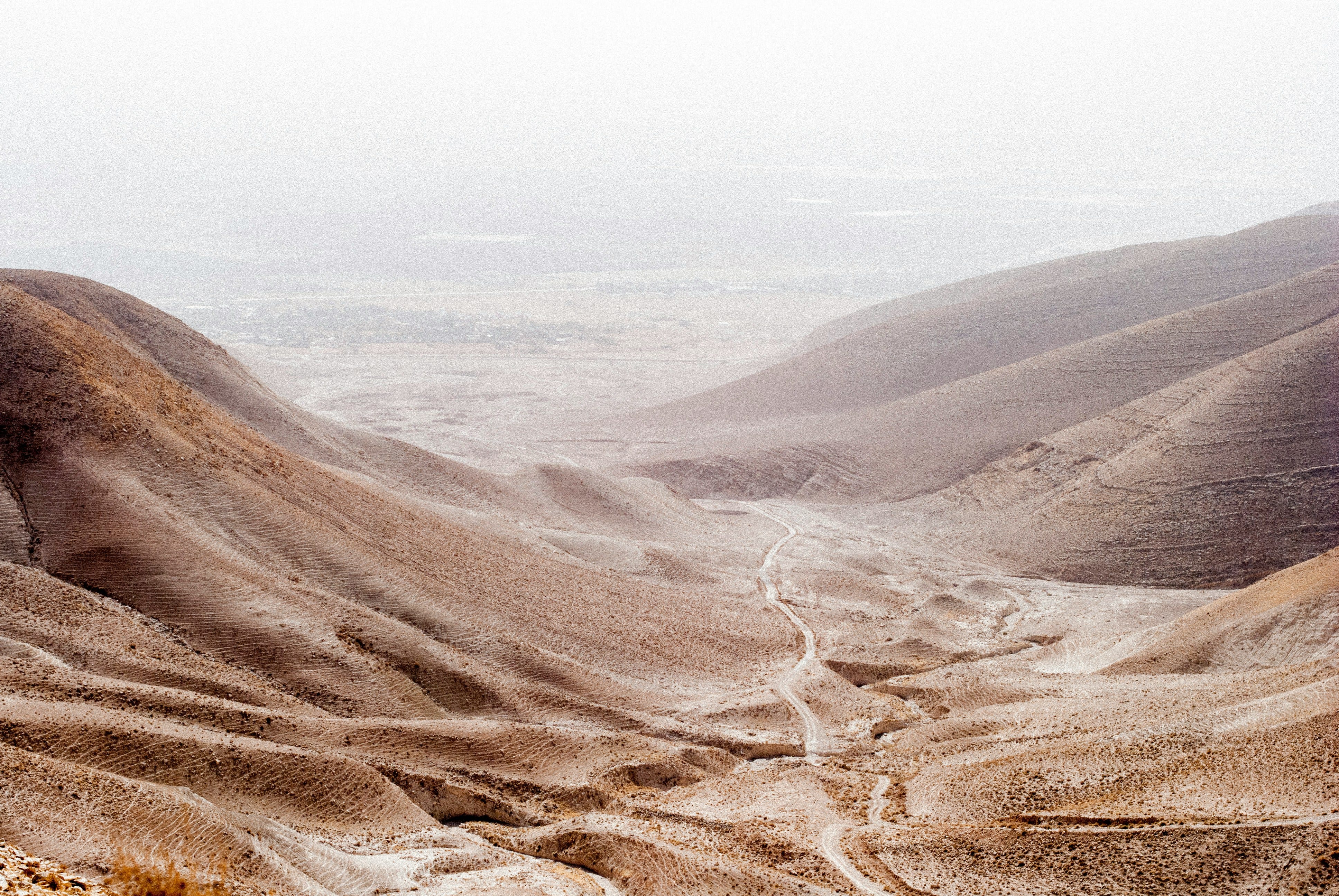
The other circumstance is mentioned by St. Mark, that our Lord ‘was with the wild beasts,’ and this seems meant to show how entirely He was cut off from the haunts of men and without shelter of any kind, such as might have been open to Him in the few huts or cottages which might have been found in the less entirely wild parts of the country called the desert of Judæa.
He had never hitherto been away from the care of Mary and the home at Nazareth, and now His abode was in one of the caves in the wild and almost inaccessible mountain which still keeps the name given to it in commemoration of His sojourn there.2
And ‘He was with the wild beasts’—renewing, as it appears, that peaceful companionship with and dominion over the animals which Adam enjoyed in Paradise, which he had lost through his self-indulgence, and which our Lord, therefore, resumed, at the time of His fasting, as the Lord of the new Creation.
For the consequences of the Fall extended both to the brute creation and the physical universe, as St. Paul tells us, and the redemption and renovation of all things by our Blessed Lord are to reach as far as and further than the fruits of the sin of Adam.
Fasting of Our Lord
Read Next:


Did the Church intend to abolish fasting—or modify it? Newman Explains
One psychological challenge of fasting today—and ways to beat it
Here’s why you should subscribe to The Father Coleridge Reader and share with others:
Fr Coleridge provides solid explanations of the entirety of the Gospel
His work is full of doctrine and piety, and is highly credible
He gives a clear trajectory of the life of Christ, its drama and all its stages—increasing our appreciation and admiration for the God-Man.
If more Catholics knew about works like Coleridge’s, then other works based on sentimentality and dubious private revelations would be much less attractive.
But sourcing and curating the texts, cleaning up scans, and editing them for online reading is a labour of love, and takes a lot of time.
Will you lend us a hand and hit subscribe?
Follow our projects on Twitter, YouTube and Telegram:
Twitter (The WM Review)
St. Matt. ix. 15.
Djebel Kourontoul (Quarantana). M. l’Abbé Verrier (Journal d’un Pélerin, t. ii. p. 78) speaks of the chapels—now in ruins—which mark the traditional spots of our Lord’s fasting and temptation as very difficult of access.