

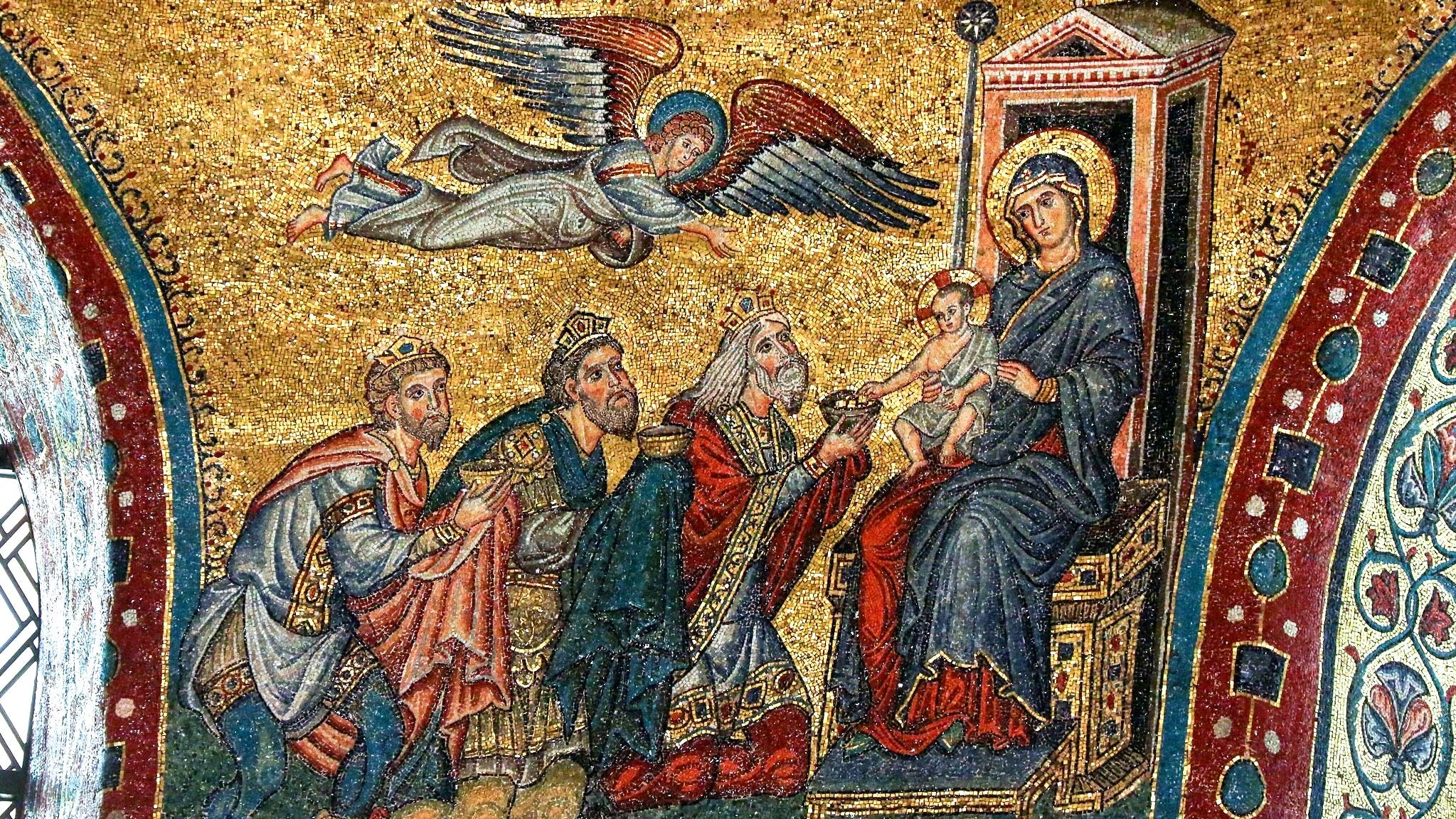
The Magi’s threefold offering unveiled the mystery hidden since Paradise – that God himself would redeem mankind and reign as King.
Editor’s Notes
In this passage, Fr. Coleridge tells us:
How the Magi’s gifts of gold, frankincense, and myrrh revealed their understanding that Christ was King, God, and Redeemer
That the Epiphany witnesses to God’s faithfulness in fulfilling promises made from the world’s beginning—not only to Israel but to all mankind
Why this mystery instructed the Angels and demonstrated God’s power, holiness, mercy, and faithfulness
He shows us that the Magi represented generations of believers who preserved the original revelation given to Adam and Noah, proving that God had prepared the entire human race for the Incarnate Redeemer.
For more context on this episode, see Part I.
The Epiphany
The Thirty Years—Our Lord’s Infancy & Hidden Life
Chapter X
St. Matt. ii. 1—12; Vita Vitæ Nostræ, § 12.
Burns and Oates, London, 1885. (1915 edition).
Headings and some line breaks added.
Adoration of the Princes
“And entering into the house, they found the Child with Mary His Mother, and falling down they adored Him, and opening their treasures, they offered Him gifts, gold, frankincense, and myrrh.”
The adoration offered by these Princes to our Lord must, of course, be considered to have been that kind of worship which, in their minds, corresponded to His dignity.
We are left to gather how far their intelligence of His Person penetrated the secret of His Divine Nature, from the gifts which they presented to Him. We have no other way of arriving at any conclusion, except so far as the whole story of their pilgrimage implies what may help us in this respect.
There can be no doubt that they considered Him as One promised by prophecy, as One Whose entrance into the world was of importance enough, in the counsels of God, to be heralded by the appearance of a miraculous star. Thus we are able to judge from their pilgrimage, from their demeanour at Jerusalem, and from the gifts which they offered, how far they understood the prophecies or traditions, which they had received, to signify Who He was and what was His Mission in the world.
The rest of this part is for paid annual/monthly subscribers.
Father Coleridge Reader is a labour of love. But curating, cleaning up and publishing these texts takes real work.
To keep this project going, and to make more of this treasury available, we rely on reader support. Some posts are reserved for members to sustain this mission.
We’re trying to keep something precious alive.
If you’ve benefited, consider joining us as a subscriber. It makes a real difference.
If we take the common Christian interpretation of these gifts alone, we are at once led to the conclusion that they recognized Him as King, as God, and as Redeemer. Gold is the offering made to kings, incense is offered to God, and myrrh signifies death, and funeral honours paid to the dead. But if one Person was to be at once King and God, and to die, it must be that He is God, the King of men by means of the Incarnation, and that He dies for men to bring about their redemption.
Thus the offerings of these Princes furnish to us, it may be said, their traditional commentary on the promise made to our first parents in Paradise. In the Seed of the Woman they see the Incarnate God, the Head and King of the human race, and in the crushing of the serpent’s head and in the lying in wait of the serpent on the heel of the conqueror, they see the redemption of the world wrought out by the suffering of the Incarnate Son of God on the Cross.
Meaning of the mystery
If this be so, we can see in this mystery of the Epiphany far more than a simple act of piety and devotion.
These Eastern Sages were not brought by Divine Providence from so great a distance simply to pour out their hearts in tender thankfulness for an unknown and uncomprehended boon. They are witnesses to the faithfulness of God in fulfilling His promises made from the beginning of the world.
But they are also witnesses to the enlightenment as to the meaning of those promises which God had vouchsafed at the beginning, and which was handed on from generation to generation, principally, no doubt, in the holy nation, but also, how largely we may never guess, among other descendants from Adam and from Noe.
We see here, as we see in the story of Job, that to the whole race of mankind was originally given the hope of a future Redeemer, Who was to be God Himself. We see the knowledge that, by means of faith in the future redemption, it was possible for men to reconcile themselves to God long before it came.
It is this original revelation to the human race which is, as it were, brought to the feet of our Lord in the Epiphany. The Wise Princes represent a long line of ancestry, for it is clear that, however marvellous may have been the personal enlightenment which they had received, the knowledge which their homage testified was in the main traditional. Who shall say how widely this knowledge had been spread, who shall count up the thousands and thousands of souls who will be found, in the Last Day, to have profited by it?
Thus, if the Epiphany had been wanting in the marvellous cycle of these early mysteries of our Lord, we should have been without this distinct and positive testification to the goodness of God in the original manifestation of His designs, and in the graces which He supplied, in order to enable so many to make use of that manifestation to the saving of their souls.
It requires comparatively a short space to relate the details of this beautiful mystery of the Epiphany, but all students of the ways of God as manifested to us in the Life of our Lord, must be prepared to find in such history very great depths of meaning and wonderful revelations of the character of God and of His work in the Incarnation.
Something has already been said of the Epiphany as viewed in this light, but it may be well, before we proceed further, to spend a short time at the feet of our Lord in His Mother’s arms, as these Wise Princes did, and consider the mystery in some of its many various aspects.
Instruction to the Angels
In the first place, we must remember that all the mysteries of our Lord’s Life were the instruction of the Holy Angels in the ways and works of God, even when they were most of all hidden from the eyes of men.
The Epiphany was indeed to become a second feast of the Nativity of our Lord to the multitudes of the Gentile believers. All over the world it is celebrated by them, and they look on it as the point in the series of these mysteries of the Holy Infancy in which they and their own children have the most lively personal interest.
But they and their children were still in the future, and the only spectators of the scene in the house at Bethlehem were the Holy Angels, with Mary and her blessed spouse. But anything new in the way of a manifestation of God was an immense joy to the heavenly host, more numerous by far than the whole multitudes of men, who were going about their ordinary occupations with so little concern, while our Lord was receiving the homage of these pilgrims in that little room.
And we can see that to them—at least, who could understand what it was that God was doing—the sight must have been a very marvellous revelation of His power, His holiness, and His mercy, as well as of that beautiful faithfulness of His, on which our Blessed Lady has taught us to dwell with loving gratitude. Let us think a few moments on each one of these attributes of God as shown in the Epiphany.
The Epiphany

Here’s why you should subscribe to The Father Coleridge Reader and share with others:
Fr Coleridge provides solid explanations of the entirety of the Gospel
His work is full of doctrine and piety, and is highly credible
He gives a clear trajectory of the life of Christ, its drama and all its stages—increasing our appreciation and admiration for the God-Man.
If more Catholics knew about works like Coleridge’s, then other works based on sentimentality and dubious private revelations would be much less attractive.
But sourcing and curating the texts, cleaning up scans, and editing them for online reading is a labour of love, and takes a lot of time.
Will you lend us a hand and hit subscribe?
Follow our projects on Twitter, YouTube and Telegram:
Twitter (The WM Review)