
The first drops of the Precious Blood
The Circumcision reveals Christ already acting as Redeemer, freely shedding his Blood with full knowledge, love, and consent.

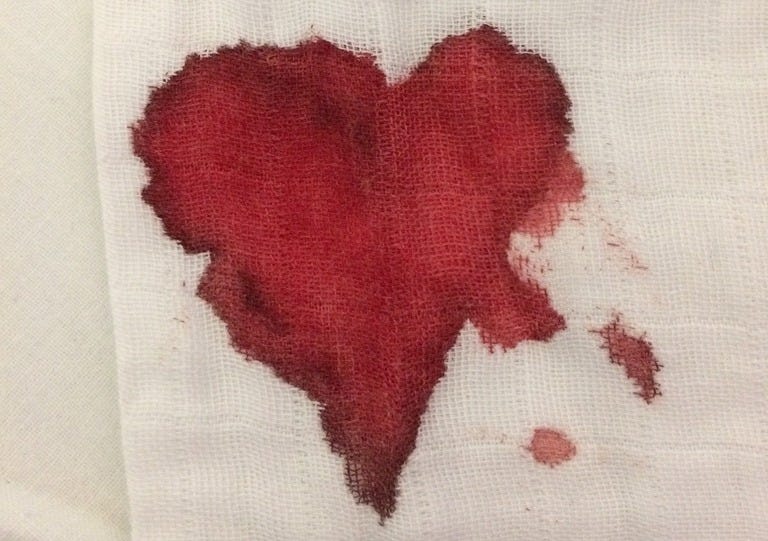
The Circumcision reveals Christ already acting as Redeemer, freely shedding his Blood with full knowledge, love, and consent.
Editor’s Notes
In this passage, Fr. Coleridge tells us:
How Christ’s Circumcision begins the redemption through the conscious, willing suffering and the first shedding of his Blood.
That this first bloodshedding already contains obedience, sacrifice, and the full scope of salvation.
Why Mary and Joseph behold not pain alone, but the Lamb already offered.
He shows us that redemption begins not at Calvary only, but at the first deliberate gift of himself.
For more context, see Part I.
The Circumcision
The Thirty Years – Our Lord’s Infancy & Hidden Life
Chapter VII
St. Luke ii. 21; Vita Vite Nostræ, § 10.
Burns and Oates, London 1885 (1915 edition).
Shedding of the Precious Blood
There are two things connected with the mystery of the Circumcision on which Catholic contemplatives may love to dwell.
The first of these is the fact that the sacred rite which was now performed was in itself very painful, and that it involved the first shedding of the Precious Blood which was afterwards to be poured out upon the Cross.
The second is that, according to the universal custom, the Child received His Name from His parents at this time, and that the Name which was received was no other than the holy name of Jesus. A few words may be said on each of these subjects.
The first shedding of the Precious Blood of our Lord could not but touch most tenderly the hearts of His Blessed Mother and St. Joseph. It would have been so in the case of any infant, and of any parents who loved their child.
But in the case of our Blessed Lady and St. Joseph, as well as of our Lord, there were circumstances altogether peculiar and unparalleled. In the first place, our Lord was already in full possession of all His mental faculties. His intelligence, His will, and the rest, could never for a single moment have been in that state of half germinal existence which is common in children. This would make the first shedding of His Blood more painful to Him than to others on account of His perfect consciousness.
But, much more than that, this bloodshedding was, on His part, as perfectly a deliberate and free act, as were afterwards that in the Garden, and that in the Praetorium, and that on the Cross. He must have shed this Blood willingly, He must have shed it deliberately, He must have shed it with all the most perfect affections of obedience to the Eternal Father, of love in the sacrifice which He was making, of desire for the salvation of mankind in general, of joy in the fruits of that particular pouring forth of His Blood in the souls of men, in all the blessings which His submitting Himself to that holy rite would involve for those for whom He underwent it.
He now began to merit, so to say, the fruits of His office of Saviour, and this could not have been so without the unrolling of all the immense range of those fruits before His mind and Heart. Nor would it be hidden from Him, on the other hand, in how many cases all that He was suffering and all that He was to suffer would be undergone in vain.
Significance of the Circumcision
In the second place, if we are to seek to enter, on this first mystery of the Precious Blood, into the hearts of Mary and Joseph, we find that the natural tenderness by which they would be touched at the sight of this innocent Blood must have been heightened and intensified in a most marvellous manner by the large extent of their intelligence of the true meanings and bearings of the mystery.
The drops of Blood which were then poured out, were not to them the simple marks of natural suffering, caused by the rite on which God had insisted, perhaps, for this very reason, that He might stamp on this initiation of the race of Abraham into covenant with Himself, some mark of the truth that without shedding of blood there is no remission.
Our Lord’s Mother and her holy Spouse must have well understood the prophecies, and they must have known that the Child was come, not only to save, but to save at the cost of His own Blood. To them He was already the Lamb of God, the Lamb slain from the foundation of the world. And so the precious drops were to them not simply His Blood, but His Blood to be shed as the ransom of men.
They must have seen in them the first-fruits of that most painful and most efficacious Sacrifice which was to be consummated on the Cross.
Moral signification
Moreover, there were moral and spiritual significations connected with the Circumcision of our Lord, which must have been present at the time both to His own mind and to the minds of Mary and Joseph.
Our Lord came to change what one of the Fathers calls a lesser circumcision into a greater circumcision. That is, He came to fulfil and to set aside the carnal circumcision to which He submitted, in order to introduce the true Christian circumcision of the heart, the spirit, the whole man, interior as well as exterior. St. Paul speaks of this in his Epistle to the Colossians, to whom he says, alluding to some false doctrines which were current in their part of the world at that time…
“… that in our Lord they are filled, Who is the head of all principality and power…”
… and then he adds, referring to other heresies by which they were assailed…
“…in Whom also ye are circumcised, with circumcision not made by hand in despoiling of the body of the flesh, but in the circumcision of Christ, buried with Him in Baptism, in Whom also you are risen again by the faith of the operation of God, Who hath raised Him up from the dead.”1
He has the same thought as to the obligation of Baptism, in the Epistle to the Romans, where He says,
“We that are dead to sin, how shall we live any longer therein? Know ye not, that we all, who are baptized in Christ Jesus, are baptized in His death? For we are buried together with Him by Baptism into death, that as Christ is risen from the dead by the glory of His Father, so we also may walk in newness of life.”2
This newness of life is received by the spiritual circumcision which our Lord came to introduce. It was represented by the external ceremony to which our Lord submitted.
It involved the perfect accomplishment of the Law, in the fulfilment of the precepts of the love of God and of the love of our neighbour. It implied the painful conquest of the appetites and concupiscences of the old man, and in this it was well prefigured by the actual cutting of the flesh, and by the flow of blood, while at the same time the feeble wills and degenerate instincts of humanity were fortified and endowed with heavenly powers by the grace purchased by the Precious Blood.
The interior crucifixion was represented, with all its blessed fruits of perfection and holiness, by the same rite which foreshadowed that Sacrifice of the Cross, by means of which were to be obtained the abundant graces which were needed for that Crucifixion.
The Circumcision
Here’s why you should subscribe to The Father Coleridge Reader and share with others:
Fr Coleridge provides solid explanations of the entirety of the Gospel
His work is full of doctrine and piety, and is highly credible
He gives a clear trajectory of the life of Christ, its drama and all its stages—increasing our appreciation and admiration for the God-Man.
If more Catholics knew about works like Coleridge’s, then other works based on sentimentality and dubious private revelations would be much less attractive.
But sourcing and curating the texts, cleaning up scans, and editing them for online reading is a labour of love, and takes a lot of time.
Will you lend us a hand and hit subscribe?
Follow our projects on Twitter, YouTube and Telegram:
Twitter (The WM Review)
Coloss. ii. 11
Romans vi. 2–4.