

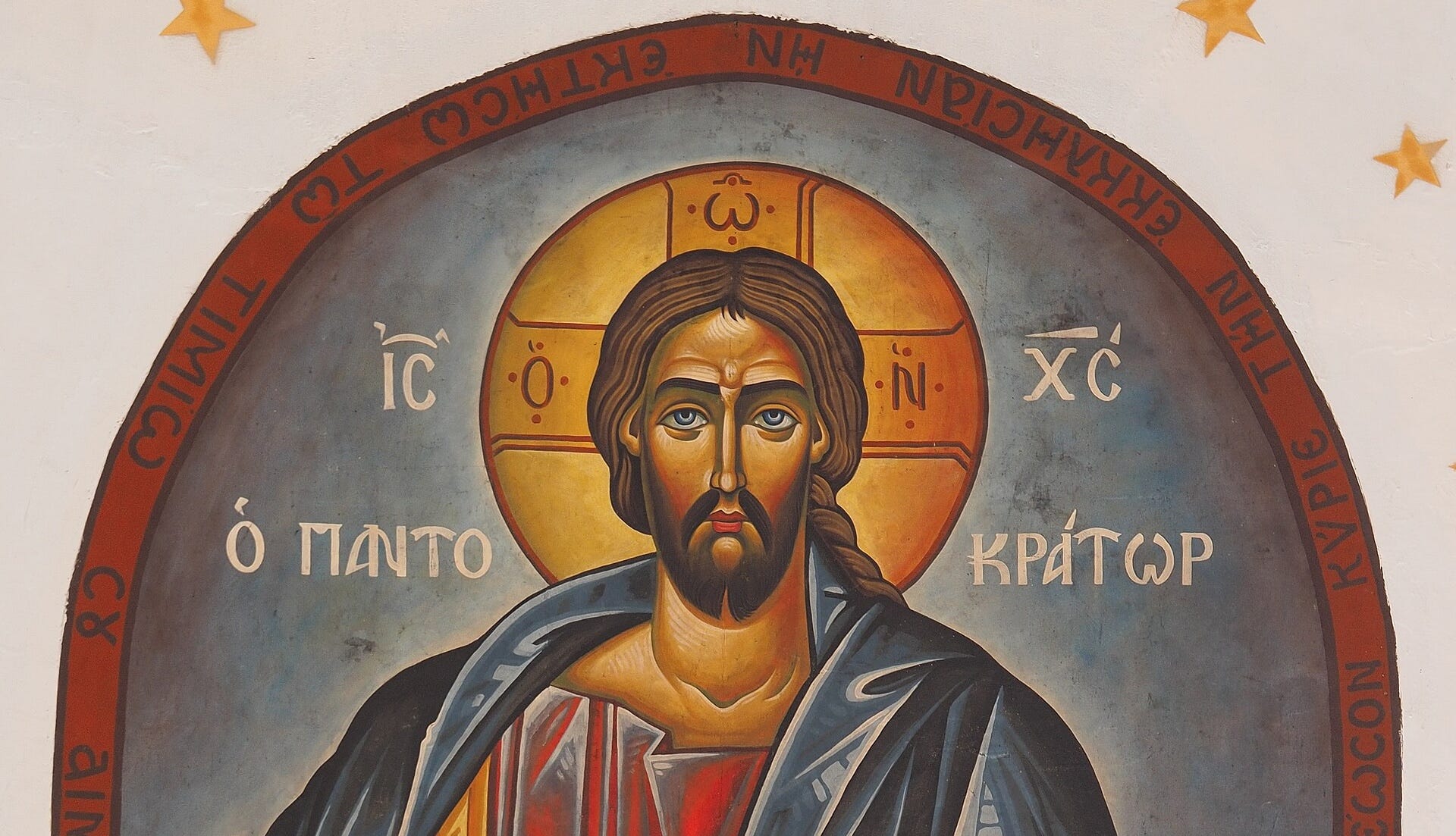
Our Lord Jesus Christ approaches the moment for which he was born as a triumphant Conqueror over his prostrate foes.
Editor’s Notes
As we enter into Holy Week, and approach the Sacred Triduum, Fr Coleridge considers Our Lord’s entrance into his Passion.
Our Lord was now approaching the moments for which he was born into this world. We have already considered how, on Palm Sunday, Our Lord casts aside some of the reserve he had previously maintained with regard to be acclaimed as King. This same casting aside is present throughout this final week of his pre-Resurrection life.
The presentation given to us by the Gospels is not of a man approaching his doom, but of a Conqueror about to trample down his enemies.
As a further aid for meditation, The WM Review, Father Coleridge Reader and Catholic Hub last year produced a recording of Fr Coleridge’s harmonisation of the Passion narratives:
Our Lord Entering on the Passion
Passiontide, Part I, Chapter II
Burns and Oates, London, 1889
Headings and some line breaks added.
Unique importance of the history
At the beginning of the history of the Sacred Passion it is natural for us to pause awhile, and recall to our thoughts the relation which that history bears to the remainder of the acts and words of our Blessed Lord, as they are preserved to us in the records of the Evangelists.
It is not only that these blessed chroniclers of our Lord have been guided to give a special prominence and extent of space to this part of their history, although it contains the account of what the world naturally thought was the defeat of their Master and the destruction of the Kingdom to found which He claimed to have been sent.
It is not only that loving friends like to dwell most fondly on the last moments of their greatest benefactors, and that disciples love to gather up every particle of the memories which are connected with such last moments and leavetakings.
It is not only that our Lord then showed His love in a more tender manner, which gave an impressiveness and power to His own precepts, examples, and exhortations, which surpassed even what they had possessed before.
It is not only that the events of the week of the Passion were in themselves such as to make a far greater sensation on the mind, even of the public, than anything that had hitherto passed in Galilee or Judæa.
All these things are true, but not the whole truth.
The one Great Sacrifice
In every one of the detailed narratives of the four Evangelists there is now evident a change of tone and of feeling, which can be accounted for by nothing else than their sense of the paramount importance of the great acts of God which they have now to relate,—paramount, even in comparison with other deeds and words of our Divine Lord.
This pre-eminence of importance can be founded on nothing else than the truth that the Passion of our Lord was, more than the most complete summary of His teaching, or the most magnificent display of His love, or the most glorious instance of virtue in the whole of His Life.
Beyond all this it was the one central act for which He came into the world, the work without which the victory would not have been gained, the Sacrifice not offered, the redemption of the world left unaccomplished, and the enemies of the human race left in possession of the conquest which they had achieved in the Fall of man. Every action or suffering of our Blessed Lord was indeed of infinite value in the sight of His Father, by reason of the union of the Divine and Human Natures in His Person. But the work for which He came was the redemption of the world by the Blood shed on the Cross. That was the one Sacrifice that was appointed for the reconciliation between God and man.
It is easy, therefore, to understand how this thought must have been prominent in our Blessed Lord’s mind at the time. We know that He had seldom spoken of it distinctly, on account of the imperfect conceptions, even of those who had been long His companions. But we can see that the Evangelists have been guided to give to the sayings and doings of the last week of His human life this altogether unique importance of which we speak.
How the Church treats it
The Catholic Church, in her sacred functions at this time of the year, reflects the thoughts of our Blessed Lord Himself. She begins her celebration of the Passion on the Sunday before Palm Sunday, and, while she veils her pictures and statues, to express the deep grief which falls on her as the year brings round the celebrations of these last days, she seems all through to keep in mind that it is the triumph of a Conqueror that she is celebrating, as well as the death of her beloved Master and Lord.
Her first notes announce the display of ‘the Standards of the King.’ Thus to her, Palm Sunday with its triumph, the people and the children crying hosannas in the Temple, the subsequent cleansing of the Temple, and our Lord’s dealings with the priests and people during the days of teaching there, up to the time of His betrayal, as well as the solemn celebrations of Holy Thursday, and all that passed in the Cenacle—all belong to the Passion, as well as the Agony in the Garden, and what passed on Calvary itself.
We have not here the history of a week, beginning by a glorious triumph, to be speedily succeeded by a complete and humiliating reverse, which quenched at once the movement that had seemed to promise so bravely, by the death of the chief agent, the scattering of His followers, and the complete victory of His enemies, who had seemed at the outset to be cowed and to quail before Him.
So it was to the eye of man, but it was quite the reverse in the eye of God. The triumph of Palm Sunday was nothing in comparison to the victory of Good Friday, and the Conqueror marches on from step to step over His prostrate foes.
Our Lord Entering on the Passion
Read Next:
Here’s why you should subscribe to The Father Coleridge Reader and share with others:
Fr Coleridge provides solid explanations of the entirety of the Gospel
His work is full of doctrine and piety, and is highly credible
He gives a clear trajectory of the life of Christ, its drama and all its stages—increasing our appreciation and admiration for the God-Man.
If more Catholics knew about works like Coleridge’s, then other works based on sentimentality and dubious private revelations would be much less attractive.
But sourcing and curating the texts, cleaning up scans, and editing them for online reading is a labour of love, and takes a lot of time.
Will you lend us a hand and hit subscribe?
Follow our projects on Twitter, YouTube and Telegram:
Twitter (The WM Review)