

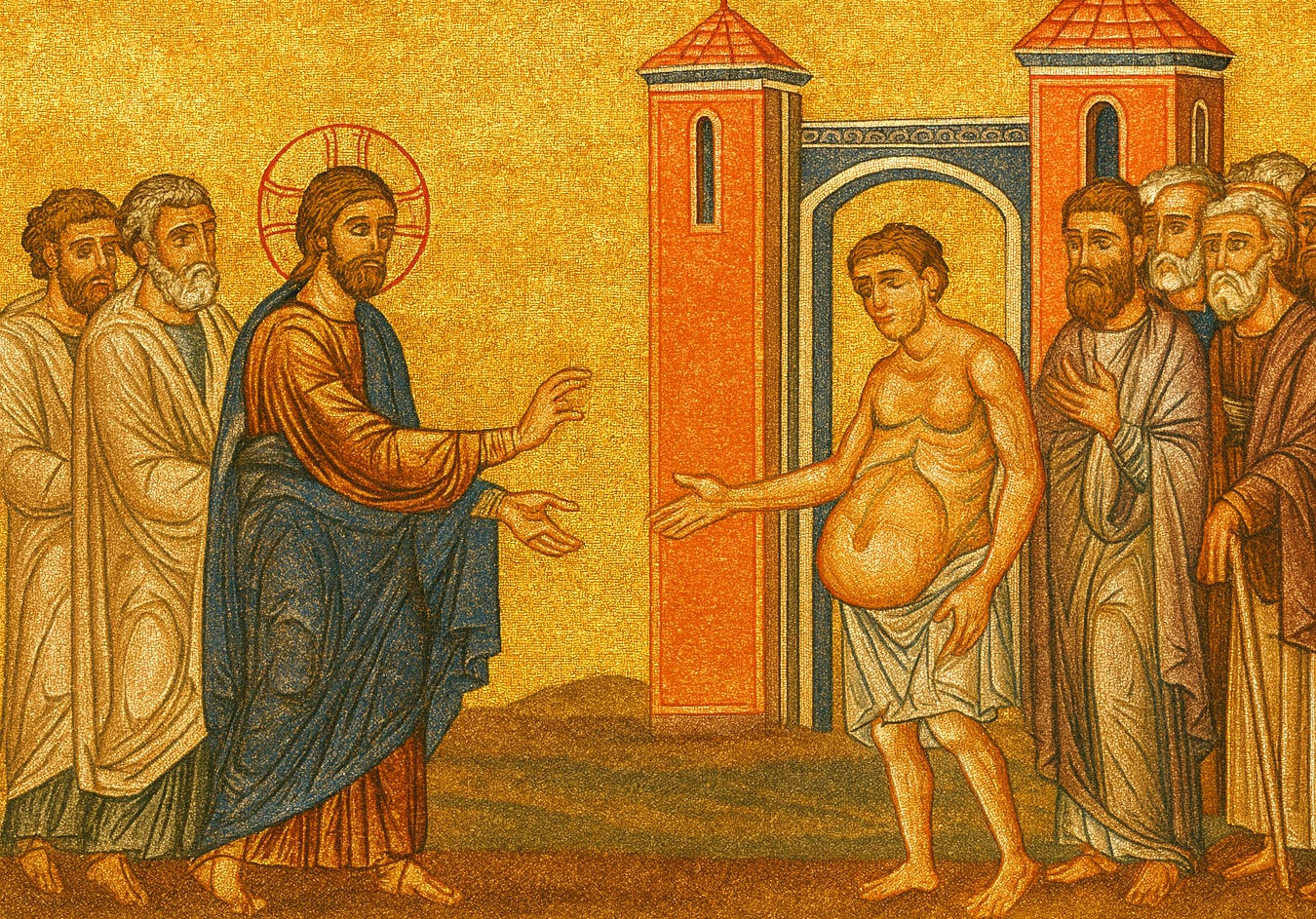
The man with dropsy may have represented pride, but the unsightly swelling must have also been most humiliating – and Our Lord takes this miracle as an opportunity to teach about humility.
Editor’s Notes
The Gospel on the Sixteenth Sunday after Pentecost takes us back to the house of a Pharisee on the Sabbath, returning to the episode recounted in part on the Second Sunday after Pentecost.
In this Gospel, we see Christ healing a man with dropsy, and then teaching the guests about the Sabbath and humility.
“At that time, when Jesus entered the house of one of the rulers of the Pharisees on the Sabbath to take food, they watched Him. And behold, there was a certain man before Him who had the dropsy. And Jesus asked the lawyers and Pharisees, saying, Is it lawful to cure on the Sabbath? But they remained silent. And He took and healed him and let him go. Then addressing them, He said, Which of you shall have an ass or an ox fall into a pit, and will not immediately draw him up on the Sabbath? And they could give Him no answer to these things.
“But He also spoke a parable to those invited, observing how they were choosing the first places at table, and He said to them, When you are invited to a wedding feast, do not recline in the first place, lest perhaps one more distinguished than you have been invited by him, and he who invited you and him come and say to you, ‘Make room for this man’; and then you begin with shame to take the last place. But when you are invited go and recline in the last place; that when he who invited you comes in, he may say to you, ‘Friend, go up higher!’ Then you will be honored in the presence of all who are at table with you. For everyone who exalts himself shall be humbled, and he who humbles himself shall be exalted.” (Luke 14:1-11)
Dropsy, also known as oedema, is a disease which causes the fluid retention and swelling in the body’s tissue – and although it has been taken to represent pride spiritually, it must also have been a most humiliating affliction. It was a fitting moment, therefore, to teach his listeners about the importance of humility.
Immediately following the text read at this Mass, Christ tells the Parable of the Greater Supper, and warns his guests that Israel was in the process of rejecting their Covenant with God, and calls them to embrace the cost of being his disciples.
This incident comes towards the end of Christ’s ministry, following his controversies with the Pharisees and Scribes and his many warnings against worldliness and carelessness.
Note: Fr Coleridge’s treatment of this incident is part of a chapter which also deals Our Lord’s parable of the Great Banquet, which is read (as mentioned) on the Second Sunday after Pentecost. We are be providing those sections below – along with the final reflections in this chapter, on what Christ means by his comments about “hating” those closest to us.
The passages particularly for today are Parts I and II.
Our Lord in the Pharisee’s House
The Preaching of the Cross, Part II
Chapter VIII
St. Luke xiv. 1-35.
Story of the Gospels, § 111-3
Burns and Oates, London, 1887
Fifteenth Sunday after Pentecost
Part I: Why did Christ provoke His enemies with miracles on the Sabbath?
Our Lord is watched closely as He enters the house of a leading Pharisee on the Sabbath. A man with dropsy stands before Him—perhaps placed there as a trap. What will he do?
Part II: Why humility is necessary even on the natural level
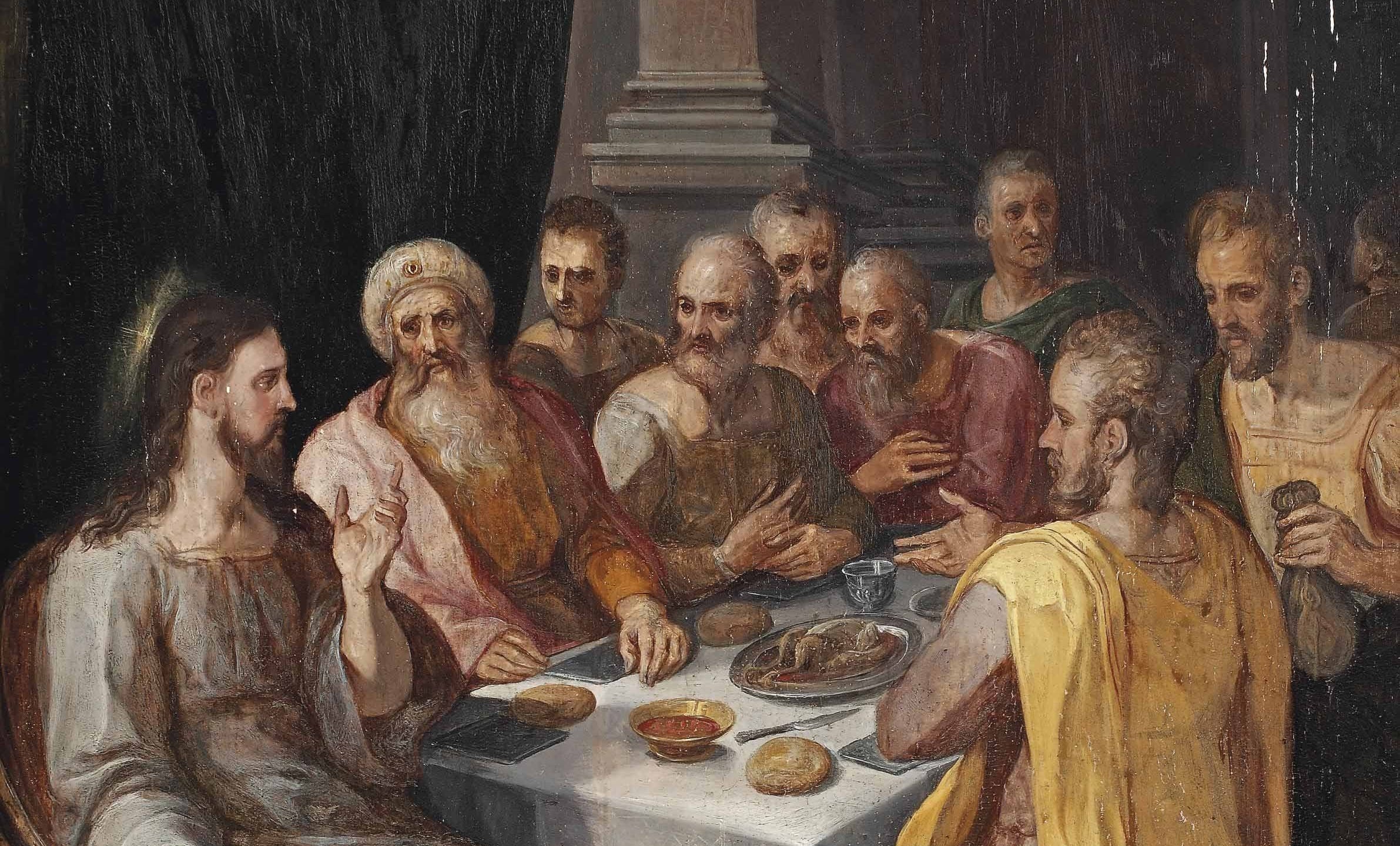
At a Sabbath meal in a Pharisee’s house, Christ explains why anyone with an ounce of self-respect must strive to be humble, or else look completely foolish.
BONUS ARTICLES
Part III: Christ’s warning: The Banquet will go on—with or without you
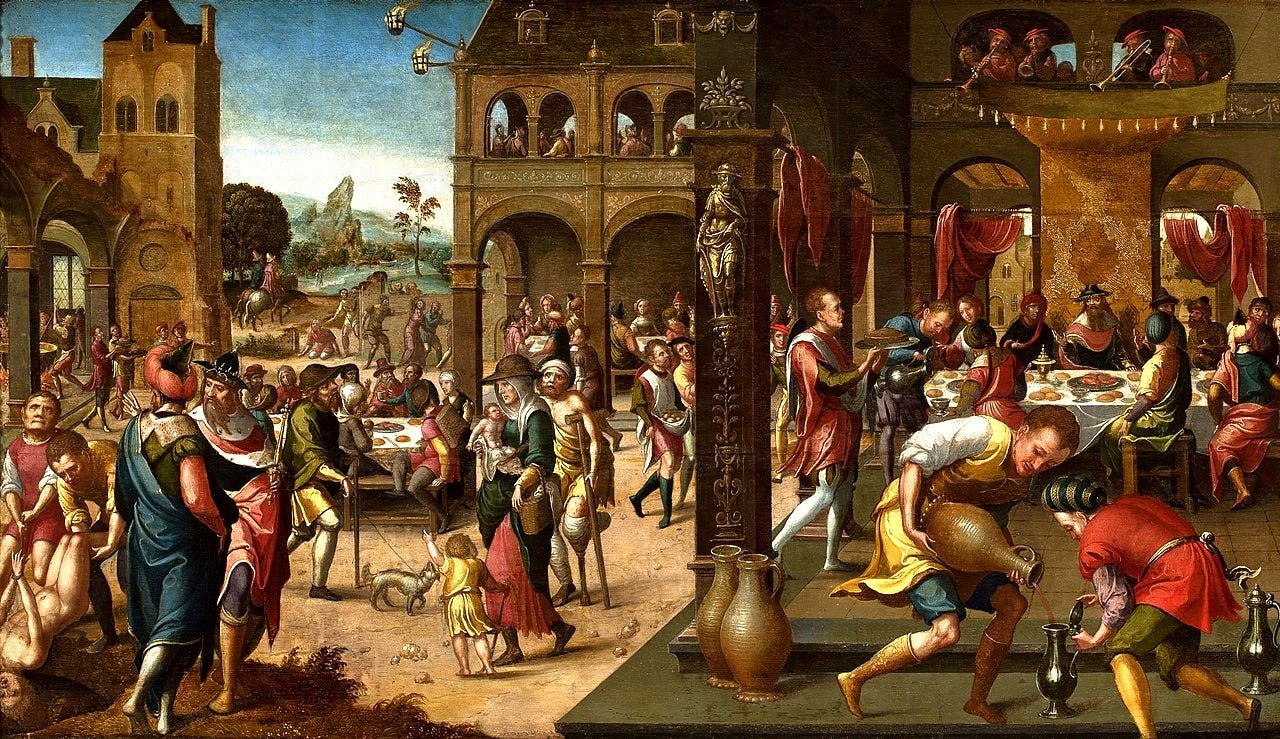
.jpg#/media/File:Christ_in_the_pharisee's_house_(Monreale).jpg)
Our Lord shows the terrible danger of refusing grace, even for things lawful in themselves.
Part IV: How the call to the Church passed from Israel to the Gentiles
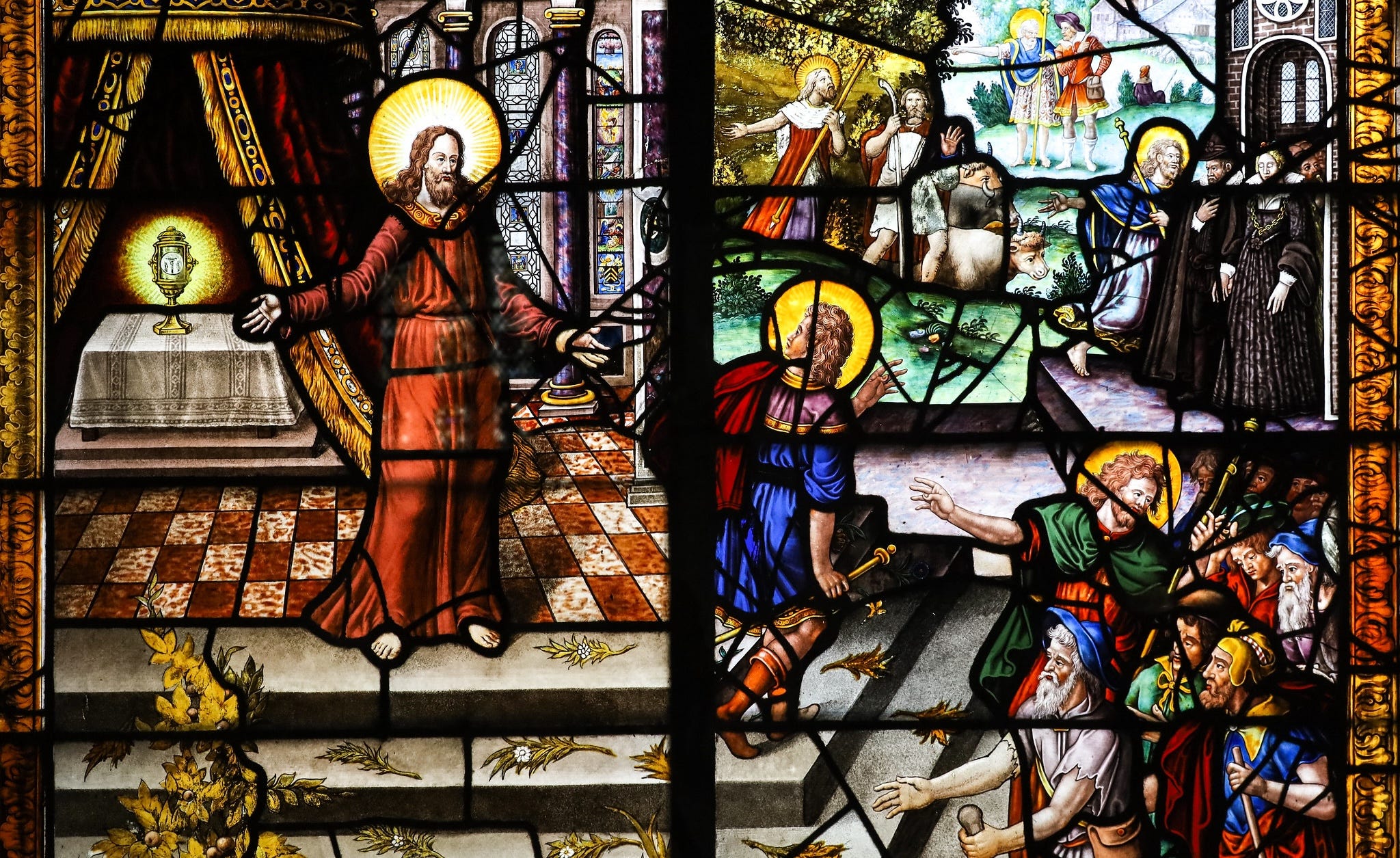
The contempt for Christ on the part of his people opened the door to the Gentiles. But what two classes of Gentiles are represented by the two classes of men in the parable?
Part V: Does Jesus actually want us to ‘hate’ our family members?
Christ tells us the cost of discipleship: not only must we carry our cross, but we must ‘hate’ father, mother, wife and children—even our own life. But what did he mean?
Here’s why you should subscribe to The Father Coleridge Reader and share with others:
Fr Coleridge provides solid explanations of the entirety of the Gospel
His work is full of doctrine and piety, and is highly credible
He gives a clear trajectory of the life of Christ, its drama and all its stages—increasing our appreciation and admiration for the God-Man.
If more Catholics knew about works like Coleridge’s, then other works based on sentimentality and dubious private revelations would be much less attractive.
But sourcing and curating the texts, cleaning up scans, and editing them for online reading is a labour of love, and takes a lot of time.
Will you lend us a hand and hit subscribe?
Follow our projects on Twitter, YouTube and Telegram:
Twitter (The WM Review)