
Why Christ was given the Holy Name of 'Jesus'
The first imposition of the Holy Name of Jesus on the infant God-Man was no less a fulfilment of the Old Covenant than the Circumcision. Fr Coleridge explains why.

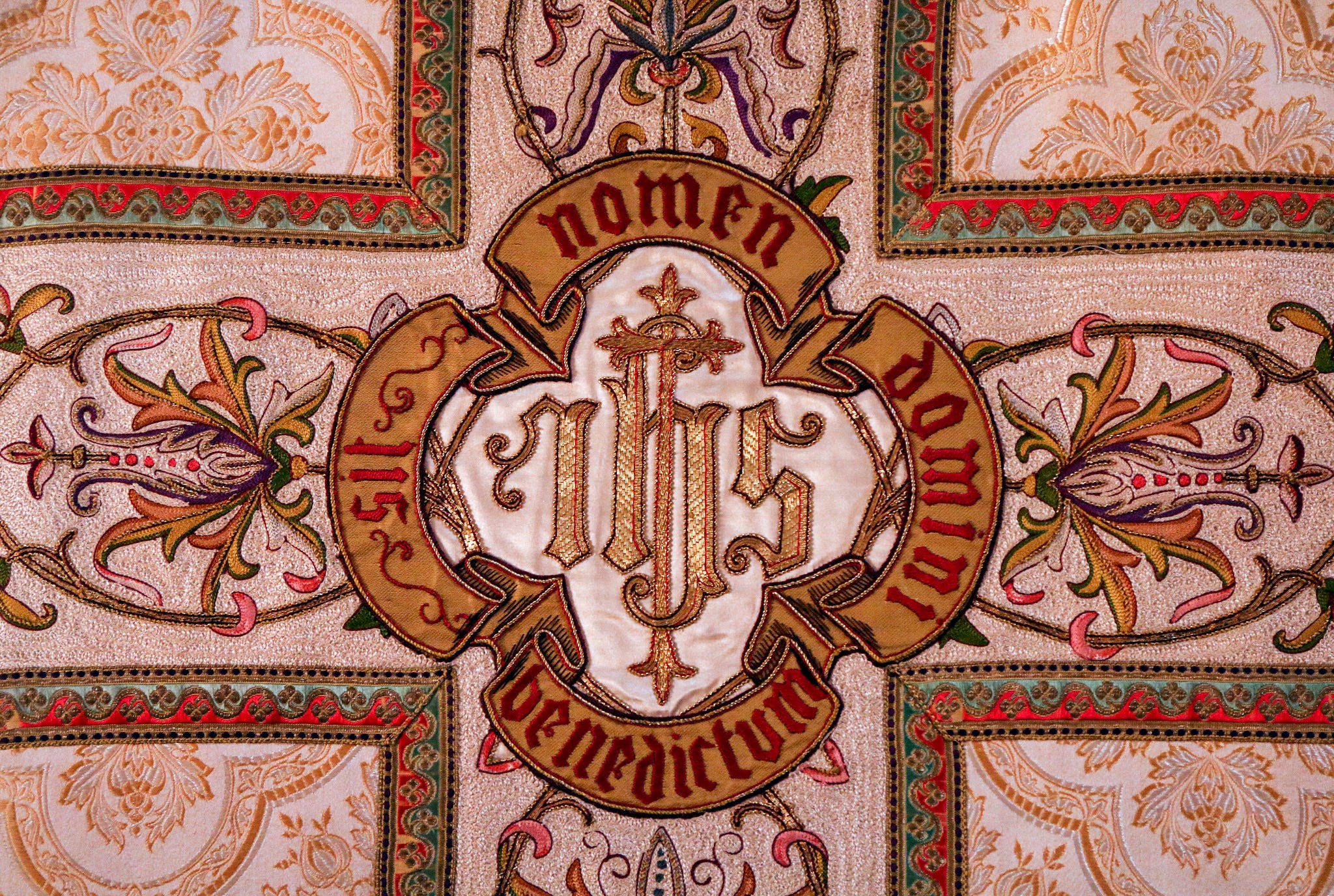
The first imposition of the Holy Name of Jesus on the infant God-Man was no less a fulfilment of the Old Covenant than the Circumcision. Fr Coleridge explains why.
Editor’s Notes
The Feast of the Most Holy Name of Jesus has been celebrated on different dates throughout history. In 1913, Pope St Pius X moved the feast to the Sunday between the Circumcision and the Epiphany.
For the Jews, the Circumcision was the moment in which the name was imposed upon a boy. Fr Coleridge addresses the devotion in the same chapter, and so we continue with his treatment.
In this passage, Fr. Coleridge tells us:
Why the name "Jesus" was expresses the Christ's mission of salvation
How the Holy Name is fulfils all Messianic promises, representing redemption, divine wisdom, and ultimate victory over sin.
How there is power in invoking the Holy Name for the faithful.
He shows us that the Holy Name is a summary of Our Lord Jesus Christ's character and mission, embodying salvation's depth and drawing hearts to love and union with Him.

The Imposition of the Holy Name
The Thirty Years – Our Lord’s Infancy & Hidden Life
Chapter VII
St. Luke ii. 21; Vita Vite Nostræ, § 10.
Burns and Oates, London 1885 (1915 edition).
Headings and some line breaks added.
Giving of the Holy Name
If the shedding of blood in the Circumcision must have signified all these beautiful results of redemption in the souls of the faithful, and thereby filled with a holy and reverential joy the hearts of the blessed pair who were so nearly united to the Heart of our Lord, it is also clear that they must have had a special delight in giving to Him the holy name of Jesus.
That name had been borne before this time by some few others, some of whom had certainly been types and forerunners of Him to Whom it primarily belonged, especially the great captain who had led the Israelites into the Promised Land, and under whose guidance its conquest had been achieved. But it was to belong to our Lord in a manner and a measure of His own; indeed, it could rightly and fully belong only to Him.
The Angel had insisted on it both to our Lady and to St. Joseph, when he revealed to each in turn the part that they were to bear in carrying out the great counsel of God. It was evidently in our Lady’s heart when she uttered her canticle of praise, for to say that her spirit rejoiced in God her Saviour, was the same thing as to mention this Holy Name. In the same way, the Holy Name is alluded to more than once in the Canticle of Zachary. In the Canticle of our Lady it is connected with the exaltation of the human race to the Kingdom of Heaven in the place of the angels. In the Canticle of Zachary, the holy Prophet seems to dwell more particularly on the blessings of a life of holiness and justice and peace in the service of God, which are secured by the mysteries which are signified in the name of Jesus.
But the actual giving of the Name was to be reserved for the time of the Circumcision, and thus for the moment when the Precious Blood was to flow for the first time. It was by that Blood that the price was to be paid of the pardoning and the cancelling of sins, of our adoption or sonship to God, of the opening of the gates of Heaven, and of the admission of man to the eternal possession of God.
Significance of names in God’s Kingdom
As the devotion to the Holy Name of Jesus fills so large a space in the hearts of Christians, we may pause for a moment to endeavour to draw out some of the thoughts which belong to that devotion.
In the first place, it must be remembered that in this, as in other names which occur in the sacred history as having been given by special command or revelation by God, we are assured by this very fact both of the importance of the Name in itself, that it must express fully and perfectly the character and office of Him to Whom it is given, and also that all the graces and blessings involved in the Name will be abundantly supplied by Him Who gives it.
It is only an imperfection in human names that they are designations and nothing more. There is no such thing as an empty title in the Kingdom of God, and the names given by Him imply the spiritual gifts or offices which they signify. Much more, of course, must this be the case with the Name of names, the Holy Name of Jesus. It was chosen specially by God, and communicated to the two persons on earth whose office it was to confer it, that is, to Mary and Joseph, with an express injunction that it was to be given by them to the Divine Child, by Mary as His Mother, and by Joseph as His Father, in all except natural generation.
Anticipations of our Lord’s office
It is, moreover, certain that the Holy Name had been promised and anticipated in the Providence of God. It had been promised in all the predictions which spoke of our Lord as performing the work of salvation, whenever such words as God my Saviour, God shall save us, and the like, had been used by holy prophets of old.
It had been in this way the burden of all the great Messianic prophecies, it had been contained in the whole sacrificial system in which redemption had been prefigured and its fruits applied, in any manner or way whatever, to the souls of men. It had been borne by some of the greatest heroes of the chosen people, whose offices were anticipations of His.
Thus the great captain of Israel represented Him as Ruler and as Conqueror of the enemies of our salvation, the great High Priest, the son of Josedech, represented Him as our Pontiff and Sacrifice, and the great teacher of wisdom, the son of Sirach, represented Him as our Master in the holy lore of salvation. Thus each of these represented, in the work which he was called to do for God, some part or branch of the work of our Lord Himself.
Meaning of the Name in Him
Thus, when the name of Jesus came to be given to our Lord by the command of an Angel, and when the reason for it was given that “He was to save His people from their sins,” it was implied that He Who was to bear it was to sum up in Himself the verification of all the prophecies, the fulfilment of all the types, personal or real, the accomplishment of the whole work of God as designed in His Eternal Wisdom and love for the salvation of the race of man.
Thus, even if we go no further in unfolding the meaning of this blessed Name as given to our Lord, we have already before us, as contained therein, our deliverance from all our spiritual enemies and dangers, the conquest for us of all the goods and riches of the Kingdom of Heaven, the perfect enlightenment which we need as to the knowledge and the service of God, and the most abundant supplies of grace and strength, all bestowed upon us by means of the most perfect atonement and reconciliation to God through the Sacrifice of the Cross.
The fulfilment of the promises and prophecies, as represented in the Holy Name, must be understood as including not only what our Lord was to do for us in His Life and Death, but all that He is to be to us in the Church, all that He is to us in the sacraments, all His personal care and love for our souls, the exercise of His power at the right hand of God in our favour, the intercession which St. Paul and St. John speak of Him as perpetually making, the Light of His example in Himself and in His Mother and His saints, and the power which He exercises on our behalf through them as well as by Himself, the welcome which He is preparing to give us as our Judge, and the eternal rewards with which He longs to crown us in the possession of Himself.
The Circumcision
Here’s why you should subscribe to The Father Coleridge Reader and share with others:
Fr Coleridge provides solid explanations of the entirety of the Gospel
His work is full of doctrine and piety, and is highly credible
He gives a clear trajectory of the life of Christ, its drama and all its stages—increasing our appreciation and admiration for the God-Man.
If more Catholics knew about works like Coleridge’s, then other works based on sentimentality and dubious private revelations would be much less attractive.
But sourcing and curating the texts, cleaning up scans, and editing them for online reading is a labour of love, and takes a lot of time.
Will you lend us a hand and hit subscribe?
Follow our projects on Twitter, YouTube and Telegram:
Twitter (The WM Review)