

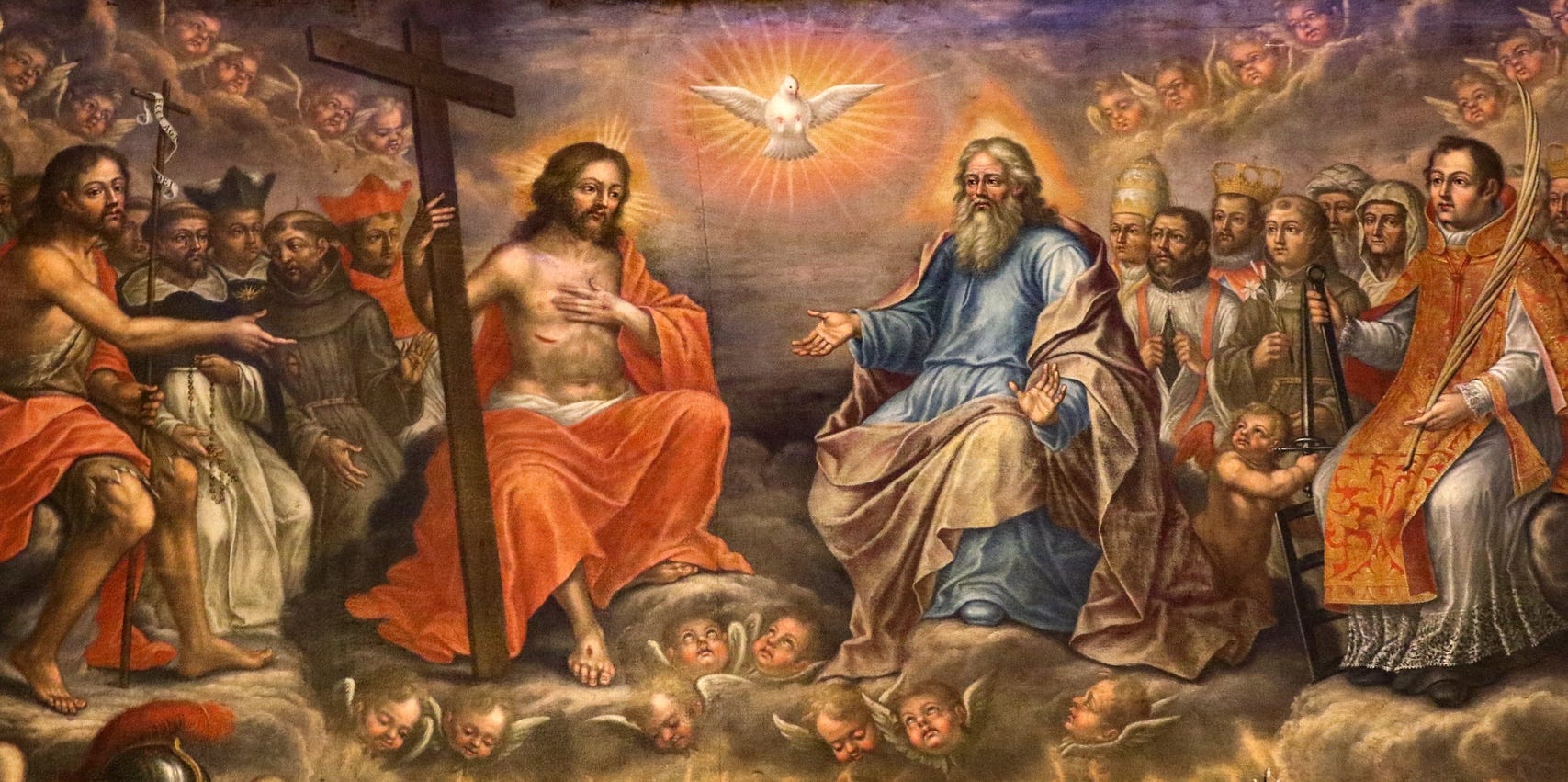
The Octave of Pentecost is Trinity Sunday – the commemoration of the heart of the Catholic religion.
Editor’s Notes
Pentecost marks the end of the great cycle of the liturgical year that began on Septuagesima (or Advent, depending on one’s reckoning). From Trinity Sunday – the Octave of Pentecost – the chronological life of Our Lord ceases to dominate the Sundays of the temporal cycle. It is fitting, therefore, that the Roman Liturgy recounts on this day one of Christ’s final acts before his Ascension.
The Gospel on Trinity Sunday recounts Our Lord definitively commissioning his Apostles to bring the Gospel to all nations, and promising to be with them until the end of time. This event forms the foundation of the Church’s life.
Each Evangelist closes his Gospel with a slightly different emphasis, which we will see as we progress through the parts of this chapter.
Following the sections, we are providing a bonus article relevant to this feast.
Before the Ascension
The Passage of Our Lord to the Father
Chapter XVI
St. Matt. xxviii. 16-20; St. Mark xvi. 14-18; St. Luke xxiv. 44-49.
Story of the Gospels, § 180
Burns and Oates, London, 1892
Part I: What Trinity Sunday tells us about the Church’s indefectible authority
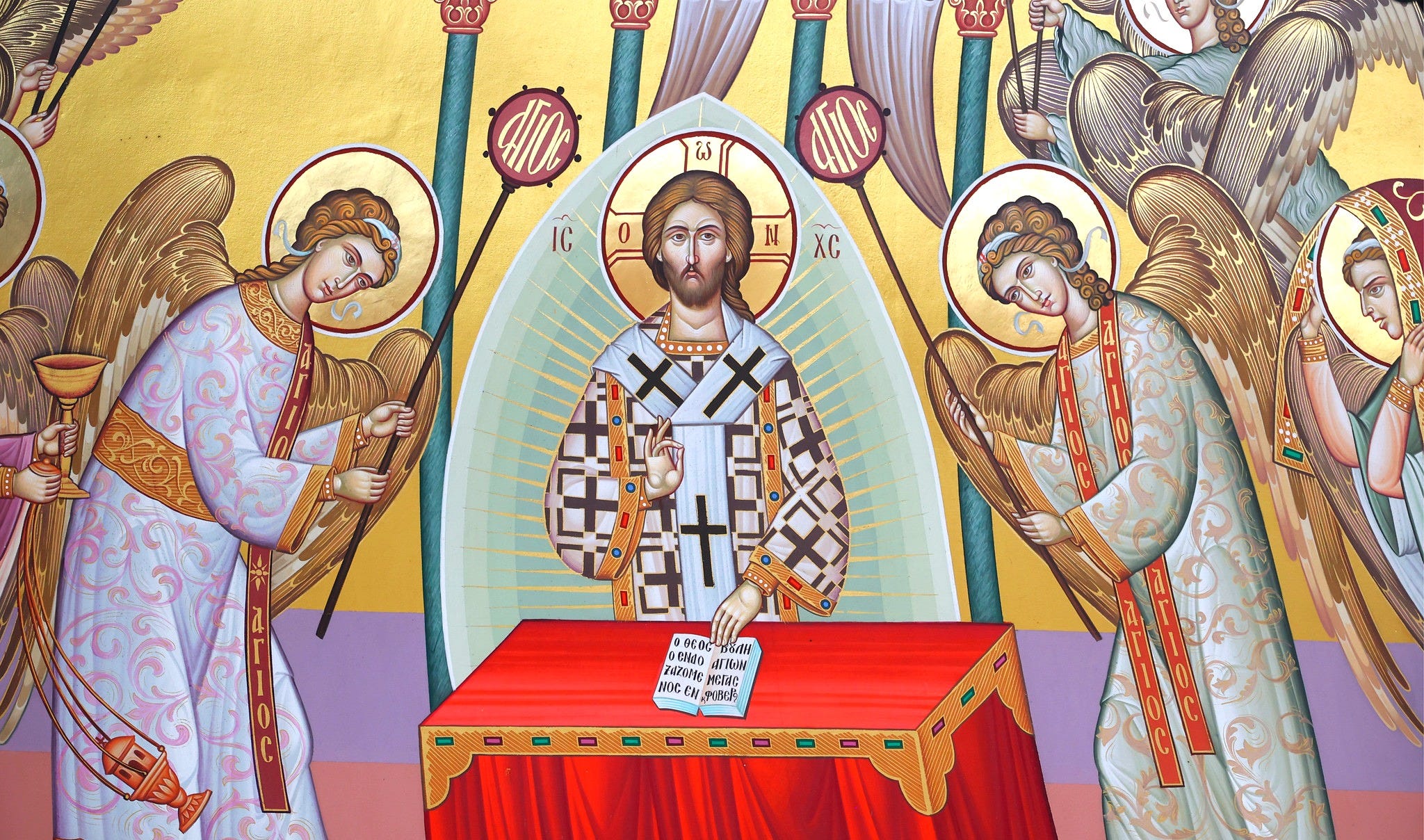
Christ’s final command was to teach, govern and sanctify all men, until the end of time. On Trinity Sunday, the Church recalls this – not as a memory, but as her living mission today.
Part II: What St Luke reveals about the Church’s mission and the Holy Ghost
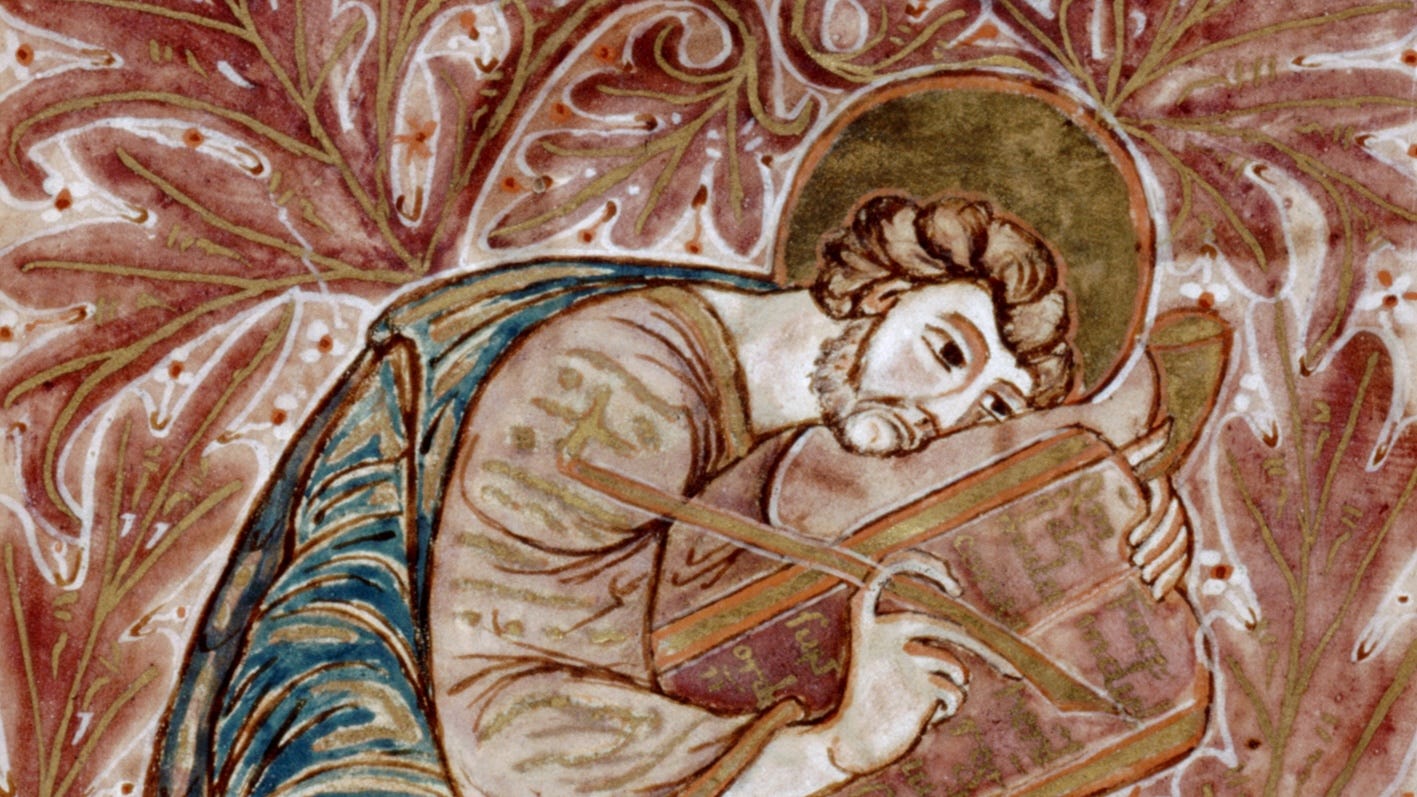
St Luke closes his Gospel with a beginning: the fulfilment of prophecy, the command to preach repentance, and the promise of power from on high.
Part III: Why does Saint John seem to end his Gospel twice?
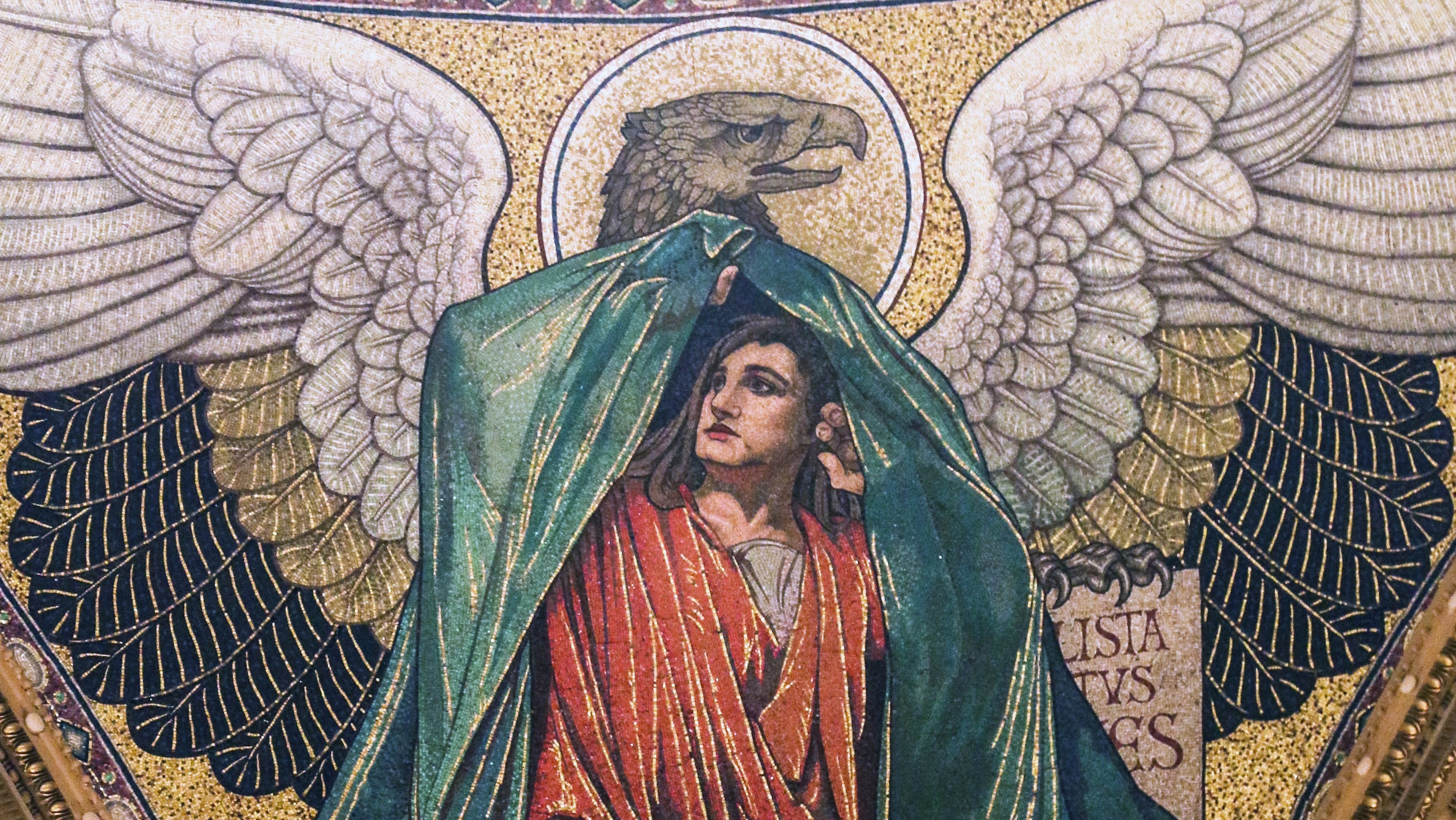
St John affirms Christ’s divinity, bears personal witness, and hints at truths too great for the world to contain. His final word is a call to believe, and to find eternal life in the Name of Jesus.
BONUS ARTICLE
Faith and Mystery: how to explain the Holy Trinity simply
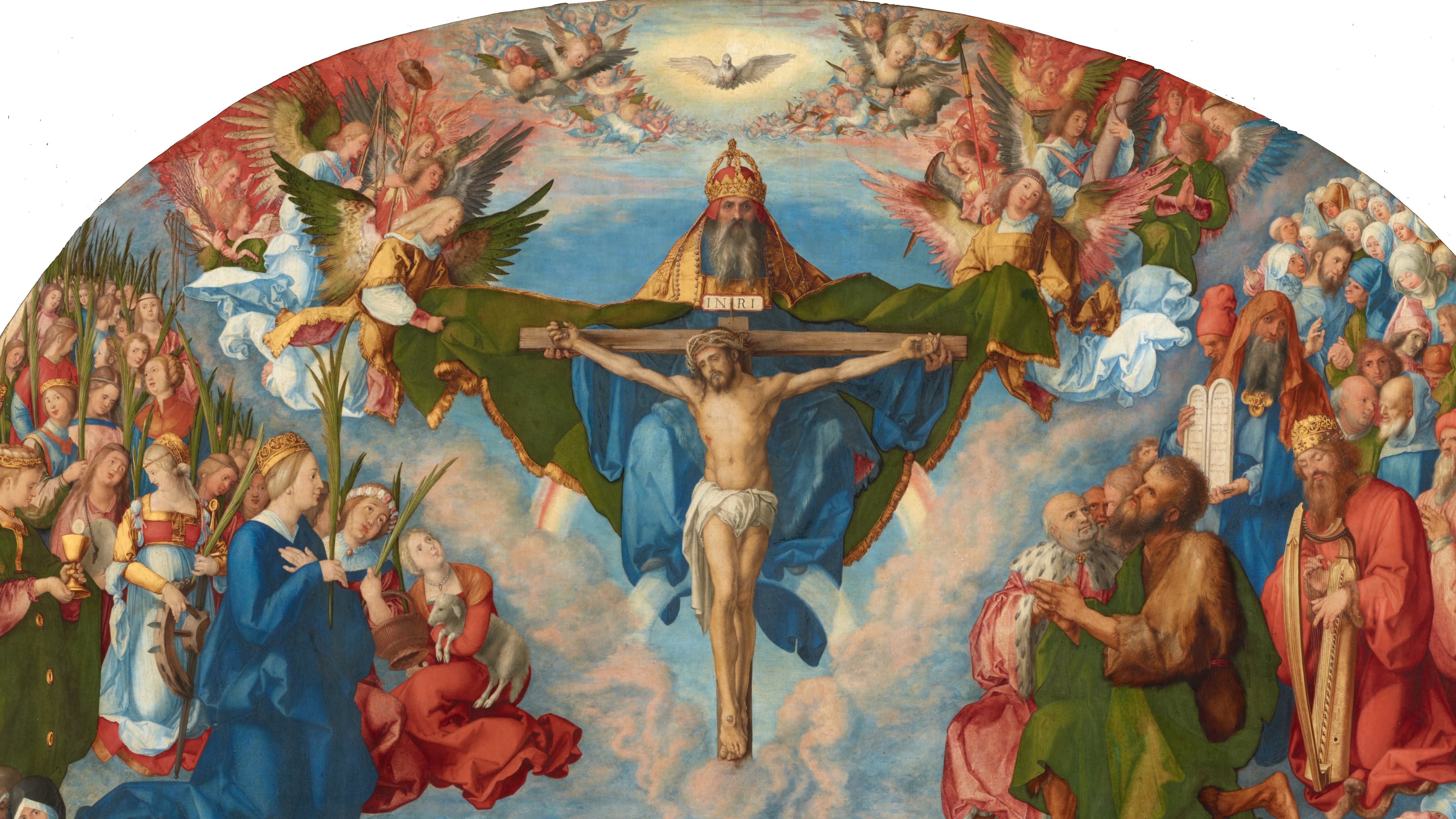

The dogma of the Holy Trinity is absolutely central to Christianity, but many do not know why we believe it, or that it is expressed in the Gospels themselves.
‘Totem Pope’—Does the mere election of a pope fulfil Christ’s promises?
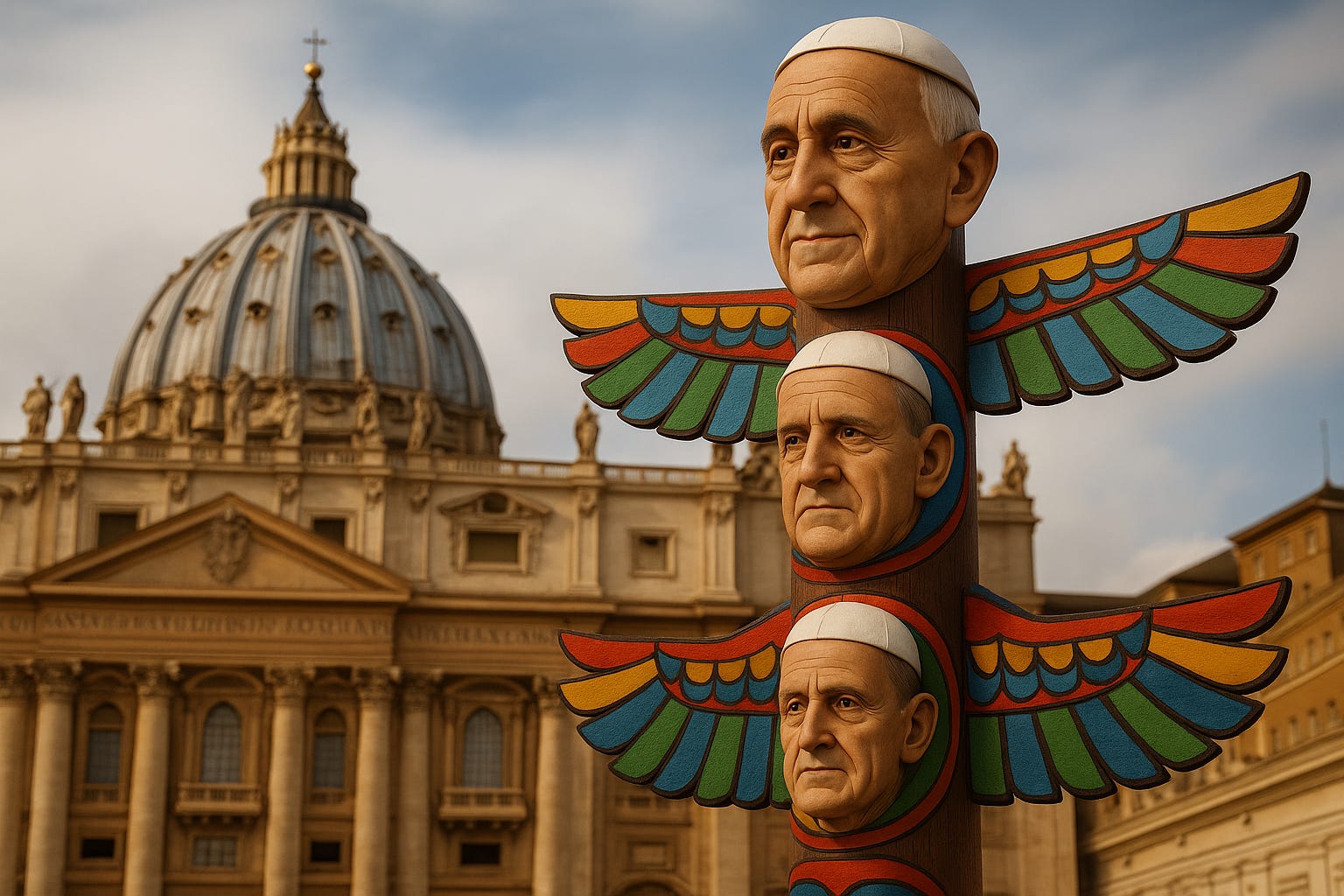
What does Christ mean when he says “I am with you all days”? This article discusses why this is more than a promise that the Church would always exist in the world:
Here’s why you should subscribe to The Father Coleridge Reader and share with others:
Fr Coleridge provides solid explanations of the entirety of the Gospel
His work is full of doctrine and piety, and is highly credible
He gives a clear trajectory of the life of Christ, its drama and all its stages—increasing our appreciation and admiration for the God-Man.
If more Catholics knew about works like Coleridge’s, then other works based on sentimentality and dubious private revelations would be much less attractive.
But sourcing and curating the texts, cleaning up scans, and editing them for online reading is a labour of love, and takes a lot of time.
Will you lend us a hand and hit subscribe?
Follow our projects on Twitter, YouTube and Telegram:
Twitter (The WM Review)