


The Church returns to the Christ’s parting words in the Last Supper discourses, as a means of preparing for life after the Ascension.
Editor’s Notes
This Gospel read on the Third Sunday after Easter takes us back to Christ’s final words to the Apostles in the Cenacle, on the night of Maundy Thursday, immediately before leaving for Gethsemane.
In this text, Christ prepares the Apostles for his imminent Passion and Resurrection, veiling the horror of his suffering in promises of future joy, clarity, and power in prayer.
Most of all, the “dual sense” of Christ’s words—pertaining to his Passion and Resurrection, as well as his Ascension and Second Coming—explain why these passages are read at this part of the Liturgical Year.
He teaches how the Church must live in the world after his visible departure – but he does not only prepare the Apostles for that reality. He also promises them that the Holy Ghost will be sent to them and direct their work, even amidst persecution and dereliction.
Parting Words
Passiontide, Part III, Chapter VI
Chapter VI
St. John xvi. 16-33, Story of the Gospels, § 156
Burns and Oates, London, 1886
Part I: What did Christ leave unsaid on the night he was betrayed?
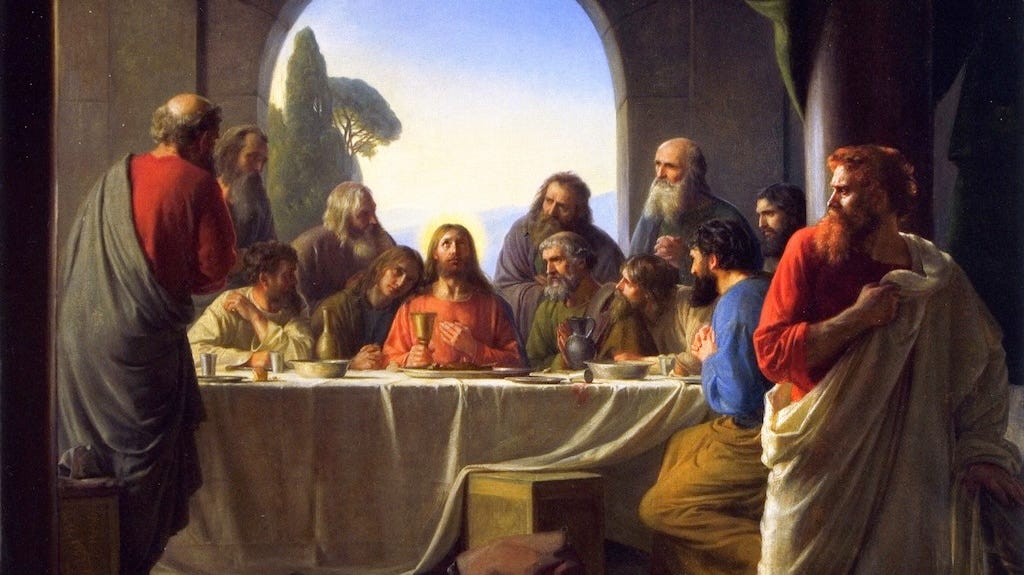

Christ made some elements of doctrine crystal clear, while left others to develop over time—but why?
Part II: Why the Church reads the Last Supper discourses in Eastertide

Our Lord spoke enigmatically before the Passion about going away, and returning—but what ‘going away’ was he talking about?
Part III: Why Christ compared Christian joy to giving birth
Our Lord did not promise that his followers would be free from sorrow. But what kind of sorrow?
Here’s why you should subscribe to The Father Coleridge Reader and share with others:
Fr Coleridge provides solid explanations of the entirety of the Gospel
His work is full of doctrine and piety, and is highly credible
He gives a clear trajectory of the life of Christ, its drama and all its stages—increasing our appreciation and admiration for the God-Man.
If more Catholics knew about works like Coleridge’s, then other works based on sentimentality and dubious private revelations would be much less attractive.
But sourcing and curating the texts, cleaning up scans, and editing them for online reading is a labour of love, and takes a lot of time.
Will you lend us a hand and hit subscribe?
Follow our projects on Twitter, YouTube and Telegram:
Twitter (The WM Review)