

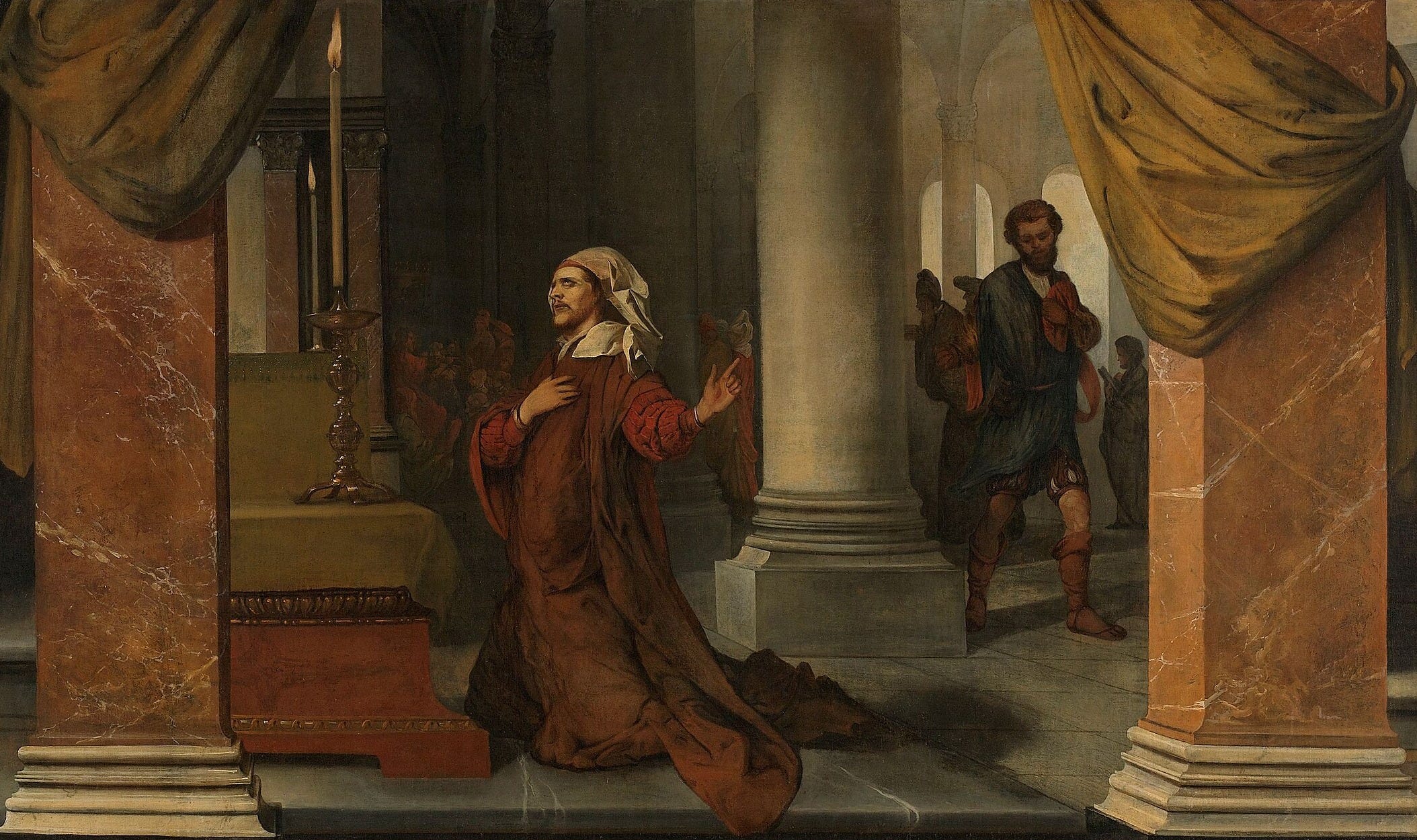
The Parable of the Publican and the Pharisee is of perennial importance for all Catholics.
Editor’s Notes
On the Tenth Sunday after Pentecost, the Church reads Our Lord’s Parable of the Pharisee and the Publican.
Christ tells he parable during his final journey towards Jerusalem, following other parables on prayer (e.g., The Unjust Judge and the Widow), and before his encounter with the Rich Young Ruler.
It offers a warning against pride, and a revelation of the true attitude towards God which we should adopt in prayer. It would be most appalling if we, who have been blessed with a certain level of understanding about the current situation in the Church, were to adopt the Pharisees attitude towards others – perhaps something like this:
“I give Thee thanks that I am not as the rest of men, Novus Ordites, Recognise and Resisters, or those who are wrong in some way about the precise nature of the crisis in the Church.”
It would be wrong to suggest that this is a particular temptation for “traditionalists”: it is a temptation for everyone, and there is no shortage of “Novus Ordites” who adopt it themselves.
But the reality is that what understanding we might have of the crisis is a gift from God, and we are not worthy of it, or anything else which we have received. Many of those on whom we might be tempted to look down, would have corresponded better to this gift had they received it, and might well be corresponding better to the graces which they have received than we are.
This is why the prayer of Publican is so important. It is, famously, used by Christians of the Byzantine rite in “The Jesus Prayer”:
Lord Jesus Christ, Son of God, have mercy on me, a sinner.
Coleridge also suggests that Our Lord was recounting a real event, rather than merely a story – an idea which he also addresses a few chapters later in relation to Christ’s encounter with Zaccheus.
In the first part, in addition to mentioning the link between this parable and the sacrifices of the Temple, Coleridge treats the prayer of the Pharisee. The second treats of the Publican’s prayer, and lists the dispositions needed by Catholics for their own prayer.
The Preaching of the Cross, Part III, Chap. VI
St. Luke xviii. 9–14
Story of the Gospels, § 123
Burns and Oates, London, 1889
Read on the Tenth Sunday after Pentecost.
Part I: Why the Pharisee’s prayer was not heard
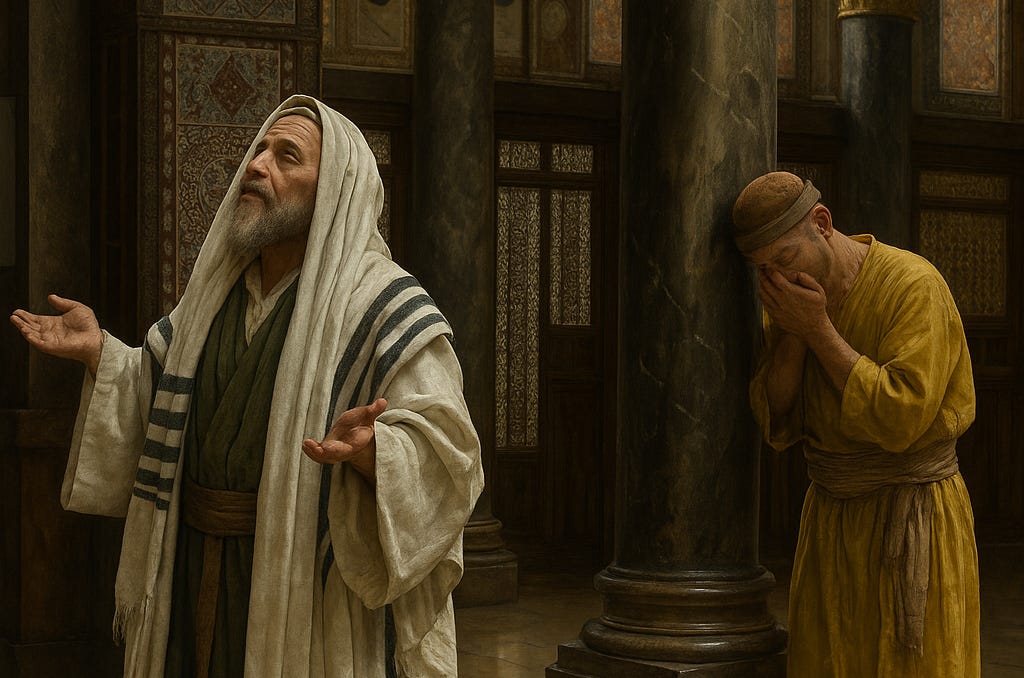
A proud Pharisee and a humble Publican go up to the Temple – but only one goes home justified. Fr Coleridge unpacks why the Pharisee’s prayer did not please God.
Part II: Why the Publican’s prayer was heard – and how ours can be too
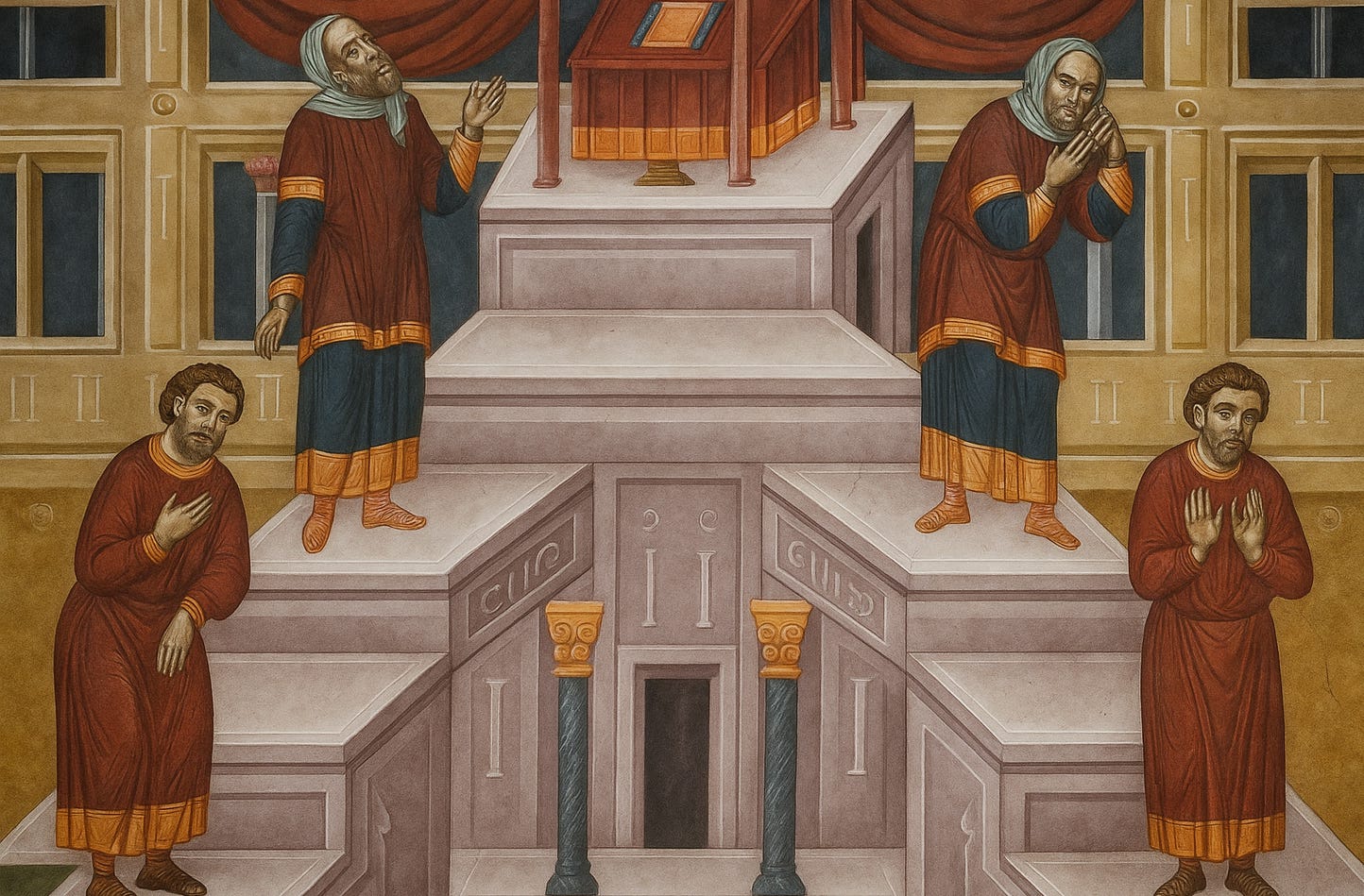

The publican uttered just one sentence—but it was enough to secure the grace of God. Father Coleridge shows how this can help us pray properly too.
Here’s why you should subscribe to The Father Coleridge Reader and share with others:
Fr Coleridge provides solid explanations of the entirety of the Gospel
His work is full of doctrine and piety, and is highly credible
He gives a clear trajectory of the life of Christ, its drama and all its stages—increasing our appreciation and admiration for the God-Man.
If more Catholics knew about works like Coleridge’s, then other works based on sentimentality and dubious private revelations would be much less attractive.
But sourcing and curating the texts, cleaning up scans, and editing them for online reading is a labour of love, and takes a lot of time.
Will you lend us a hand and hit subscribe?
Follow our projects on Twitter, YouTube and Telegram:
Twitter (The WM Review)
Thanks for the editorial.