


The feeding of the four thousand was an occasion for Our Lord to express his fundamental orientation towards mankind.
Editor’s Notes
On the Sixth Sunday after Pentecost, the Church reads St Mark’s account of the feeding of the four thousand.
It takes place after healing the Syrophoenician woman’s daughter and the deaf-mute man in Decapolis; before Our Lord’s return to Galilee and the confrontation with the Pharisees over ritual purity.
Although some might assume that it is simply a retelling of the feeding of the five thousand, it is in fact the second multiplication of loaves. Nor can this be doubted: both St Matthew and St Mark recount it as the second such miracle.
If this were not so, many would assume that it must be otherwise. As Coleridge mentions at the end of the chapter, this incident is a standing warning against those who have “a false estimate of the accuracy of the Sacred Texts,” and who approach them without the docility necessary for Christians.
The two miracles of this kind are also a double rebuke to those who try to make “the real miracle” a mere sharing of food amongst the crowd.
We could also consider the following. St John makes clear that the feeding of is orientated principally towards the doctrine of the Holy Eucharist. The feeding of the four thousand, however, is more about Christ’s love for mankind, and his determination not to leave them orphans – as Fr Coleridge makes clear.
The Feeding of the Four Thousand
The Training of the Apostles, Part IV, Chapter VII
St. Matt. xv. 29—39; St. Mark viii. 1–10.
Story of the Gospels, § 32
Burns and Oates, London, 1885
Read on the Sixth Sunday after Pentecost.
Part I: The feeding of the four thousand was a second, separate miracle
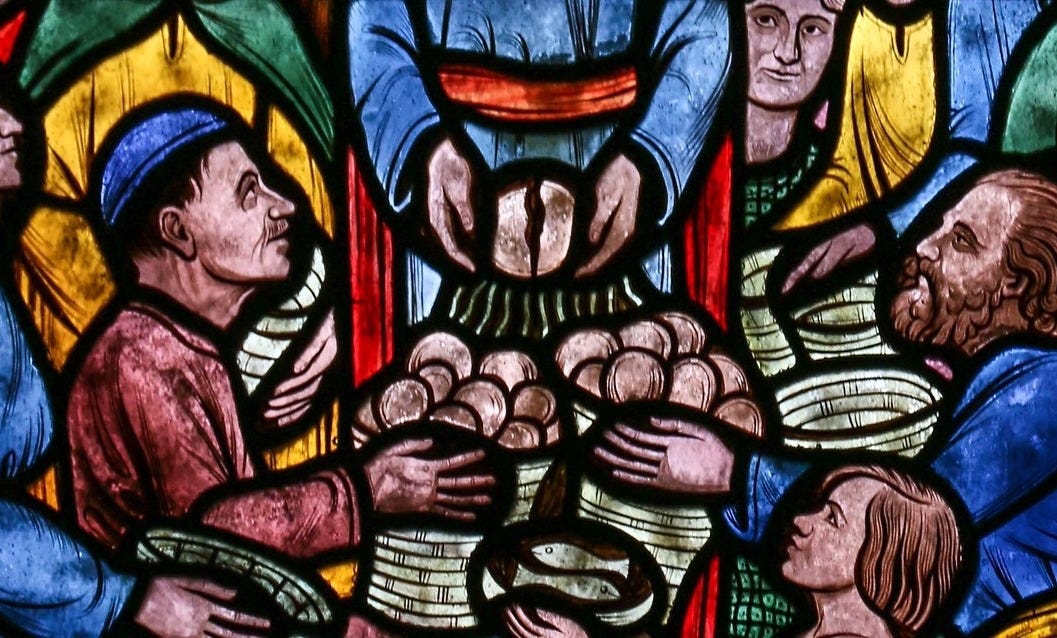
The second multiplication of loaves, given even to Gentiles, shows Our Lord was not afraid to deal with those whom corrupt religious authorities held to be “unclean.”
Part II: How did the second multiplication of the loaves flow from the first?
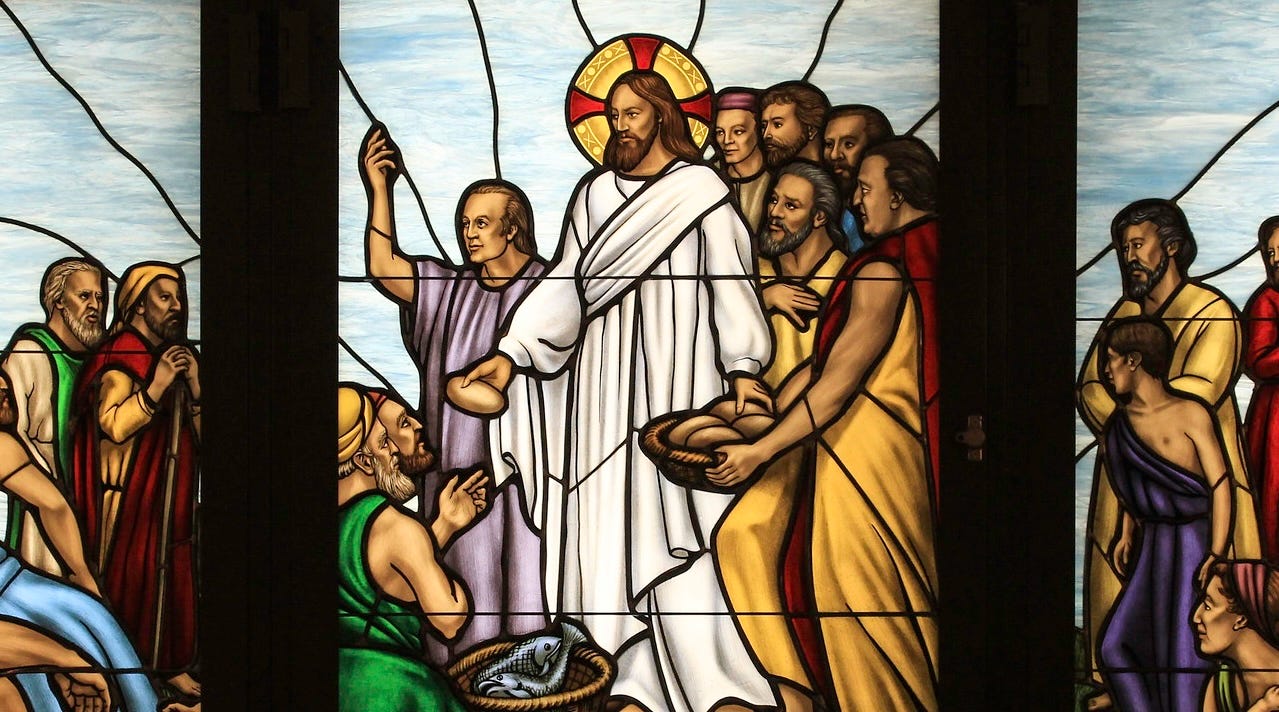
Christ repeats the miracle of the loaves to demonstrate his compassion—and to test the disciples’ readiness to expect new favours in light of past ones.
Here’s why you should subscribe to The Father Coleridge Reader and share with others:
Fr Coleridge provides solid explanations of the entirety of the Gospel
His work is full of doctrine and piety, and is highly credible
He gives a clear trajectory of the life of Christ, its drama and all its stages—increasing our appreciation and admiration for the God-Man.
If more Catholics knew about works like Coleridge’s, then other works based on sentimentality and dubious private revelations would be much less attractive.
But sourcing and curating the texts, cleaning up scans, and editing them for online reading is a labour of love, and takes a lot of time.
Will you lend us a hand and hit subscribe?
Follow our projects on Twitter, YouTube and Telegram:
Twitter (The WM Review)