

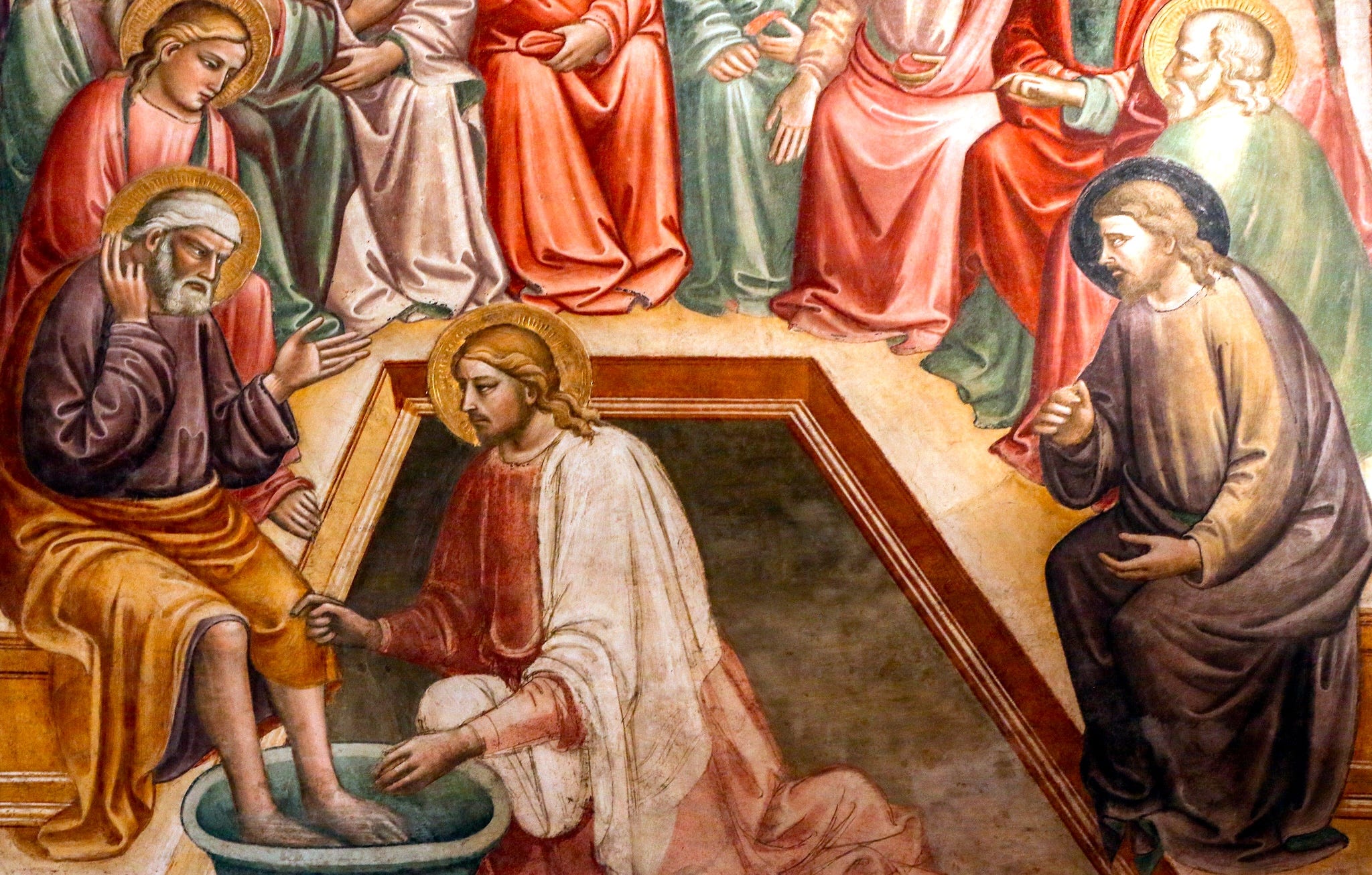
The Sermon on the Mount teaches about a beautiful reliance on Providence – but what is the basis of this reliance?
Editor’s Notes
On the Fourteenth Sunday after Pentecost, the Church reads one of the most beautiful sections of the Sermon on the Mount:
“At that time, Jesus said to His disciples: No man serve two masters; for either he will hate the one and love the other, or else he will stand by the one and despise the other. You cannot serve God and mammon.
“Therefore I say to you, do not be anxious for your life, what you shall eat; nor yet for your body, what you shall put on. Is not the life a greater thing than the food, and the body than the clothing? Look at the birds of the air: they do not sow, or reap, or gather into barns; yet your heavenly Father feeds them. Are not you of much more value than they? But which of you by being anxious about it can add to his stature a single cubit? And as for clothing, why are you anxious?
“Consider how the lilies of the field grow; they neither toil nor spin, yet I say to you that not even Solomon in all his glory was arrayed like one of those. But if God so clothes the grass of the field, which flourishes today but tomorrow is thrown into the oven, how much more you, O you of little faith!
“Therefore do not be anxious, saying, ‘What shall we eat?’ or, ‘What shall we drink?’ or, ‘What are we to put on?’ - for after all these things the Gentiles seek; - for your Father knows that you need all these things. But seek first the Kingdom of God and His justice, and all these things shall be given you besides.”
(Matt 6:24-33)
We may have grown familiar with what Our Lord says about reliance on the providence of God – and we may find Fr Coleridge’s exposition sheds new light upon it.
That is because he explicitly links the trust which we are to have in God with the words at the start of this extract about our state of servitude. As Fr Coleridge shows, we might even understand ourselves as the slaves of God.
In what sense might we be called the “slaves” of God? Our Lord said to the Apostles that they were his friends rather than servants, which would seem to exclude a fortiori any notion of slavery:
“This is my commandment, that you love one another, as I have loved you.
“Greater love than this no man hath, that a man lay down his life for his friends. You are my friends, if you do the things that I command you.
“I will not now call you servants: for the servant knoweth not what his lord doth. But I have called you friends because all things, whatsoever I have heard of my Father, I have made known to you.”
Similarly, great Bishop Bernard Ullathorne wrote in 1866:
“We are not the slaves even of God, but, as St. Paul says, our service is a free and reasonable service.”
On the other hand, the word used by Our Lady to the Angel denotes not just “handmaid” or “female servant” but “female slave” of the Lord. There is also St Louis de Montfort’s devotion of “holy slavery”, whose place in the Church’s life is unimpeachable.
It seems clear, especially in light of Coleridge’s texts, we are and are not the slaves of God, depending on what is meant by the word. In some sense, we are less and lower than slaves, in relation to God; in another sense, we are granted an exalted place as adopted sons in the Son.
This is because “slavery” is a complex concept. The word “slavery” provokes strong reactions, and Catholics have debated whether the practice of slavery is intrinsically immoral, or whether just and unjust forms of slavery can be distinguished.
This became a current issue in mid-2026, when Leo XIV apologised for what he presented as the Church’s role in slavery. I addressed this issue in the following article, which is interesting not because we can desire to re-establish the institution of slavery, but because claiming slavery is intrinsically evil (which the Church did not do) raises problems for the Church’s indefectibility, as well as the historical record:
Readers may find that the limited form of slavery recognised by the Church as legitimate (even if regrettable, and now to be avoided), purified of its historical contingencies, sheds light on the wholly honorable and desirable “holy slavery” to God – the title, Fr Coleridge explains, by which we can expect from God everything that we need.
Bishop Donald Sanborn also praised this article as “excellent” and suggested that Leo XIV himself should read it. I expanded on the issue in another article, comparing the Church’s nuanced position towards slavery with her wholly oppositional stance towards gladiatorial blood sports:
Single Service
The Sermon on the Mount (To the End of the Lord’s Prayer)
Chapter VII
St. Matt. vi. 24; Story of the Gospels, § 33
Burns and Oates, London, 1878
Fourteenth Sunday after Pentecost
Part I: God will not be outdone in protecting his servants
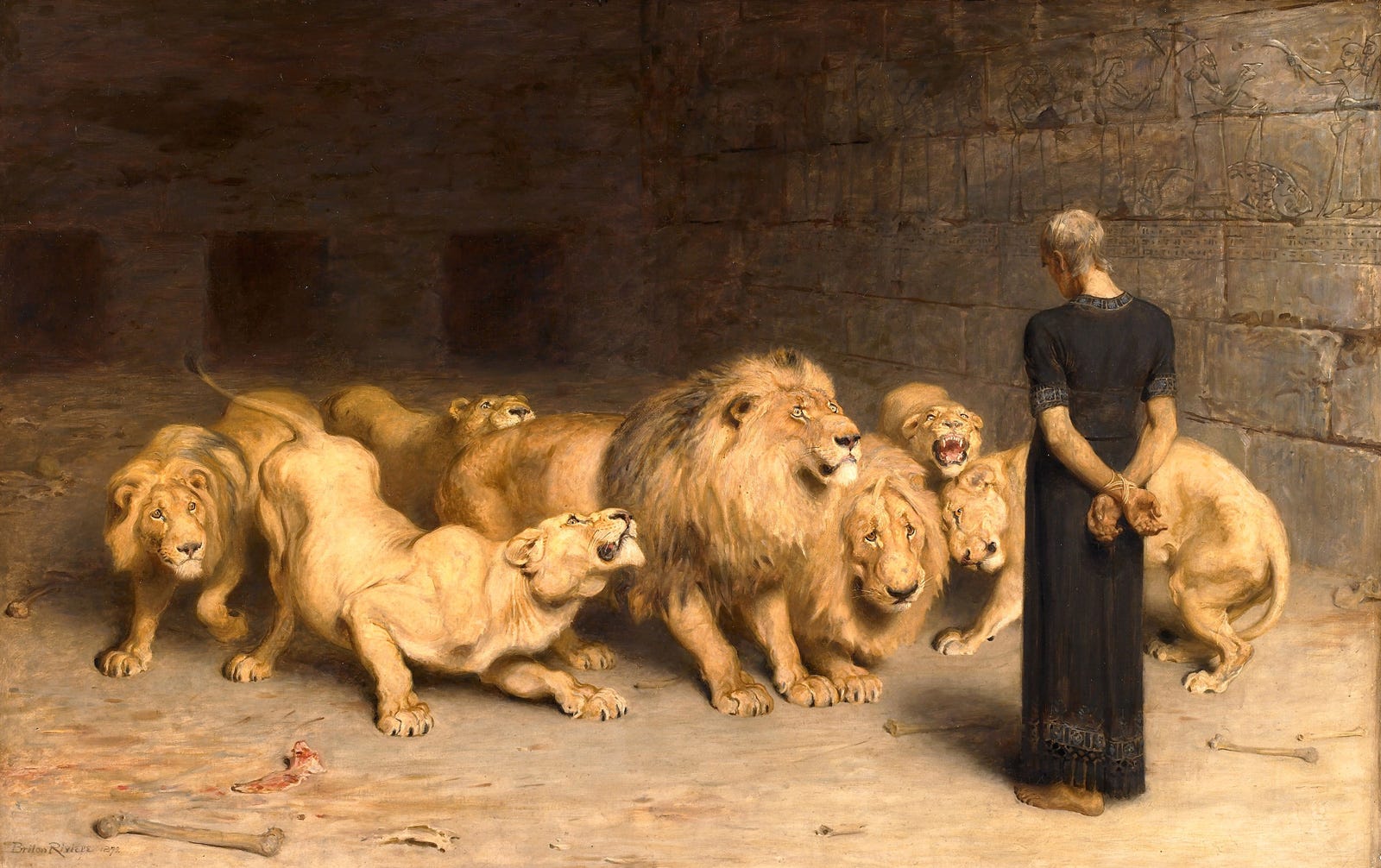
It may not always be in the form that we desire or expect, but that’s because God’s protection exceeds our limited ideas.
Part II: Are we the ‘slaves’ of God – and what happens if we refuse his dominion?


If God is our Master, are we his servants... or slaves?
Part III: If we are ‘slaves,’ what kind of Master is God?
The two masters that Christ puts before us are wholly different. It is emphatically not ‘Better to reign in Hell, than serve in Heaven,’ as Milton put it.
Here’s why you should subscribe to The Father Coleridge Reader and share with others:
Fr Coleridge provides solid explanations of the entirety of the Gospel
His work is full of doctrine and piety, and is highly credible
He gives a clear trajectory of the life of Christ, its drama and all its stages—increasing our appreciation and admiration for the God-Man.
If more Catholics knew about works like Coleridge’s, then other works based on sentimentality and dubious private revelations would be much less attractive.
But sourcing and curating the texts, cleaning up scans, and editing them for online reading is a labour of love, and takes a lot of time.
Will you lend us a hand and hit subscribe?
Follow our projects on Twitter, YouTube and Telegram:
Twitter (The WM Review)