


Christ’s words about ‘anger’ are one of the most challenging parts of the Gospels – and they are explained here in full.
Editor’s Notes
On the Fifth Sunday after Pentecost, the Church reads the following from Our Lord’s Sermon on the Mount:
At that time, Jesus said to His disciples: Unless your justice exceeds that of the Scribes and Pharisees, you shall not enter the kingdom of heaven. You have heard that it was said to the ancients, ‘You shall not kill’; and that whoever shall kill shall be liable to judgment.
But I say to you that everyone who is angry with his brother shall be liable to judgment; and whoever says to his brother, ‘Raca,’ shall be liable to the Sanhedrin; and whoever says, ‘You fool!’, shall be liable to the fire of Gehenna.
Therefore, if you are offering your gift at the altar, and there remember that your brother has anything against you, leave your gift before the altar and go first to be reconciled to your brother; and then come and offer your gift.
The Sermon on the Mount was delivered early in Christ’s public ministry, after the first Passover and our Lord’s initial preaching and miracles.
The section itself appears early in the Sermon, in the section which Coleridge titles “Evangelical Justice.” It begins with Our Lord’s comments about having come to fulfil the Law and the Prophets; following his treatment of the fifth commandment (“Thou shalt not kill”) and anger, he treats divorce, oaths, and other matters.
Our Lord shows that the demands of the Gospel radically exceed the teaching of the Pharisees and the Scribes—awakening an awareness in his listeners of their dependence on God, rather than themselves.
This is a difficult passage, and easily misunderstood. One reason for this is that the word anger refers both to a passion, and a sin.
We have addressed this matter in more detail below:

To summarise:
The passion of anger is a good part of our nature. Like all the passions, the Fall has made anger difficult for reason to govern. Experiencing this passion is morally indifferent, and it may move us to an act of virtue or of sin, depending on the circumstances.
The sin of anger is that which is not regulated by the order of reason. It may be a mortal or venial sin depending on the circumstances.
Losing sight of these distinctions has caused much confusion in our day, as have confused explanations of this particular Gospel passage.
The text from Fr Coleridge
Our Lord’s purpose in this passage was to present the scope of the Fifth Commandment (“Thou shalt not kill”), rather than to present a thorough analysis of anger, or the passions in general.
The point is that the Fifth Commandment includes interior malice, and not that anger can never be justified.
This is why Fr Coleridge’s text focuses on the sin of anger. He does not address the concept of just or righteous anger; nor does he exclude it, or suggest that all forms or feelings of anger are sinful. His focus is on a deliberate “malice and evil intention” which is contrary to temperance, justice and charity.
It is also a salutary warning – because in some cases, what we feel to be justified anger may not really be so. Our Lord’s words may serve as a check on a wounded sense of self-love, and hold us back from seeking revenge or justice in a disproportionate way.
The Gospel Law as to Anger
The Sermon on the Mount (To the End of the Lord’s Prayer)
Chapter V
St Matt. vi. 20-30
Story of the Gospels, § 32
Burns and Oates, London, 1878
Part I: What Christ teaches about contempt, anger, and judgement of others

Christ condemns not just murder, but the anger, contempt, and malice that lead to it—revealing that justice must begin in the heart.
Part II: What kind of anger deserves the fires of Hell?
Our Lord teaches that anger can be a grave sin against the order of charity he came to establish, and merit eternal punishment in Hell.
Part III: Does non-Catholic worship please God?

Our Lord teaches that no worship can be acceptable while we harbour malice in our hearts, or stand outside the unity of the Church.
Part IV: Reconciliation must be sought before the Day of Judgment
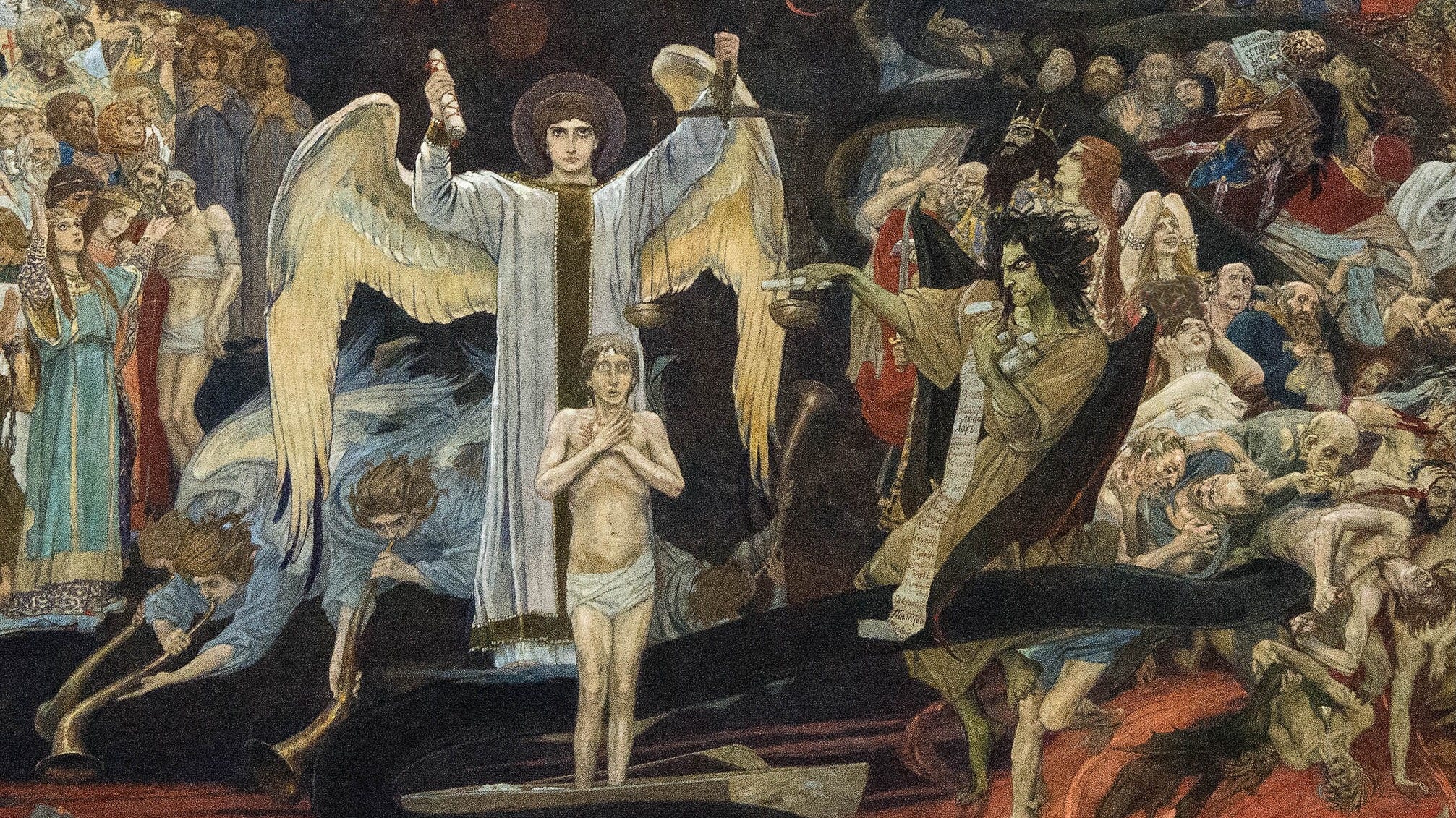
Christ warns us not to delay reconciliation with God or neighbour, lest we face divine justice on the last day.
Part V: How Christ refers to Purgatory in his warning about sinful anger

In his treatment of the Fifth Commandment, Christ’s image of prison implies not necesaarily Hell, but Purgatory—a warning that we must pay the price of rejecting grace.
BONUS: Anger and revenge can be virtuous: St Thomas explains

Christ warns us not to delay reconciliation with God or neighbour, lest we face divine justice on the last day.
Here’s why you should subscribe to The Father Coleridge Reader and share with others:
Fr Coleridge provides solid explanations of the entirety of the Gospel
His work is full of doctrine and piety, and is highly credible
He gives a clear trajectory of the life of Christ, its drama and all its stages—increasing our appreciation and admiration for the God-Man.
If more Catholics knew about works like Coleridge’s, then other works based on sentimentality and dubious private revelations would be much less attractive.
But sourcing and curating the texts, cleaning up scans, and editing them for online reading is a labour of love, and takes a lot of time.
Will you lend us a hand and hit subscribe?
Follow our projects on Twitter, YouTube and Telegram:
Twitter (The WM Review)