

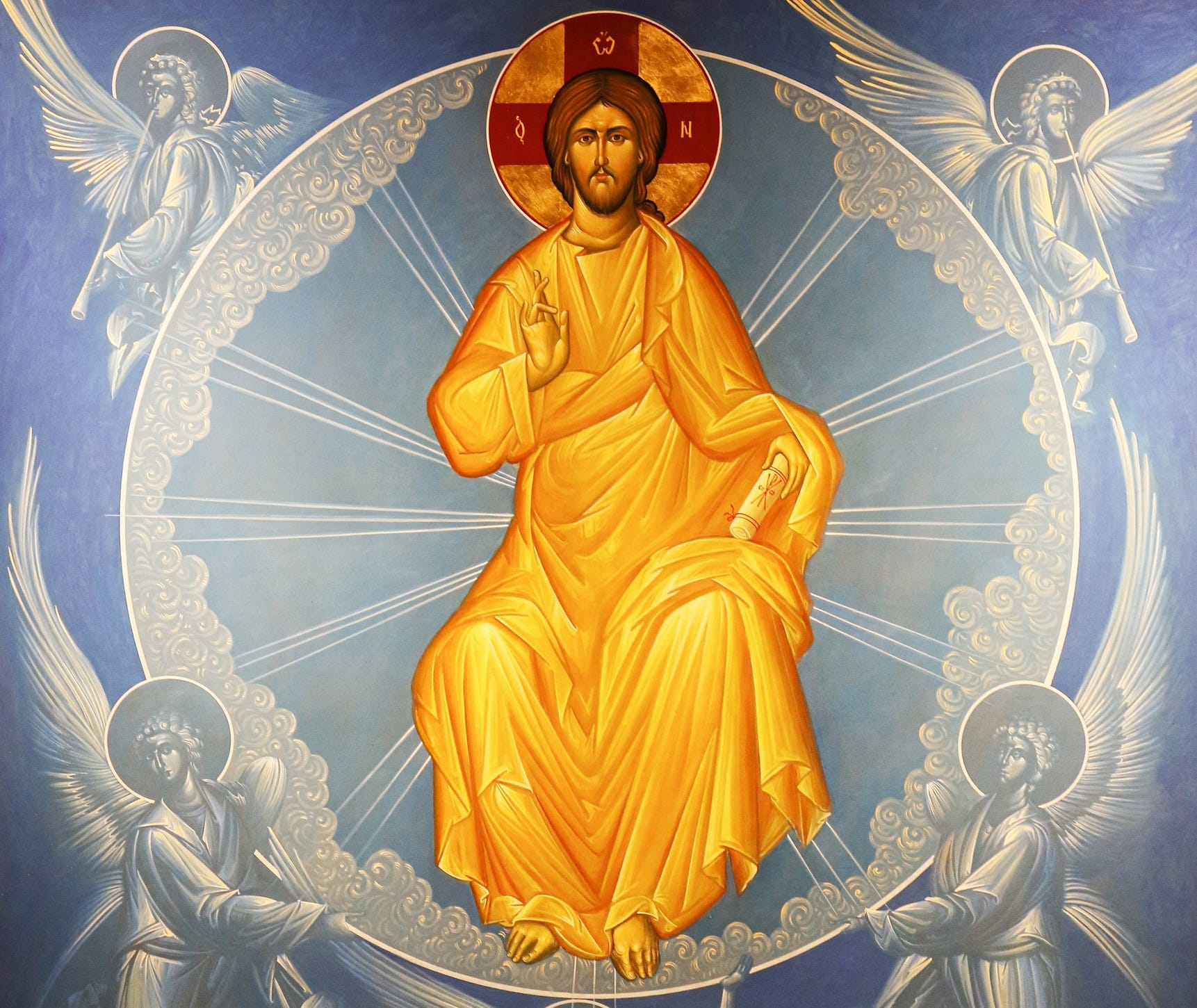
Our Lord’s triumphant entry into Jerusalem led to his Passion and Resurrection. His triumphant entry into Heaven led to the Descent of the Holy Ghost at Pentecost.
Editor’s Notes
On the Feast of the Ascension, the Church reads St Mark’s account at the Gospel, and St Luke’s account in the Acts of the Apostles in the Epistle.
Father Coleridge’s account of the Resurrection draws on both of these, as well as those of the other Gospels.
He points out that the Gospel accounts are silent about certain aspects of the Ascension narratives, and tentatively supplements them with certain private revelations that have been given to the mystics.
Just as the triumphant entry of Palm Sunday led to the Passion and Resurrection of Christ, Christ’s Ascension was his triumphant entry into Heaven, leading to the Descent of Pentecost. Fr Coleridge argues that the Ascension was a moment of joy, as it was Christ’s triumphant entry into Heaven.
It is often suggested that, after the Ascension, the Apostles locked themselves in the Cenacle “for fear of the Jews” – and that this fear continued until the coming of the Holy Ghost nine days later. However, this may be something of a conflation with what happened after the Passion. The Acts of the Apostles does not indicate terror: rather, they retreated to the Cenacle to pray, as they had been told to do so. Further, in his Gospel account, St Luke states that “they adoring went back into Jerusalem with great joy.”
The Ascension
The Passage of Our Lord to the Father
Chapter XVII
St. Luke xxiv. 50-53; St. Mark xvi. 19, 20; St. John xx. 30, 31; xxi. 25.
Story of the Gospels, § 181
Burns and Oates, London, 1892
Part I: Who was at the Ascension of Christ?
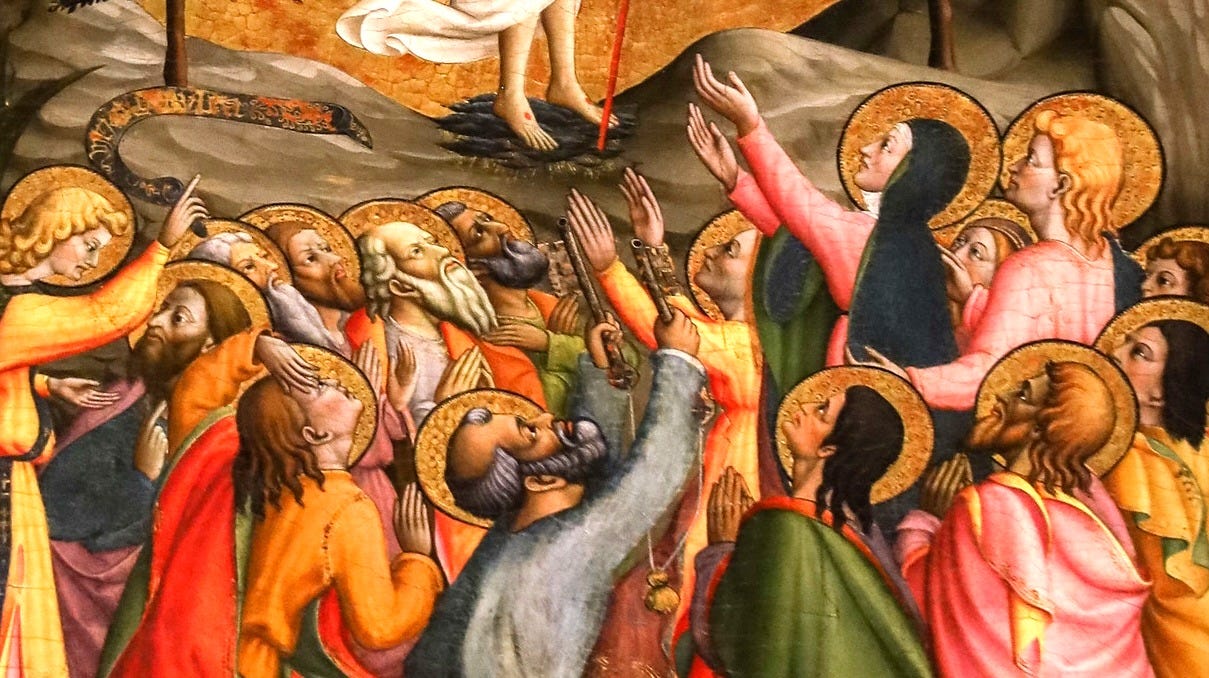
Our Lord Jesus Christ’s Ascension and visible departure left no sorrow—only joy, courage, and a mission to proclaim Him.
Part II: What the Ascension teaches about prophecy and false religious expectations

Christ did not restore Israel’s kingdom—he founded the Church and sent the Apostles to suffer. He turned their hopes from political triumph to the conquest of souls.
Part III: Why is Christ’s Ascension still hidden in mystery?
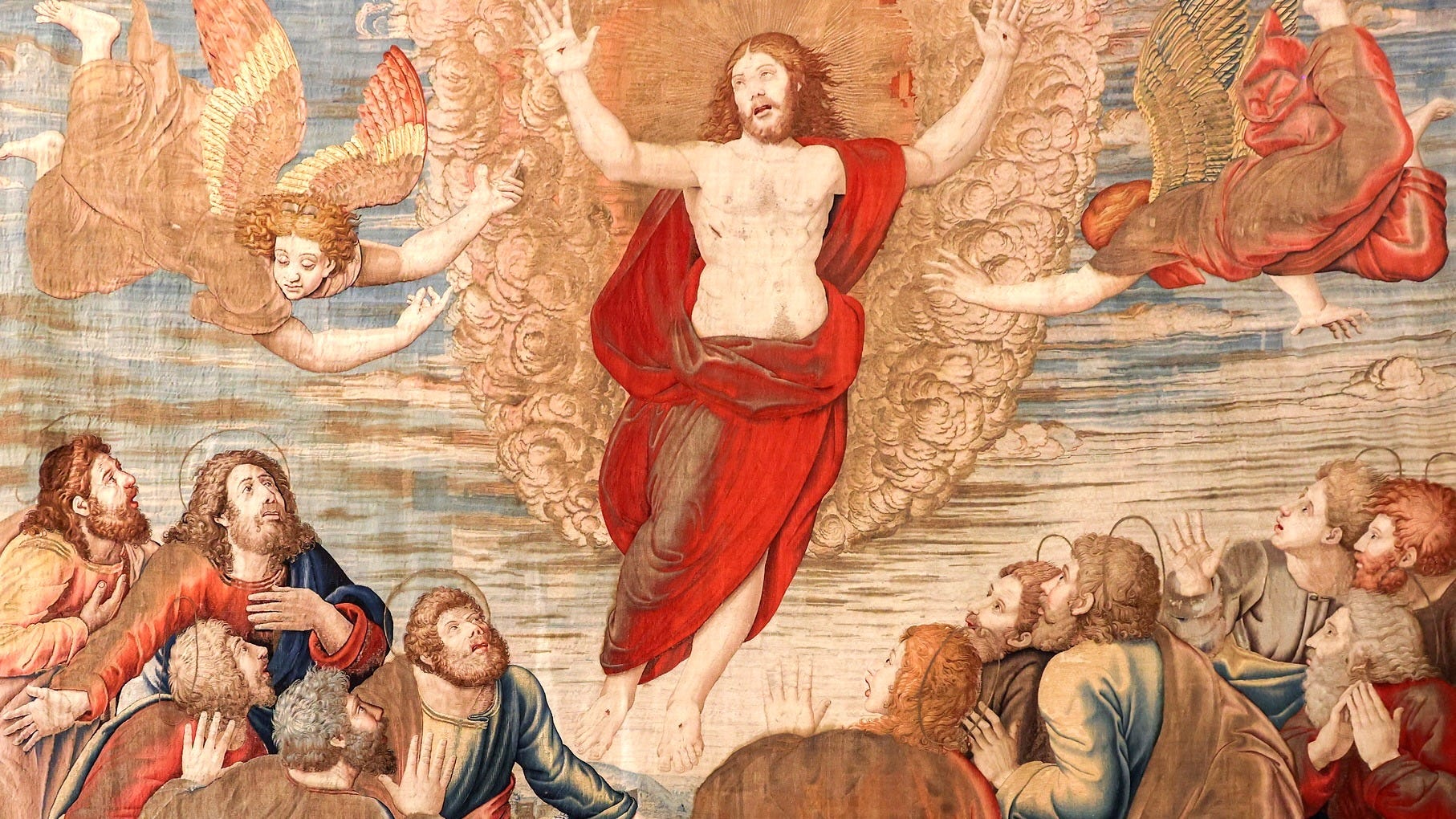
Sacred Scripture offers only glimpses of the Ascension—leaving us to consider whether Christ ascended alone, or bore with him the redeemed souls that had risen after his death.
Part IV: Why Our Lady remained after Christ’s Ascension
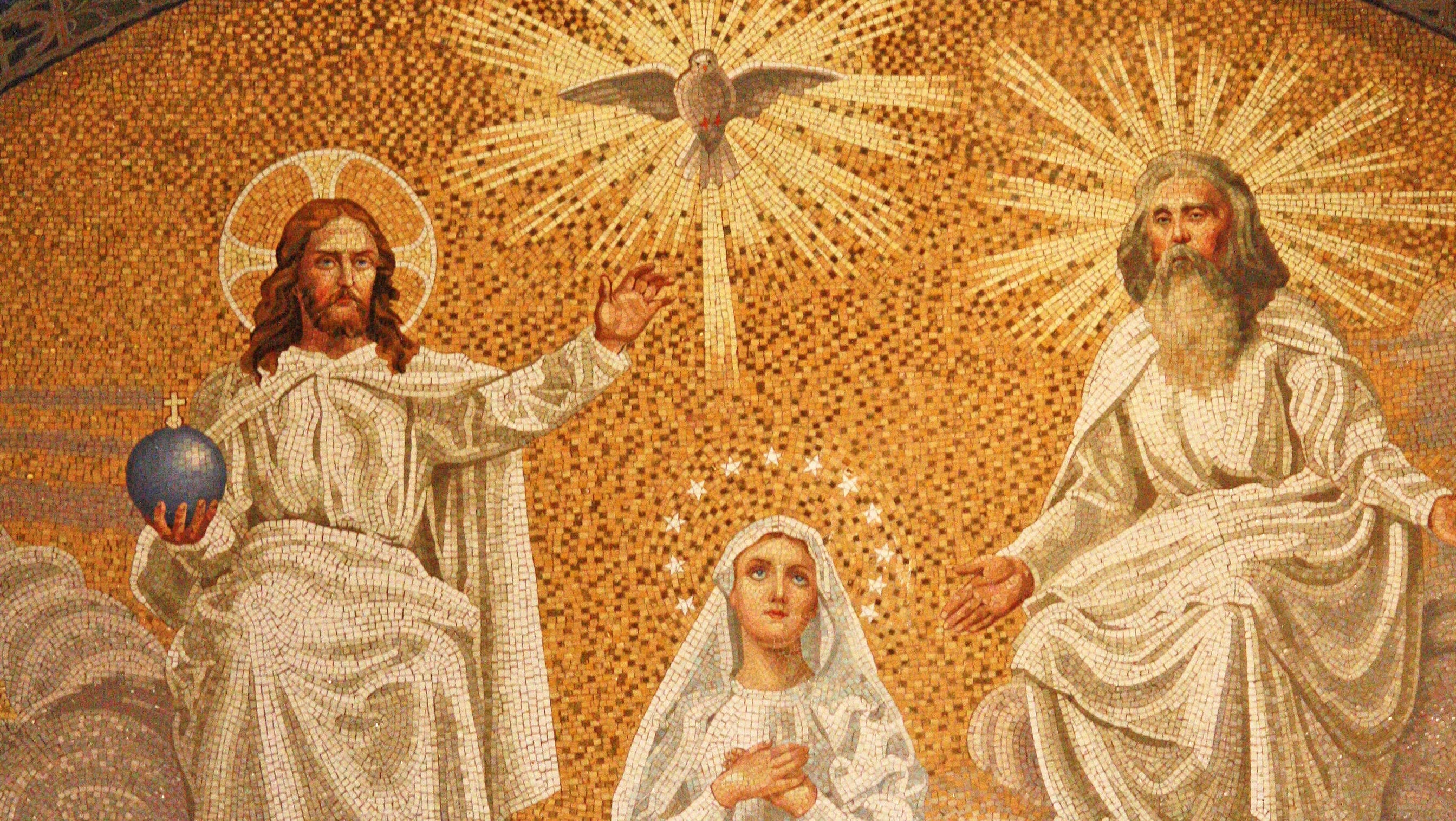
Did Our Lady ascend with Christ, and return in obedience and love for the infant Church?
Here’s why you should subscribe to The Father Coleridge Reader and share with others:
Fr Coleridge provides solid explanations of the entirety of the Gospel
His work is full of doctrine and piety, and is highly credible
He gives a clear trajectory of the life of Christ, its drama and all its stages—increasing our appreciation and admiration for the God-Man.
If more Catholics knew about works like Coleridge’s, then other works based on sentimentality and dubious private revelations would be much less attractive.
But sourcing and curating the texts, cleaning up scans, and editing them for online reading is a labour of love, and takes a lot of time.
Will you lend us a hand and hit subscribe?
Follow our projects on Twitter, YouTube and Telegram:
Twitter (The WM Review)