

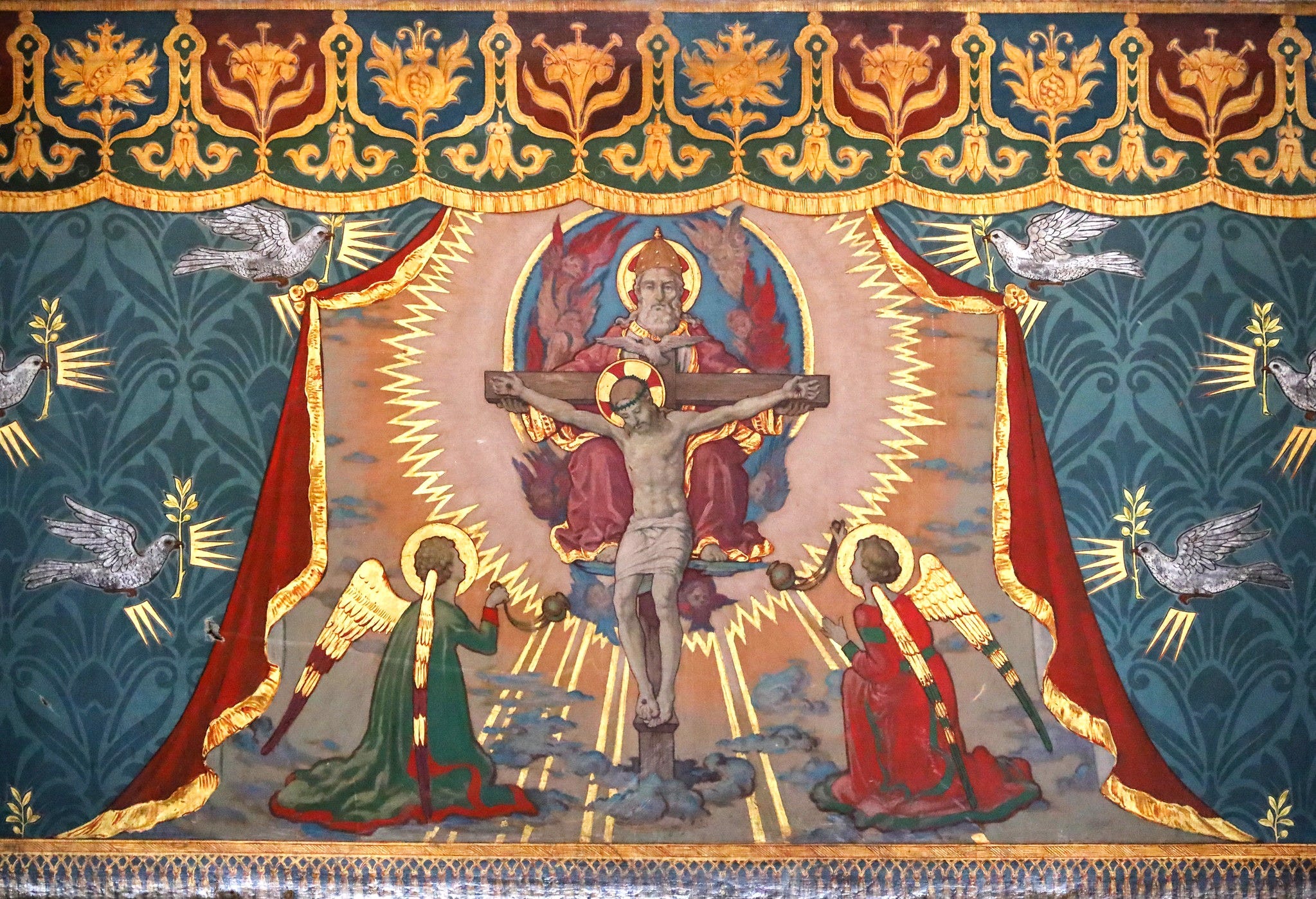
Our Lord states which is the greatest commandment, and silences his opponenets with a question.
Editor’s Notes
In the Gospel on the Seventeenth Sunday after Pentecost, Our Lord discusses both “the great commandment” and the relationship between King David and the Messias.
“At that time, the Pharisees came to Jesus and one of them, a doctor of the Law, putting Him to the test, asked Him, Master, which is the great commandment in the Law? Jesus said to him, You shall love the Lord your God with your whole heart, and with your whole soul, and with your whole mind. This is the greatest and first commandment. And the second is like it, You shall love your neighbor as yourself. On these two commandments depend the whole Law and the Prophets.
“Now while the Pharisees were gathered together, Jesus questioned them, saying, What do you think of the Christ? Whose son is He? They said to Him, David’s. He said to them, How then does David in the spirit call Him Lord, saying, The Lord said to my Lord: Sit at My right hand, till I make Your enemies Your footstool? If David, therefore, calls Him Lord, how is He his son? And no one could answer Him a word; neither did anyone dare from that day forth to ask Him any more questions.” (Matt 22:34-46)
The Gospel reading is divided into two parts, and Fr Coleridge addresses it across two chapters.
The event takes place during Holy Week, after Christ’s triumphal entry, and the cleansing of the Temple. His enemies attempt to ensnare him, but he reduces them to silence. Fr Coleridge draws out some of the rivalries between the Jews at this time, emphasising the opposition between the Sadducees and the Pharisees.
In this first chapter (Parts I–II), Fr Coleridge explains why the law of charity is greater than any external observances – and that even sacrifice is only the external manifestation of this absolutely fundamental virtue.
In the second chapter (Parts III-IV) he explains why Our Lord’s comments are an assertion of his divinity, and the purpose for phrasing it in this way at this time.
The Great Commandment
Passiontide, Part I
Chapter IX
St. Matt. xxii. 34-40; St. Mark xii. 28-34
Story of the Gospels, § 140
Burns and Oates, London, 1887
Seventeenth Sunday after Pentecost
Part I: How love of God and neighbour outweighs every sacrifice in the Law of Moses
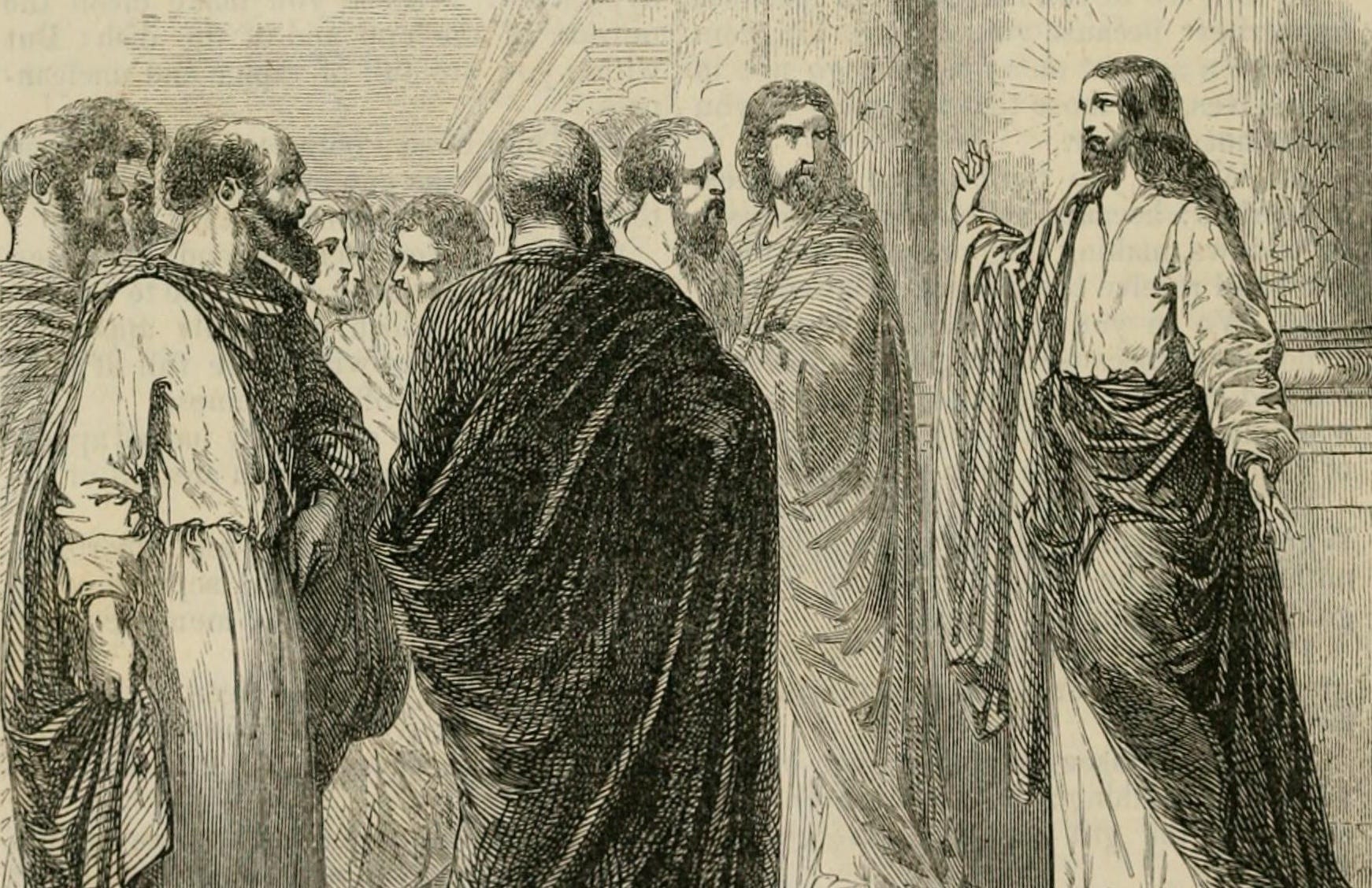
Christ teaches that all the Law and the Prophets rest on the twofold love of God and neighbour, surpassing every ceremonial observance.
Part II: What is the meaning of the ‘fourfold’ love of God?
Why must we love God with all our heart, mind, soul and strength – and how can we see which area we need to develop?
The Son of David
Chapter X
St. Matt. xxii. 34-40; St. Mark xii. 28-34
Story of the Gospels, § 140
Burns and Oates, London, 1887
Part III: Why Jesus asks, ‘What think you of Christ, whose Son is he?’
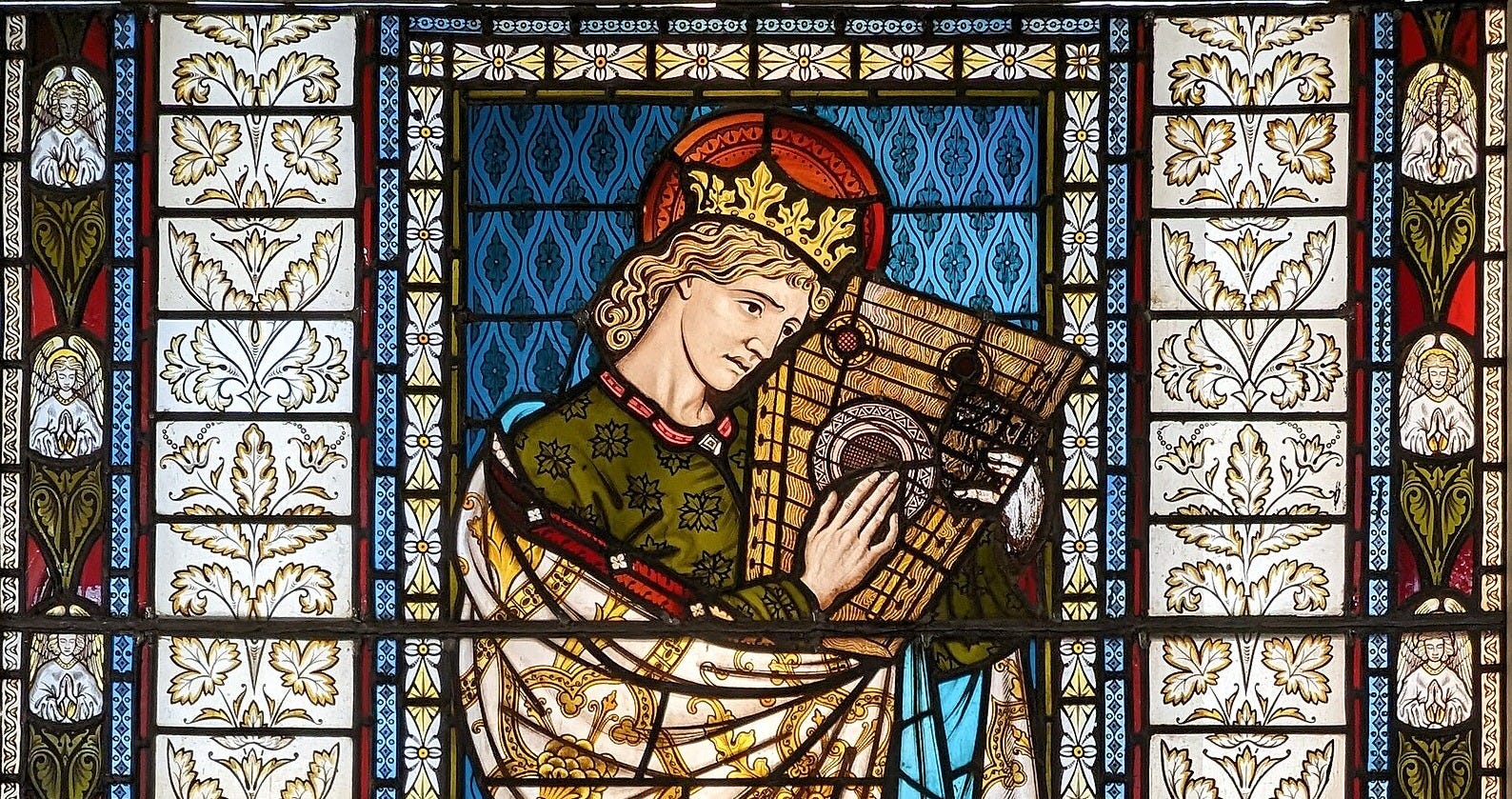
In posing a question about King David, Our Lord offered his enemies one last lifeline.
Part IV: How Christ used David’s Psalm to expose the misconceptions of his enemies

Christ’s question about David’s ‘Lord’ revealed the their inability to recognise the divine Person who stood before them.
Here’s why you should subscribe to The Father Coleridge Reader and share with others:
Fr Coleridge provides solid explanations of the entirety of the Gospel
His work is full of doctrine and piety, and is highly credible
He gives a clear trajectory of the life of Christ, its drama and all its stages—increasing our appreciation and admiration for the God-Man.
If more Catholics knew about works like Coleridge’s, then other works based on sentimentality and dubious private revelations would be much less attractive.
But sourcing and curating the texts, cleaning up scans, and editing them for online reading is a labour of love, and takes a lot of time.
Will you lend us a hand and hit subscribe?
Follow our projects on Twitter, YouTube and Telegram:
Twitter (The WM Review)